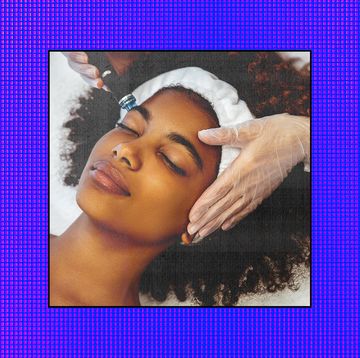
Even as a beauty director, it’s hard to keep up with the constantly changing, innovative world of skincare. It feels like, after decades of slow and steady development, now there are ‘hero’ products launching weekly with ingredients that we can barely pronounce. But what are the new actives that are worth shaking up your routine for? How often should you be using them, and what do they actually do? Look no further, these are the next-gen ingredients that are actually worth knowing for firmer, more radiant skin this summer…
Exosomes – The quiet optimisers
What are they?
‘Exosomes are essentially nature’s messengers,’ says Mark Curry, co-founder of The Inkey List. ‘They are tiny carriers that help skin cells “talk” to each other more effectively.’ So what does this mean for your skin? Essentially, better regeneration and repair as they encourage your cells to be better communicators, resulting in your smoothest, most radiant skin yet.
Who are they for?
Everyone! As Curry notes, ‘They act as quiet optimisers in a skincare routine – not loud and instant, but subtly helping the skin behave like a healthier, more resilient version of itself over time.’ As with introducing any new ingredients, though, if you are pregnant or breastfeeding, do consult your medical professional.
How to use them?
‘Use exosomes on clean, dry skin after cleansing and before heavier serums or moisturisers,’ advises Curry. Although it’s not an acid and doesn’t sting like vitamin A can, you should still start using it just a few times a week and keep the rest of your routine simple, as you build up usage.
Medicube One Day Exosome Shot Pore Ampoule 7500 30ml

Medicube One Day Exosome Shot Pore Ampoule 7500 30ml
Trinny London Naked Ambition Vitamin C Serum 30ml

Trinny London Naked Ambition Vitamin C Serum 30ml
The INKEY List Exosome Hydro-Glow Complex

PDRN – The collagen improver
What are they?
Have you heard your pals yapping about salmon sperm? Well, it’s this, kinda. ‘Polydeoxyribonucleotides, or PDRNs, are DNA fragments derived most commonly from purified salmonid (such as trout or salmon) DNA,’ says aesthetic doctor David Jack.
Ready to put your science cap on? ‘PDRN is generally believed to bind to adenosine (A2A) receptors on fibroblasts in the skin, pushing them into a reparative state that favours collagen production.’ This process helps form new blood vessels and, as Dr Jack says, ‘essentially forces cells into repair processes’.
Who are they for?
If you feel like your skin is losing elasticity and is looking less plump, it’s definitely one to consider. ‘Its relevance in the skin is due to the ability to act as a cellular signal to reduce inflammation and improve things like collagen production,’ notes Dr Jack.
How to use?
PDRN can be injected into the skin as a more invasive treatment, but topical, over-the-counter products do work, too – possibly less effectively, or more slowly. ‘Topical PDRN works at a more superficial level and relies heavily on formulation quality to allow them to penetrate the skin’s barrier,’ explains Dr Jack.

Anua Pdrn Hyaluronic Acid 100 Moisture Cream - Hydrating And Restoring 60Ml

Anua Pdrn Hyaluronic Acid 100 Moisture Cream - Hydrating And Restoring 60Ml
Anua Pdrn Hyaluronic Acid 100 Moisture Cream - Hydrating And Restoring 60Ml
Mediheal Toner Pads - PDRN Lifting Toner Pads (100 count)

Mediheal Toner Pads - PDRN Lifting Toner Pads (100 count)
Beta-Glutan – The repair warrior
What are they?
Beta-glucans, or β-glucans to use their more formal name, are naturally occurring soluble prebiotic fibres and polysaccharides. The ingredient is normally derived from the cell walls of yeast, fungi and fibre-rich cereals, such as oats, barley and grains.
Who are they for?
At its core, this ingredient is all about calming redness and helping with skin repair. So if you feel like you might have gone a bit too far with BHAs or AHAs and your skin barrier is feeling a little on the fiery side, this ingredient has you covered.
How to use?
Because this ingredient is so mild in nature, it really is perfect – even for the most super sensitive types of skin. To supercharge beta-glucan’s properties, we suggest pairing it with hydrating ingredients, such as a low-molecular hyaluronic acid, so it can max out its absorption into the skin surface.
The Ordinary Natural Moisturising Factors Beta Glucan - 30ml

The Ordinary Natural Moisturising Factors Beta Glucan - 30ml


Why trust Cosmopolitan?
Keeks Reid is the Beauty Director at Cosmo UK. She has spent over a decade in the industry, testing the efficiency of the newest ingredients for skin, hair and body.
Keeks Reid is the Beauty Director at Cosmopolitan UK. While she loves all things beauty, Keeks is a hair fanatic through and through. She started her career in beauty journalism in 2013 as editorial assistant at Blackhair and Hair magazines working her way to Acting Editor of Blackhair magazine at 23 years old. She spent much of her career working in trade hairdressing media at Hairdressers Journal, Salon International and the British Hairdressing Awards. Which is why she is a regular contributor to Cosmo's Curl Up franchise. Now, alongside her Cosmo work, she presents, creates content on social media and works with a range of beauty companies; from magazines and websites to beauty brands and salons.