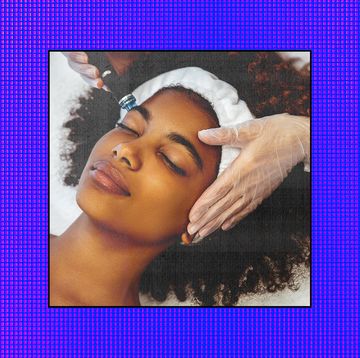
Whenever a pimple appears out of nowhere, it can feel random and unfair – and it’s usually timed perfectly for the day you finally have a date worth leaving the house for. But skin isn’t chaotic; it’s communicative. Breakouts are often your body responding to what’s happening beneath the surface. And unfortunately for that date, you’re already in a long, complicated, on-again-off-again situationship – and it isn’t with them – it’s actually with your hormones.
Sure, we know about the period-hormone correlation and how skin can fluctuate depending on your cycle, but what about later on in life? Specifically, perimenopause and menopause. One minute your skin is glowing, obedient and low-maintenance; the next it’s breaking out like a stroppy teenager, flaking like filo pastry, or reacting to a moisturiser it loved last week.
But before you throw your entire bathroom cabinet in the bin, let’s get something straight: most of what your skin does across your life is normal. Hormonal shifts don’t mean something is ‘wrong’; they mean your body is doing what bodies do. The trick is knowing what phase you’re in, what your skin is reacting to and how to support it.
So, to get the lowdown (read: practical advice), we spoke to Alexis Granite, a world-renowned expert in medical and aesthetic dermatology, on how to look after your skin through it all – without losing your head (or your skin barrier).
How to know when it’s hormonal
Hormonal skin issues tend to follow patterns. ‘Common signs are breakouts around the jawline or chin, flare-ups with your cycle or issues that appear suddenly, often coinciding with life stages,’ says Dr Granite.
They may also arrive alongside other symptoms: irregular periods, hot flushes, mood shifts and hair and scalp changes. Skin rarely acts alone – it’s part of a larger hormonal conversation.
‘If acne is persistent, painful or scarring, if pigmentation is worsening or if skin changes are accompanied by symptoms such as disrupted sleep, hot flushes or cycle changes, seek medical advice, as it may be a problem beyond hormones,’ says Dr Granite.
A GP or dermatologist can assess whether medication, a hormonal evaluation or options such as HRT may be appropriate. Often, the best outcomes come from combining skincare with lifestyle shifts and, when needed, medical support.
Perimenopause and the skin
If puberty was the first rude awakening, perimenopause is the sequel no one warned you about. The transitional phase before menopause usually occurs between 45 and 55.
‘Perimenopause and menopause can be one of the most challenging phases for adult skin,’ says Dr Granite. ‘Oestrogen fluctuates, leading to breakouts, dryness and sensitivity.’
Collagen production starts to rapidly decline (even more than it already was), healing slows, and the skin barrier becomes easier to disrupt. The result is skin that feels thinner, more reactive and occasionally… unfamiliar.
This is where many people panic and overcorrect. And while it’s easier said than done, don’t. Over-exfoliating, stripping cleansers, and too many actives can worsen irritation and pigmentation. Instead, restore your barrier first with richer moisturisers, lipid replenishment and well-chosen actives used strategically, rather than aggressively.

FaceTheory HydraOat Soothing Daily Moisturiser
Lipids need replenishing during perimenopause, and this fragrance-free moisturiser repairs the skin barrier with ease.

Ingestible collagen is a great way to reduce fine lines and wrinkles. These sachets help with hair growth, too.

Skin Rocks The Rich Moisturiser Fragrance Free
Soft, conditioned, resilient skin this way!
Menopause and the skin
Post-menopause, oestrogen levels remain low, but more stable. Skin often becomes drier, thinner and less resilient, with fine lines and texture more noticeable.
‘In this phase, collagen loss accelerates, elasticity decreases, and fine lines become more apparent,’ says Dr Granite. ‘Some women notice fewer breakouts but more sensitivity, dryness, itching and crepiness.’ This isn’t skin failing – it’s changing.
Good hydration, sun protection and barrier support become non-negotiable. Retinoids can still be valuable, but tolerance matters more than maximal strength. Slow, steady and nourishing wins the race here.

Weleda Skin Food
Sensitivity, dryness and itching are more common during the menopause phase. Calm discomfort with this rich, intensive moisturiser that works on the face and body.

Reome Hydra-Plasma Veil
With six pioneering ingredients – hydrolysed collagen, adenosine and chamomile, to name a few – these masks lend instant hydration and repair.

Sun protection is always a non-negotiable, but when menopause hits, it should be your priority.
Lia Mappoura (she/her) is the Beauty Writer at Cosmopolitan UK, with over four years of experience reporting across the brand's print, social, video and digital platforms. Lia covers everything from emerging trend analysis to viral celebrity hair and makeup moments, making her an expert at spotting the season’s next big beauty look (before it takes over social media feeds).
In 2025, she was named The Rising Media Star at the Love Perfume Awards with The Perfume Shop, recognised for her outstanding digital fragrance content and for building genuine authority within the space. She is passionate about challenging outdated beauty stereotypes, championing inclusive representation in beauty, and educating readers on the trends, products and conversations shaping the industry today. Follow her on Instagram or find her on LinkedIn.