I remember the first time I saw 500 Days of Summer in the cinema; despite being only 16 at the time, something about it resonated with me deeply. The powerful representation of that pain you feel when losing someone you were sure was meant for you hit me like a tonne of bricks. Even at that tender age, I’d always felt things intensely — so the thought of having to navigate my ‘one that got away’ in future was something I was, rather irrationally (or so I thought), terrified of.
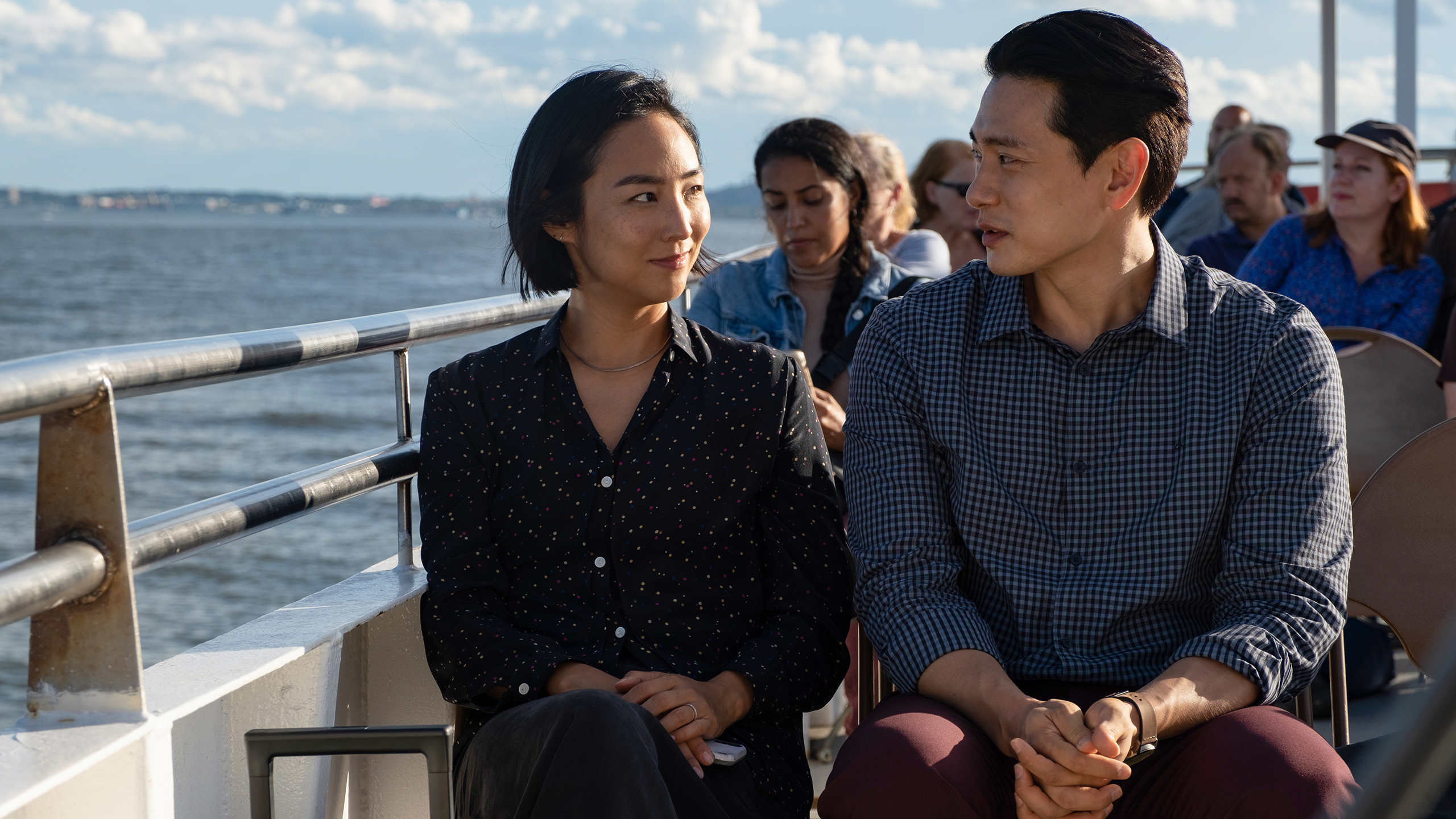
As I grew older, the pop culture trope seemed to follow me everywhere: there was that devastating scene at the end of La La Land and, more recently, Celine Song’s cinematic masterpiece, Past Lives. As a queer person, the complex, doomed WLW (woman-loving woman) love story in Portrait of A Lady on Fire emotionally decimated me for months.
Although I’ve always loved these ‘one that got away’ stories, I never truly understood them — until I experienced this kind of anguish firsthand.
Jade* and I first met via a dating app right after I’d moved from the UK to Australia. Off the back of a series of failed dates, I’d all but given up on dating by this point, but I got great vibes from Jade over messages and so decided to give it one last shot. The problem was timing: I was about to go travelling for several months, so starting something new now was a risk. But after going on three unforgettable dates in one week, I knew it was a risk worth taking.


Jade made me feel instantly safe, and fully seen. We just got each other, constantly laughing and being silly. But we also seemed to nail the more serious stuff pretty early on: even in different countries, communication felt easy and we continued to connect on a uniquely deep level. We also managed to make romance work, even with hundreds of miles between us. We once created Spotify playlists for each other featuring our all-time favourite songs, accompanied by notes about what they meant to us. It was a fun way to get to know each other and felt really intimate. After only a few weeks since our first date, she flew out to see me for a beautiful long weekend spent by the ocean.
Soon enough though, the distance started to get hard, especially so early into a fledgling relationship. We also began to disagree on a couple of issues that caused tension (such as being friends with exes), made harder by the fact we couldn’t work through things in person. The relationship became strained and started to fall apart; we were on and off for a while, never really knowing where we stood. It became clear after a few months that this wasn’t working.
Everyone's clicking on...
Being apart geographically made the break-up easier — but when I returned to Australia a few months later, I realised I’d never properly processed my feelings, and everything started flooding back. I learnt that she’d since moved on with someone else, and despite genuinely wanting her to be happy, I felt a bit broken that it wasn’t with me.
In the past, I’d always been able to see, over time, that a person wasn’t right for me and thus work to progressively let them go. Healing was pretty linear. But with Jade, I went up and down. I was able to move past it on a surface level; I knew it was over and could go weeks without the relationship crossing my mind. I found happiness and built a life that felt whole and full of joy in my new city. But there was always this small, quiet voice in the back of my head — or deep down in my gut — that whispered maybe it shouldn’t be over. She still owned a small piece of my heart, and I had remnants of feelings I couldn’t seem to shake. And although I threw myself back into dating, no one seemed to compare.
I started to battle with the idea that I’d built this all up in my head and it had never meant anything to her like it did to me. I’d think of 500 Days Of Summer: to viewers, it’s obvious Tom likes Summer far more than she likes him. She is framed as his ‘one’, but to her, he’s only her ‘one before the one’. I sometimes wonder if an audience watching mine and Jade’s story might see the same thing and think it was obvious; was I missing something?
Creating an idealised ‘character’ of the person is always possible in ‘the one I got away’ stories, says psychologist and relationship coach, Cosmina Naum. “These stories preserve relationships in their most ideal form. They never had to face routine, compromise, or conflict, so they remain emotionally perfect in memory.”


“‘The one that got away’ isn’t really about regret, it’s about longing,” Naum continues. “The risk is that it keeps people oriented toward the past, instead of noticing what might be available to them now.”
When I try to take emotion out of it and look back objectively, I do know deep down that the relationship was anything but perfect; there was conflict pretty early on, and we had different attachment styles that made me feel a fair amount of anxiety. But, obviously, no relationship is perfect. Besides, it wasn’t just the past that I missed and longed for; I was grieving our possible future together. Jade made me feel confident and full of joy, like I’d finally manifested my vision for healthy, happy love. Letting that go prematurely was hard when there was no real conclusion or closure.
Naum agrees this is common within these scenarios (including in situationships), where we didn’t get to play out the future version of the relationship, nor the person we could have been. This is painful, but oddly addictive to ruminate on. She notes that ‘the one that got away’ “often represents a version of ourselves, or a future we felt was possible with them”. “In many cases, what people are grieving isn’t the relationship itself, but what it symbolised: being chosen, being deeply understood, or becoming a different version of themselves.”
As fate would have it, my story with Jade didn’t end there. Two years later, we re-matched on Hinge and got together for a drink. The passion, chemistry, and attraction were all still there. We talked for hours, sharing wine and small plates. We ended up lying next to each other on my building’s rooftop looking at the stars, sharing stories that felt intimate and sacred; like we were in our own little world. She asked me to kiss her.
It was one of the most romantic nights of my life — but it was too good to be true. Jade was dealing with a break-up and some other heavy life changes. She wasn’t looking for anything serious. I, on the other hand, was in a place of dating intentionally and wanting to commit to someone. Once again, our timelines didn’t align and we decided it was best to go our separate ways. I will always wonder if she and I could have really been something if those barriers didn’t exist, or if we simply weren’t suited.
In some ways it wasn’t fair of Jade to kiss me and give me hope. But I don’t regret meeting. I’m glad we got to re-connect because it gave me a level of closure I hadn’t had before. I was reminded that I deserve someone who can meet me where I’m at, and reciprocate my feelings.


This is important for moving on, agrees dating coach Hayley Quinn: “You need to focus not only on the emotional and physical connection you share but also on how good the other person is as a partner to you,” she says. “The truth may well be that you have a great connection, but that they (or you both) lack the relationship skills and compatibility to really make it work. Put it this way: someone becomes ‘the one’ when you form a successful relationship together with them, but if the relationship continually fails, they can’t be ‘the one’.”
And while the beautiful stories we read, watch, or listen to can feel comforting, Quinn says: “Moving on from this experience is made tougher by a popular culture which often shows relationships overcoming huge adversity.” Keeping these representations at arm’s length, therefore, is key to growth.
Ultimately, despite our intentions, Jade and I just couldn’t seem to make it work — and that’s the reality. She’s the one that got away. That used to feel like a tragedy (and on the odd bad day, it still can), but now, I tend to see the experience as something beautiful that I was lucky to have, and take the good from it for my next relationship. In this way, Naum encourages long-time yearners to see the ones that got away as “expanders”, that widened “our sense of what’s possible in love”. She suggests: “Instead of seeing them only as a loss, it can be more powerful to ask: what did this connection awaken in me?” And that’s exactly how I see it now.
*Name has been changed