We may earn commission from links on this page, but we only recommend products we love. Promise.

Do Hair-Growth Oils Really Work? 6 Formulas Approved by Cosmo Editors
Experts have mixed reviews.
I’m sorry to burst your bubble, but TikTok has led you astray: Oil can’t really grow your hair. I know, I know. Deep breaths. “Hair growth takes time—think: half an inch a month," trichologist Dominic Burg has toldCosmo. Even hair-loss products clinically proven to work—like minoxidil—take at least three to four months to see results, Burg has explained.
But! All hope is not lost! Because while hair-growth oils aren’t the miracle-worker many claim (hair-growth vitamins also fall into this category), they can help nurture your scalp, creating the most optimal environment for a healthy scalp. Most formulas are spiked with hydrating, scalp-friendly ingredients that ~may~ help create a strong and healthy foundation for hair to grow. And because hair loss is complicated and unique to each person, I've consulted a few dermatologists—hi, Mona Gohara, MD, Dhaval G. Bhanusal, MD, and Karan Lal, MD—to give me all the inside scoop, as well as personally tested and reviewed the best ones on the market, below.
The best hair-growth oils, tested by editors:

Keep reading for the full breakdown of the best hair-growth oils—according to my own testing and product reviewers—along with tips from dermatologists on choosing the best hair oils, how to know if you should (or should not) use one, and what to look for before you buy.
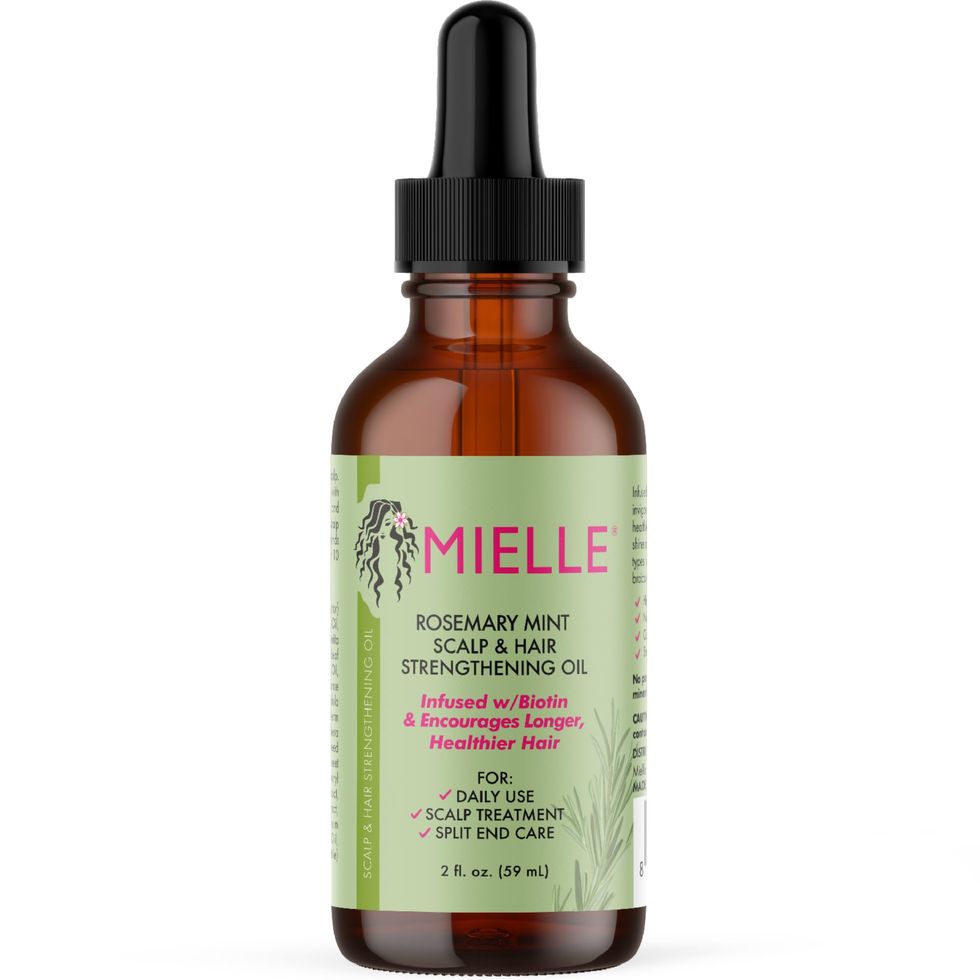
Pros
- Great for naturally curly hair

Cons
- Excess application of rosemary oil may be irritating on your scalp and skin

Why we love it: If you've been struggling with hair loss or thinning and have considered using OTC treatments but don't wanna commit yet, minoxidil—the active ingredient in Rogaine proven to promote hair growth—and rosemary oil were both clinically tested on people who struggle with genetic androgen-related hair loss. The study found similar efficacy between the two. The best part? Rosemary oil was more effective than minoxidil in reducing scalp itching and irritation, explains Dhaval G. Bhanusali, MD.
One Cosmo editor says: “The second I found out that rosemary is one of the best over-the-counter ingredients for hair growth, I researched the heck out of available formulas and landed upon this. I used this exclusively for more than a year, and while I didn’t notice more density necessarily (very few products have ever done that, to be fair), it definitely made my scalp calmer and less prone to irritation. I also think it helped reduce some shedding, which over time, made me feel like I had fuller, thicker hair.”—BETH GILLETTE, BEAUTY EDITOR
| Key ingredients | Rosemary leaf oil, tea tree leaf oil, castor seed oil, peppermint oil |

Pros
- Promotes hair moisture
Cons
- The scent can be overwhelming for those sensitive to smell
Why we love it: For those with thin, fine hair, oil can be a nightmare (read: greasy, weighed-down hair). That's why those looking for an oil alternative should consider a pre-wash treatment that can be rinsed right out, so you get all the benefits and moisture without that heavy, oily feeling.
One Cosmo editor says: “My scalp gets really dry, so I appreciate the dropper applicator that makes it easy to target exactly where I need this formula most. It has a lovely scent and a lightweight consistency compared to other oil-based treatments, which I really like.” —SARAH MABERRY, FASHION AND LUXURY COMMERCE EDITOR
| Key ingredients | Safflower seed oil, olive fruit oil, grape seed oil, squalene |

Pros
- Makes hair look shiny and feel super soft (helping to eliminate frizz)
- Thick consistency is great for massaging into scalp
Cons
- Contains a lot of heavy oils, which are great for locking in moisture, but aren't small enough to actually hydrate your scalp or hair on its own
Why we love it: Although Cécred’s hair oil isn’t exactly meant for hair growth purposes, it is a fantastic pick if you want a nourishing treatment for your hair and scalp. Winner of a Cosmo Holy Grail Beauty Award, Beyoncé’s hair oil combines a mix of really rich oils (castor seed oil, baobab seed oil, and coconut oil) with some lighter-weight oils (sunflower seed oil and seabuckthorn oil) to help moisturize lightly.
No, these ingredients won’t magically make your hair grow (as we’ve said, nothing will, other than minoxidil, and even that isn’t a miracle worker either). However, a moisturized scalp and hair are an important piece of the puzzle.
One Cosmo editor says: “Beyond the fact that I get to channel my inner Beyoncé every time I use this oil, my hair comes out looking glossy and gorgeous. Just a few drops seals in moisture without weighing me down. Shine, softness, and strength all in one.” —JULEE WILSON, BEAUTY EDITOR-AT-LARGE
| Key ingredients | Sea buckthorn oil, sunflower seed oil, coconut oil, castor seed oil, Baobab seed oil, neem extract |

Pros
- Uses caffeine, which has been said to decrease hair loss
- We love the non-greasy formula
Cons
- It will take consistent use to see results
- Not going to lock in moisture like other oil-based products on this list
Why we love it: So, we now know that oil in itself will not stimulate hair growth, but it can potentially create an environment to promote it. The GRO Hair Serum by Vegamour moisturizes dry, irritated scalps and uses caffeine, which naturally counteracts DHT (see: the hormone responsible for hair loss). It works best when used as a spot treatment, and bonus points because it's perfectly safe for color-treated hair.
One Cosmo editor says: “Three months—and three bottles—in, I've noticed a significant amount of new baby wispies appearing along my hairline and temples. Beyond that, my hair has been growing like weeds. Not only did my hairstylist comment on the major difference in length, but my roots have become more pronounced in a shorter amount of time. Typically, I'll dye my hair every five weeks, but I've been pushing it to four due to how quickly my roots grow out.”—MARY HONKUS, CONTRIBUTING BEAUTY EDITOR
| Key ingredients | Caffeine, AHA, glycerin, panthenol |

Pros
- Extremely lightweight formula that won't make scalp greasy
- Easy dropper application
Cons
- Although many of the botanical extracts are thought to be anti-inflammatory, these ingredients can be irritating for some with sensitive scalps (always do a patch test)
- Not an oil-based product, so if you want something to seal in hydration, this won't do that
Why we love it: Nutrafol is already known and well-loved in the hair-growth space, mostly for their best-selling vitamins. Many of our editors have tested them (beauty director Lauren Balsamo swore by it for fending off postpartum hair loss), but if taking daily pills isn’t exactly up your alley, one way to encourage a healthier scalp is through the brand’s hair serum.
One Cosmo editor says: “I have Great Lengths hair extensions right now, but I still want to keep my scalp content and happy (and hey, if I grow some more hairs even with my extensions in, hell yeah).
One thing I love about this formula is how soothing it is. My scalp gets itchy and irritated, especially from having these brand-new long locks attached to my head, and a few drops of this instantly calms everything down. I’ll put it in at night, and by the time I wake up in the morning, the formula has completely absorbed into my hair—no grease or oil left behind that I have to combat with dry shampoo (the usual experience I have with hair oils and serums).
Is it going to grow hair on its own? No, but I feel good knowing that my scalp isn’t metaphorically crying all the time because it’s consistently coated in anti-inflammatory ingredients and hydrators.”—BG
| Key ingredients | Ashwaghanda, Irish moss peptides, sea buckthorn extract, maca extract, pea sprout extract |

Pros
- Quickly smooths flyaways and frizz on dry hair
- Seriously great for all hair types
Cons
- Comes with a very minimal amount of product, especially if you have very thick or coarse hair
Why we love it: Growing out hair that’s been fried by heat damage, chemical damage, or color treatments is difficult, but not impossible. Olaplex utilizes its proprietary bond-building complex in this hair oil to help smooth and repair hair from roots to tip. It’s best on your ends, for sure, but it can be massaged into your scalp too. Pro tip: Double up with Olaplex's cult-favorite leave-in treatmentfor maximum results.
One Cosmo editor says: “Listen, I understand that using a hair oil can be intimidating—there's a very fine line between looking glassy and greasy—but Olaplex's liquid gold gives me a glass-like shine with just two drops. Truly, that's all I use.
But it's not just a hair oil. It seals my hair cuticle, wards off frizz, and makes my hair strands look so smooth and sleek, while also incorporating a lil bit of that Olaplex bonding complex to help repair damage. It can be used on dry or damp hair. But I really love it to revive two- or three-day-old styles since it helps smooth down my flyaways.”—MH
| Key ingredients | Dimethicone, sunflower seed oil, pomegranate seed oil, vitamin E |
Do hair-growth oils actually work?

For starters, it depends on what you mean by "work." No, hair oil will not magically regrow hair, despite what you may see on social media, explains Dhaval G. Bhanusali, MD, adding that it's important to keep in mind that there are plenty of skincare and hair myths out there. As for what hair oils can do, well, certain oils can hydrate the scalp and hair cuticles, possibly creating a better environment for hair growth, especially if the hair loss is temporary (yes, we'll get into that).
If you want to see real growth, consult your doctor or dermatologist to assess whether clinically-proven hair growth treatments such as Minoxidil (the active ingredient found in topical products such as Rogaine and Hers), steroids and prescriptions, or an in-office treatment would be a good option for you.
How to choose the best hair-growth oil:
Figure out the cause of your hair loss
"Hair growth patterns are very complex and depend on genetics, environment, age, diet, and so on," says board-certified dermatologist Karan Lal, MD. Mona Gohara, MD, has explained to Cosmo that stress (hi, Covid-19 related hair loss), dieting or lack of nutrition, hormonal fluctuation, post-pregnancy, and even over-processing hair are all lifestyle changes that can lead to temporary hair thinning and/or loss (aka telogen effluvium).
If you and—most importantly!—your doctor or dermatologist have assessed that it is not one of the above causes, you could be suffering from an inflammatory scalp condition (i.e., dandruff, dryness, psoriasis). This is incredibly important to determine before using hair oil because, as Dr. Lal explains, if you have dandruff, certain hair oils can make your condition worse as some oils feed the culprit yeast that causes dandruff. So, yeah, reason #109234 to be evaluated by a professional.
Manage your expectations
Okay, so if you and a dermatologist have determined what may be the culprit of your hair loss, and you want to dabble with a few hair oils, it's important to understand what they can and cannot do.
"Most hair growth oils have vitamins, antioxidants, and various extracts," says Dr. Lal. And reminder! Sure, all of this sounds great, but the best these formulations can do is add moisture to dry scalps, promote cuticle health, or moisturize the actual hair strands, which in turn may create a better environment for hair growth. Sorry, it may not be the answer you were hoping for, but don't fret just yet—science continues to advance, and there are proven hair-growth treatments out there today (see: in-office treatments and minoxidil) that you and your doctor can look into.
Meet the experts:
- Karan Lal, MD, is a double board-certified adult, pediatric, and cosmetic dermatologist at Affiliated Dermatology in Scottsdale, AZ.
- Dhaval G. Bhanusal, MD, is a board-certified dermatologist in New York, NY and the founder of HairStim, a custom-compounded hair-loss formula that’s created and prescribed by your own dermatologist.
- Mona Gohara, MD, is a board-certified dermatologist in Hamden, Connecticut, president of the Women's Dermatologic Society, and associate clinical professor at Yale. Her areas of expertise include medical and surgical dermatology and skin of color. Gohara has talked to Cosmo in the past about shampoos for thinning hair.
- Dominic Burg is a trichologist and chief scientist at Evolis Professional. His expertise includes hair cycles and how they are impacted by inflammation and age-related diseases. Burg has talked to Cosmo in the past about hair loss in young women.
Why trust Cosmopolitan?
Beth Gillette is the beauty editor at Cosmopolitan with eight years of experience researching, writing, and editing hair, makeup, nail, and fragrance stories.
Siena Gagliano is the former associate editor at Cosmopolitan, and has five years of experience writing about beauty, fashion, and lifestyle news.
Beth Gillette is the beauty editor at Cosmopolitan, where she covers skincare, makeup, hair, nails, and more across digital and print. She can generally be found in bright eyeshadow furiously typing her latest feature or hemming and hawing about a new product you "have to try." Prior to Cosmopolitan, she wrote and edited beauty content as an Editor at The Everygirl for four years. Follow her on Instagram for makeup selfies and a new hair 'do every few months.



Bella Hadid's Levi's Shorts Are Under $35 (!!) RN

All the Pros and Cons of Solawave’s $400 LED Mask

Prime Day Dorm Deals to Get You Move-In Ready

Melissa x Diesel’s Second Drop Is Selling Fast


