

TW: Discusses rape and sexual assault
On 7 November 2017, 19-year-old Gaia Pope-Sutherland left her aunt’s home in the quiet seaside town of Swanage in a distressed state. Three years earlier, she'd reported to police that she had been raped at the age of sixteen – and that, along with the lack of subsequent action against the accused, Connor Hayes (a man in his early twenties at the time of the alleged attack – who says he "maintains his innocence and adamantly denies raping Gaia"), caused Gaia’s health to plummet. Her epilepsy worsened and she also developed PTSD, leading to manic episodes, like the one she was trapped in on the day she went missing.
Knowing this (and the fact she didn’t have medication with her), local authorities promised Gaia's family that they were doing everything in their power to bring her home safely. But that wasn’t true. Nor was it the only time Gaia had been let down by those meant to protect her.
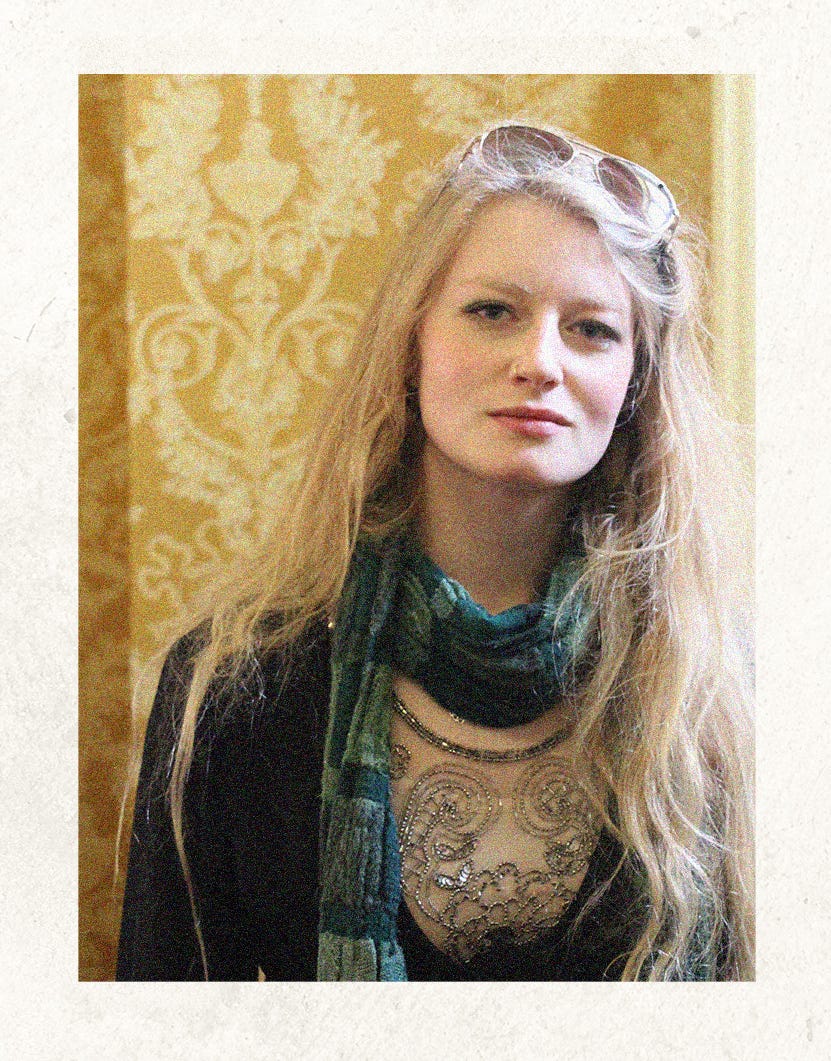
The teenager’s face quickly became recognisable as the story of her eleven-day disappearance made national headlines, and a photo of her smiling - that many still remember to this day - was shared thousands of times across social media. But despite the huge search and mammoth efforts from those in the local community, heartbreakingly, Gaia’s body was later found in a bush at a beauty spot, Dancing Ledge, just a mile from her home. Her cause of death was ruled as hypothermia.

It took a further five years for the inquest into Gaia’s death to be completed — one of the longest in British history — and the report it produced was damning: it found 50 missed opportunities ranging from the mental health treatment Dorset HealthCare Trust provided her through to Dorset Police's handling of the missing person search. Her family feel the failings first began back in December 2015, when Gaia alleged that she was attacked and was told six months later (despite fourteen others accusing Hayes of wrongdoing too) that ‘no further action’ was being taken.
Now, Gaia’s family is fighting back. They’re championing for the Gaia Principle to become the norm: a proposed law change that would see alleged perpetrators investigated holistically in cases where there are multiple allegations against them. They want all police officers, and society at large, to better understand how sexual assault can have severe mental health repercussions for survivors and they’re calling for Rape Crisis centres to be given urgent funding.
Everyone's clicking on...
Here, Gaia's sister, Clara Pope-Sutherland shares how her family is still trying to process their loss and why they decided to tell their story in the a BBC documentary, Gaia: A Death on Dancing Ledge.
There’s only a year-and-a-half age gap between my twin sisters, Gaia and Maya, and I. Growing up, the three of us were always creating mischief – whether it was me waking the twins at 4am and insisting we go into the garden to do an obstacle course, or our fights over who’d be next to wear the princess high heels from our dress up box. We were an entrepreneurial little group too, mixing petals with water to make ‘perfume’ and baking bread to sell to our neighbours to raise money for the air ambulance; there was always a greater good behind our hustling.
As we got older, my relationship with Gaia morphed beyond troublemaking into a real, beautiful friendship. Even though I was the elder sister, she went out of her way to protect me too. I remember times where I’d be feeling insecure in my body and Gaia would be the one comforting me.
Once, after getting out of the shower, around the age of 16, she caught me crying in the mirror and instantly marched into the bathroom, put a towel around me, hugged me and repeatedly told me that I was beautiful. Even when her mental health declined after the rape, to the point where she began experiencing episodes of psychosis, she was still always the biggest cheerleader for those she loved.


Up until Gaia met Connor Hayes, who first approached her on Facebook (like he did countless other teenage girls), she had always been confident. As she got older, she knew that she was sexy, that she could walk into a room and own it. It was refreshing to see, given how at odds her attitude was with the way society usually makes teenagers feel about themselves. She was sassy, wise beyond her years and cared deeply about people and nature – and doing the right thing.
I know Gaia would be a big supporter of the body confidence movement we’ve all witnessed in the last few years, as well as the Me Too movement, which started just a few weeks before her death. I feel so lucky that I got to experience that more adult side of her, to see a glimpse of who she might have become as a compassionate, intelligent and fun-loving woman, albeit far too briefly.
In some ways, it’s actually harder to talk about the good times we shared, like perfume-making and obstacle courses. Having to relive seeing Gaia go through hell and her disappearance triggers crazy anxiety in me, which I feel very physically as well as mentally. There’s such a strong mind-body connection that’s often overlooked, which is something that Gaia experienced too. Her epilepsy greatly worsened after her attack. Now, I often don’t realise the impact that talking about what happened to her has on me until several days later.
Whilst my sister’s story is now widely known, there are so many others out there who also haven’t seen any justice, whether they reported their attack or not – and for those 5 in 6 women (and 4 in 5 men) who do stay silent, is it any wonder given the misogynistic and dismissive attitudes running rife within the police? When, in December 2015, after almost a year spent (sometimes literally) shaking with fear, Gaia was ready to report that Connor Hayes, a man then in his early twenties, had drugged and raped her at the age of 16, it was as if the police seemed more interested in disproving her claim than investigating it.
They said her account was ‘confusing’, overlooking the fact that trauma can massively impact a person’s mental state, and that Gaia’s health had deteriorated in every way following that night. A night that, she said, saw her head back to a friend’s house after a party, drink a cup of tea prepared by Hayes, who had recently contacted her on Facebook ‘wanting to get to know her’, and then black out. The next day, she awoke with no memory, in pain and with bloodied underwear.
Gaia’s word alone should have been enough (just 3 to 4% of rape allegations are thought to be false… and yet only 1% of reported rapes end in a conviction) – but if officers needed more evidence, why didn’t they also consider the other fourteen girls who’d accused Connor Hayes of wrongdoing? Dozens of teenagers, some as young as 13, say they were approached by him online and asked to create sexually explicit material, meet up or were encouraged to take part in his regular webcam shows. Protecting them, others like them, and honouring Gaia’s memory, is what now fuels our Justice For Gaia campaign, and is why we as a family chose to make the new documentary.
After Gaia’s report was dismissed (and denied by Hayes), Hayes later admitted to taking an indecent moving image of a child, possession of indecent images of a child and paying for the sexual services of a child. He was jailed for just two years and was due for release around the time that Gaia experienced another breakdown in her mental health and ran.


I believe she was running from Hayes, who’d previously messaged her asking her why she’d ‘falsely accused’ him of rape (he still maintains his innocence to this day) and threatened her family. Though I feel with all my being she knew where she was running. Towards Dancing Ledge – to seek a place of safety. A place filled with happy memories of walking there as a family and I know it’s somewhere she loved to be. Heaven on earth.
Just a few days before Gaia went missing – 7 November 2017 – she’d received an unsolicited dick pic which sent her spiralling. Despite our aunt, Talia, calling the police multiple times, urging them to interview Gaia about it, so she felt heard and taken seriously, she was once again overlooked. The officer on call, having not listened to the desperation in Talia’s and Gaia’s voices, even stated to the dispatch call handler that “rape was not part of his job” and asked them to block the calls because he thought they were “taking the piss”.
If things had gone differently that day, Gaia might still be here, and Hayes could have been convicted for a second time far sooner (he was later jailed for further sexual offences against minors). This was far from the only fuck up along the way though: Gaia was also labelled a ‘medium risk’ missing person rather than ‘high risk’ when we reported her gone, despite us telling the emergency call handler that she was a vulnerable survivor who needed epilepsy medication. The police also waited too long to deploy a search helicopter and falsified records. It took eleven days to find her body.
All of this is set against a backdrop of a wider, ever-thriving rape culture. I don’t know a single other woman who hasn’t got a story of her own – myself included – related to sexual harassment or assault. Young people are not taught enough that it is okay to say no, and nor are they taught we should respect the boundaries of those that make clear they don’t want to. At the age of fourteen, I was sexually assaulted, something that I disclosed to very few people, but one of whom was my sister, Gaia.
In not understanding that I could say no, and in trying to not ‘make a scene’ in public, I desperately expressed my discomfort and that I didn’t want to. Being touched against my will, I felt violated and disgusted with myself and cried for days afterwards. But when I spoke to friends about it, nothing was done and the incident was just chalked up as ‘normal teenage behaviour’. This kind of attitude is another glaring failure, that not only did Gaia a disservice, but does a disservice to all of us.
Right now, the number of sexual offences in Dorset is at a record high, something the Police and Crime Commissioner David Sidwick recently addressed, saying he will continue to work with colleagues to “focus on what more can be done in this area of policing”.
In reality, there’s no need to try to figure out ‘what more can be done’ when the solution is patently obvious: listen to rape survivors. Believe rape survivors. Support rape survivors with properly funded mental health care plans. Look at the extensive research that’s already been done, such as the near 200-page report from Operation Soteria (the Crown Prosecution Service’s assessment into how police handle reports of sexual assault). Implement specialised rape and sexual assault policing units, aimed at centring their work around the voices of victims, instead of actively trying to disprove them.
Without a doubt, there are others out there who’ve been hurt and targeted by Hayes. To anyone reading this who has been subjected to him and his utter disregard for others’ safety, life and happiness, we urge you to come forward and report your experiences to the Centre of Women’s Justice. This man is a prolific sex offender and yet, he still walks the streets, allowing him to possibly target more unknowing young people. He’s living freely, and Gaia is not. The Centre of Women’s Justice can and will protect you. Hand in hand, we can help to re-open and re-examine his file.
Gaia died due to a combination of systemic and societal failings. All we can do now, as a family, is to keep sharing her story, and giving her a voice after she was repeatedly denied one – in the hopes of preventing others from going through a loss as devastating and irreparable as ours.
Hayes said via a statement issued to the BBC that "he is very sorry for any distress he may have inadvertently caused to anyone he contacted on the internet" and denies raping or sending any threats to Gaia.
You can watch Gaia: A Death on Dancing Ledge on BBC Three and BBC iPlayer from 25 July


