
When we say that someone has been waiting their whole life for something, it’s often hyperbole. But in the case of Prince Charles, now King Charles III, it’s pretty accurate. Queen Elizabeth II took to the throne when she was 25 years old, and Charles was three. Since then, he has waited in the wings for more than seven decades, becoming the longest-serving heir to the throne in history.
The bittersweet conflict of becoming sovereign when your parent dies was felt by Elizabeth II when she was informed of her father George VI’s passing while on a visit to Kenya. Following the Queen’s death on 8 September, Charles, in turn, assumed his role as King. While his coronation is unlikely to take place until next year, he has already been formally proclaimed King Charles III in an accession ceremony at St James's Palace and made his first address to the nation in which he promised a “lifelong service” as reigning monarch.
After 70 years of Queen Elizabeth II as head of state, a new monarch is likely to feel like a significant shift in the UK and across the Commonwealth nations. But Charles has been in the public eye his entire life, meaning we’ve had plenty of time to gauge what sort of monarch he might be.


As the Prince of Wales, Charles was known for speaking out on issues he feels passionately about, particularly the environment. But as King, he will have to remain politically neutral. This is something he touched on in a BBC documentary to mark his 70th birthday in 2018, saying that the idea that he would carry on speaking out in “exactly the same way” was “complete nonsense”. When asked if his public campaigning would continue, he said: “No, it won't. I'm not that stupid.”
In his first address to the nation as King, Charles acknowledged that his life would change as he took up his new responsibilities. “It will no longer be possible for me to give so much of my time and energies to the charities and issues for which I care so deeply,” he said.
“As Prince, he was famous for expressing sometimes controversial opinions,” says Sarah Gristwood, author of Elizabeth: Queen and Crown. This was him “putting down markers”, indicating that he would “back off”, she explains to Cosmopolitan UK.
Everyone's clicking on...
Although she points out that, in some cases, a bit of interference from the King wouldn’t be such a bad thing. “One of his great concerns has always been the environment and that's one thing which most of us would forgive him for if he did go on meddling a bit. If word slipped out that behind the scenes, he'd been pushing this government's ministers on that, I think we will be grateful for it.”
According to Gristwood, the new King could push for action on climate change in his weekly audiences with the Prime Minister. “Behind the scenes. he could be exercising a fair amount of influence and soft power,” she explains.
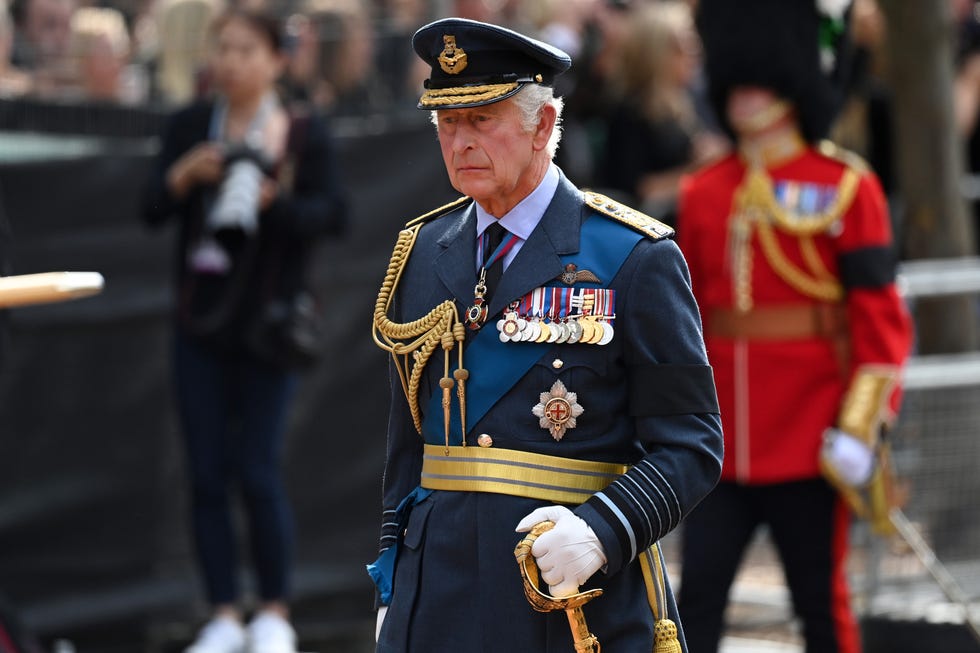

Tracy Borman, author of Crown & Sceptre agrees that Charles will try to push for progress on issues that he’s passionate about, saying that he’ll “be more forthright than the late Queen”, but still sticking “very much within the confines of the constitution”. She explains: “A monarch doesn't have a great deal of political power, and I don't think he's going to try and contest that. But I think he will take what opportunities he can to express opinions on issues where he can make a difference.”
Over his years as Prince of Wales, Charles has also made his opinions known on everything from wildlife conservation to homoeopathy (apparently the alternative practice is used on the cows and sheep at Clarence House). He has often been criticised for “meddling”, especially in the case of the “black spider memos”. Named after his “spidery” handwriting, these were letters from Charles to government ministers, covering topics as varied as farming, architecture and education. More recently, it was reported that he criticised the government’s policy on sending refugees to Rwanda, describing it as “appalling”.
His outspoken nature isn’t the only reason Charles has attracted attention as Prince of Wales. It’s clear that his personality is quite different from the Queen’s. We’ve seen that this week through his outbursts about leaky pens and ink pots, captured on camera, prompting the King to say: “I can’t bear this bloody thing! What they do, every stinking time!”.
Of course, some might say that his apparent vendetta against pen pots is a reflection of the pressure he’s under during a time of grieving, but it is hard to imagine Queen Elizabeth exposing the same frustrations in public. It’s not the first time Charles has been caught losing his cool on camera. Back in 2005, when he was being interviewed by BBC’s royal correspondent Nicholas Witchell, the mic picked up him saying to his sons: “Bloody people. I can’t bear that man. He’s so awful. He really is.”


But at the age of 73, is it possible for Charles to tone down his personality? “I think if there was going to be any reining in it would be in these very first encounters between the King and his public,” says Borman. “That accession council was televised for the first time, so we saw that and we saw the incident with the pen. So, in a sense, if he can't do it at this stage, I think probably he won't be toning down his personality completely during his reign. We may see it emerge more than we did the Queen, who famously never complained, never explained.” Borman predicts that Charles will be more “discreet and reserved” than he was as Prince of Wales, but not as “discreet and reserved as the late Queen”.
Not everyone agrees. Royal expert Richard Fitzwilliams says it’s crucial for Charles to change his behaviour now that he is King. “One of the things for Charles that will pull him both ways is that he's got this activist side and it's a lifetime habit that’s difficult to change completely,” he says. According to Fitzwilliams, Charles’ speech was “significant” in terms of the King promising to adapt how he approaches things. “He must,” says Fitzwilliams. “He's had one job and he's done it brilliantly, but it's a totally different job now.”


Aside from temperament, there has been much speculation about what would happen to the monarchy when the Queen died. “We know he's wanted a slimmed down royal family, just the core members of it, even before the Queen's death,” Gristwood says. “The big balcony appearances now are down to the immediate line of succession, which usefully removed Prince Andrew.” This is likely to continue now that Charles is King, explains Dorman. “I think we are likely to see the increasing prominence of the new Prince and Princess of Wales because they are incredibly popular figures and already very active members of the royal family. I think we will see the new King putting them more in the foreground.”
Whatever his plans are as monarch, it’s clear that King Charles’ accession to the throne is very different from his mother’s. Fitzwilliams says Charles’ age may work against him when it comes to getting young people interested in the monarchy. “It is a problem if you're 73,” he explains. “The Queen at 25 was very much [Pietro] Annigoni’s portrait of her with robes, silver background – the future seemed somehow golden, another Elizabethan age that Churchill had and all the rest of it. This is very, very different. It's a time of national crisis, it's post-Brexit, cost of living crisis, problems with the EU, there's a war in Ukraine – there are huge difficulties.” Fitzwilliams points to a line from Alan Bennett’s play “The Madness of George III”, which says: “To be a Prince of Wales is not a position. It is a predicament.” Now, Charles’ predicament is how to be King in a nation that is completely changed from the one his mother inherited.


