We earn a commission for products purchased through some links in this article.
What are best condoms? Our sex writers weigh in
Materials, size, spermicide: here’s EYNTK

We’ve come a long way when it comes to sexual health. Gone are the days of having only two condom brands to choose from, with products locked in plastic boxes that you have to sheepishly bring up to the counter. Safe sex is now, well, sexy — and there are a ton of cool brands to choose from.
A quick return to sex ed 101: condoms are one of the only contraceptive methods that will protect you against sexually transmitted infections (STIs). While hormonal contraception can prevent pregnancy, only barrier methods — like the male condoms reviewed here — will limit the sharing of conditions like chlamydia, gonorrhoea, and HPV.
They’re also great for protecting your delicate microbiome from bacterial imbalances. Both thrush and bacterial vaginosis (BV) can be caused by the mixing of your juices with someone else’s.
But despite the significant benefits of using a condom during sex, and the fact that this has been hammered home during sex ed for decades, their use is on the downward spiral — particularly among teenagers, prompting the World Health Organisation to issue a warning that their sexual health was at risk as a result.
Luckily, there is plenty of choice when it comes to adult sleeping bags, and you can now buy condoms in pretty much every shop you go into — so there’s really no excuse for not wrapping up.
But to save you time trawling or scrolling, our sex writers have rounded up the best on the market for 2025 (including some banging bargains in Amazon’s spring sale) — and share some top tips for safe, satisfying sex.
The best condoms to shop now
- 1
- 2
- 3
- 4

- 5


What to consider when choosing a condom
Telling you to work out your personal preferences may seem like obvious advice, but every single one of us is different, and will desire different sizes, scents, and/or textures.
However, one expert argues the most important thing to consider is your pH balance. Mo Carrier, CEO and Founder of MyBliss, says: “There are so many varieties of male condom — latex, non-latex, thick, ultra-thin, textured, flavoured, condoms with a water-based lubricant, condoms with a silicone oil lubricant, and even ones that glow in the dark. What I believe to be the most important is finding a product that is safe for vulvas and vaginas. Condoms are an internal use product, and even though a flavoured or scented condom sounds exciting, those are best used solely for oral sex.”
Carrier continues: “Unnecessary chemicals like gluten, casein, glycerin, parabens, spermicide, or fragrances can lead to vaginal irritation and even infections like thrush and UTIs.”
She also shared her top tips for bringing up the subject with your partner, adding: “Many people feel embarrassed asking their partner to use a condom, especially if they’re on hormonal birth control. I suggest normalising condoms with your partner; have them permanently next to your bed or, if you’re staying at theirs, put your lube and condoms on his dresser before you get down to it.”
Conversations or small actions like these are especially important right now, as recent stats from Durex reveal that condom use in the UK is at an all-time low, with just 15% of people buying condoms in 2024, almost half the global average (28%). And, it seems, shame and awkwardness (and poor sex education) are largely to blame, with the biggest barriers to condom usage being perceived lack of sensation (16%), lack of spontaneity (14%), and the thought of them being a mood killer (13%). This tracks with a nationwide rise in STIs, with gonorrhoea and syphilis diagnoses in England recently hitting record levels.
All of this is to say: condoms are an essential part of sex and shouldn’t be a source of embarrassment, nor a ‘mood-killer’. The more we talk about them, use them, and thus normalise them, the better!
The main types of condoms
First, let’s all agree that sexual shame and judgement while shopping for condoms is no longer a thing. Rather, we should be celebrating people taking control of their playtime and, ultimately, pleasure. Now that’s out of the way, let’s run through your options.
Latex
The standard type, made from the most common type of rubber. These tend to be slightly cheaper, widely available in stores like Boots or Superdrug, and are best paired with water-based lubricants to avoid tears.
Non-latex
If you weren’t aware, latex allergies are fairly common, limiting your access to some rubbers. Two alternative materials often used are polyurethane and polyisoprene.
Textured
With ribs, dips, and dots aplenty, textured condoms are all about maximising vaginal/anal stimulation. If you find additions on the outside of your condom, that’s for the receiver’s benefit. On the inside, that’s for the wearer.
Flavoured
PSA: STIs like gonorrhoea, genital herpes, and HPV can be caught and shared via oral sex. Therefore, it is recommended you wrap up before pleasuring your partner. Your options include fresh mint, sweet strawberry, and indulgent chocolate.
Delay Condoms
Tailored to men and people with penises who may be struggling with premature ejaculation (PE), delay condoms are often lined with supercharged lubricant — popular choices include 5% benzocaine or 1% lidocaine — designed to numb the tip to reduce overstimulation.
Also falling into this category are extended pleasure condoms — slightly thicker sleeves that limit sensation — and mutual pleasure condoms that include the same desensitising lube, but also come with ribs and dots for the receiver’s satisfaction.
The 13 best condoms for 2025
Now you know all of the many varieties of condoms and what they’re used for, let’s get into the best condoms on the market right now.
Pros
- They met the ultimate test: no tears or splits, even when used with acrylic claws
- Scentless — and that lube isn’t sticky
- The 4-week subscription means you’ll always be prepared

Cons
- Not for sessions that involve silicone sex toys

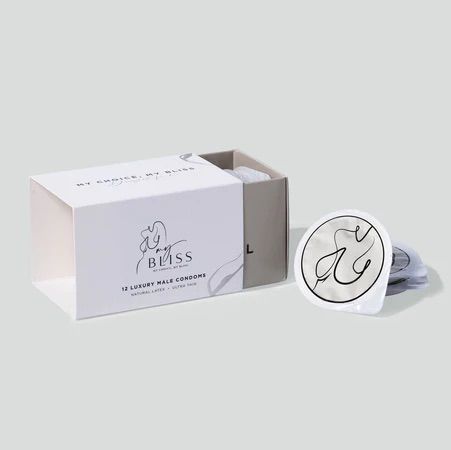
These all-natural wrappers have been rumoured to be a personal favourite of one of our sex writers — and that’s not just because they were designed by a woman for those with variable pH vaginas.
Yep, these are 100% vegan and lined with organic, silicone-lube. Plus, gone are the days of struggling to tear open that (loud) foil wrapper; MyBliss opted for capsules that open with minimal effort.
At 0.045mm thick, they’re ultra-thin, so no need to compromise on pleasure — and 100% biodegradable, for the eco-warriors out there.
| Type | Vegan latex |
|---|---|
| No. per pack | 12 |
Pros
- Ultra-thin; we’re talking 0.065mm
- Electronically tested to meet International Safety and Reliability standards
Cons
- You’ll need to stick to water-based lube to avoid rips and tears
The hunt for the right condom is a bit like trying to find The One — it takes some trial and error, and requires serious patience. But to save you the effort, we’ve already tracked down a decent all-rounder.
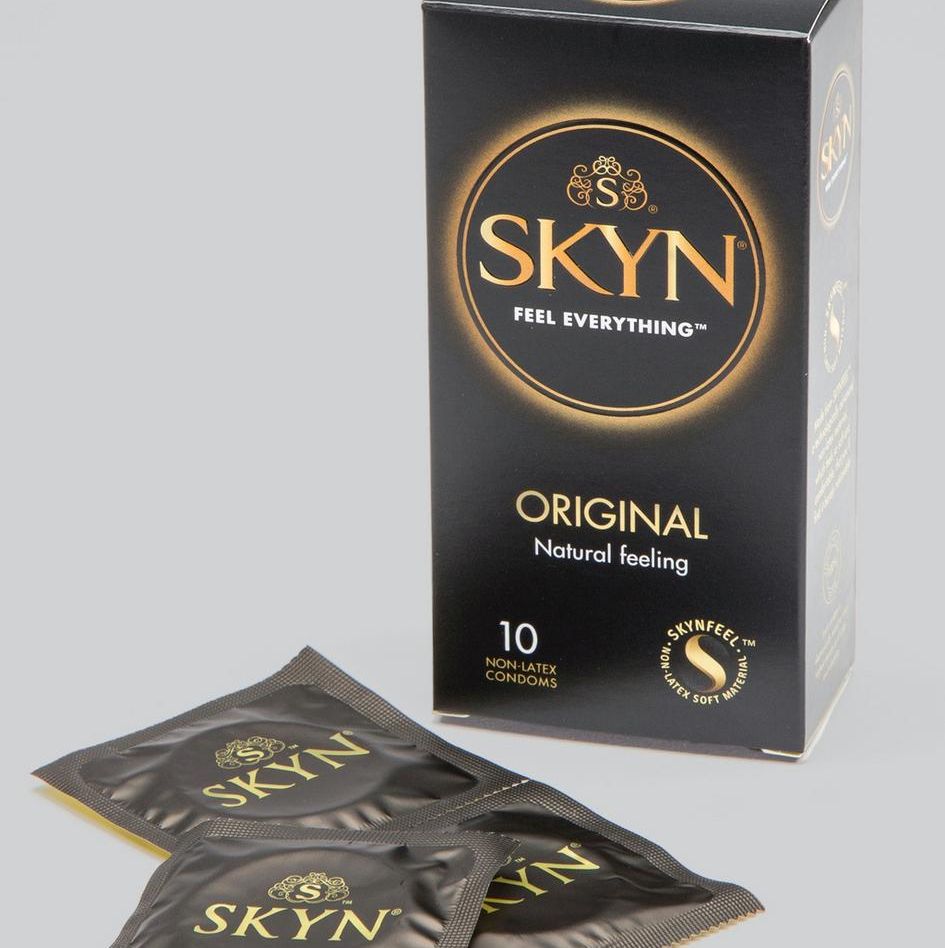
These non-latex sleeves from SKYN have been (lovingly) crafted from ultra-thin polyisoprene, meaning they’re super-soft to the touch and suitable for allergy sufferers.
And, like most on the market, these stretch to accommodate dongs up to seven inches long. Just make sure to leave a little space at the tip to avoid a split.
| Type | Non-latex |
|---|---|
| No. per pack | 10 |

Pros
- Seriously secure fit
- Neutralised scent, meaning plastic is off the menu
Cons
- A tad more expensive
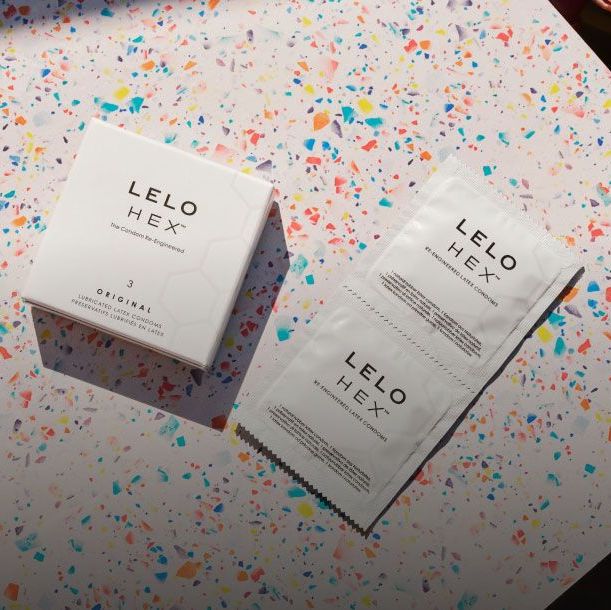
We all throw around the phrases ‘cutting edge’ and ‘revolutionary’, but Swedish sexual wellness purveyor LELO really has brought out something brand spanking new.
While (super) smooth on the outside, the inside of a HEX condom has been lined with 350 miniature hexagons. Yep, maths just got sexy. This structure not only boosts the sensations, but also allows for the transfer of body heat between you and your partner — oh, and holds it in place like a pro.
Ultra-thin, you’ll feel every pulse and ripple while riding with one of these. Just pair with your favourite water-based lube for a slick ride to the finish line.
| Type | Latex |
|---|---|
| No. per pack | Choose between packs of 3, 12, and 36 |
Pros
- Lucky dip
- Great value for money
Cons
- Might not be so good for first timers
Let’s face it, condoms are a necessity, more than they are the most exciting part of sex. So if you prefer to take a lucky dip approach to your condom selection, we wouldn’t blame you.
Thankfully, Durex has got you covered (get it?) for all eventualities with its ‘Surprise Me’ variety pack set with four different types of condom — meaning you’ll never know whether you’re in for a night of ribbed and dotted stimulation or ultra smooth sensuality.
| Type | Variety pack of latex condoms |
|---|---|
| No. per pack | 40 |
Pros
- Budget-friendly, this pack works out to just £1.08 a wrapper
- Super durable
Cons
- Smell a tad plastic-y
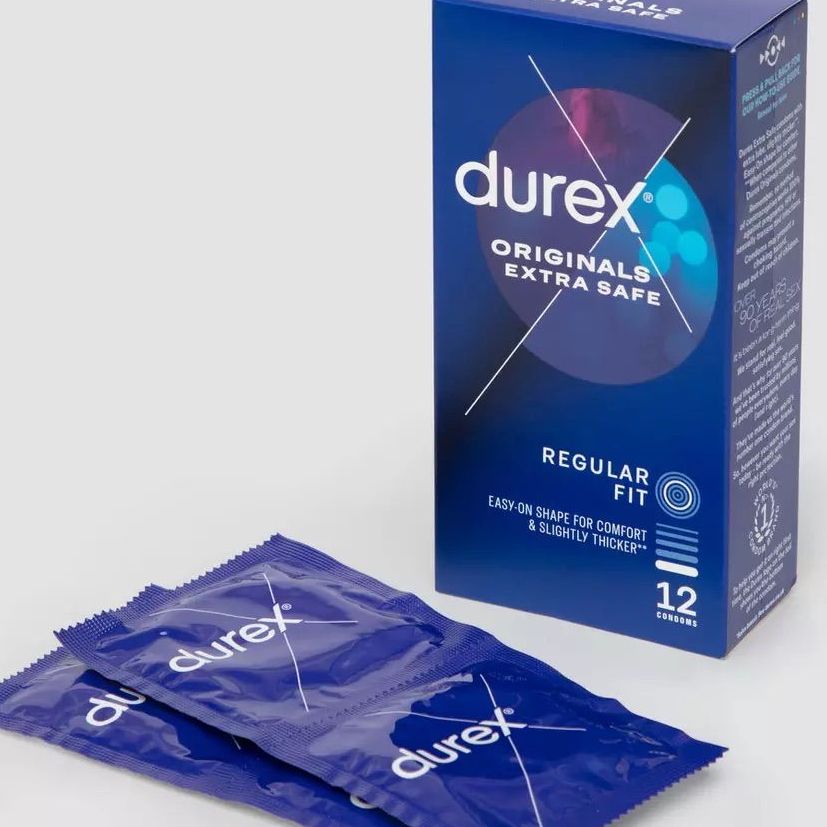
If you’re all about sex with a side of safety, these thicker, stronger rubbers have been designed to reassure even the most anxious of shaggers.
Yep, Durex has guaranteed these have been 100% electronically tested for your peace of mind. But, because your pleasure is the ultimate priority, the brand has also lined the inside with extra lube. Stun.
We will admit that they slightly dull the sensations, but not so much that you can’t achieve the desired result. Trust us.
| Type | Extra safe |
|---|---|
| No. per pack | 12 |
Pros
- True to size, just pick the right one (Close, Regular, Wide)
- One review raved: “They make the whole experience feel much more intimate. As the name implies, it feels as if you’re barely wearing anything”
- Great for anal as silicone lube lasts longer (just don't use with your sex toys!)
Cons
- Not especially heavy-duty
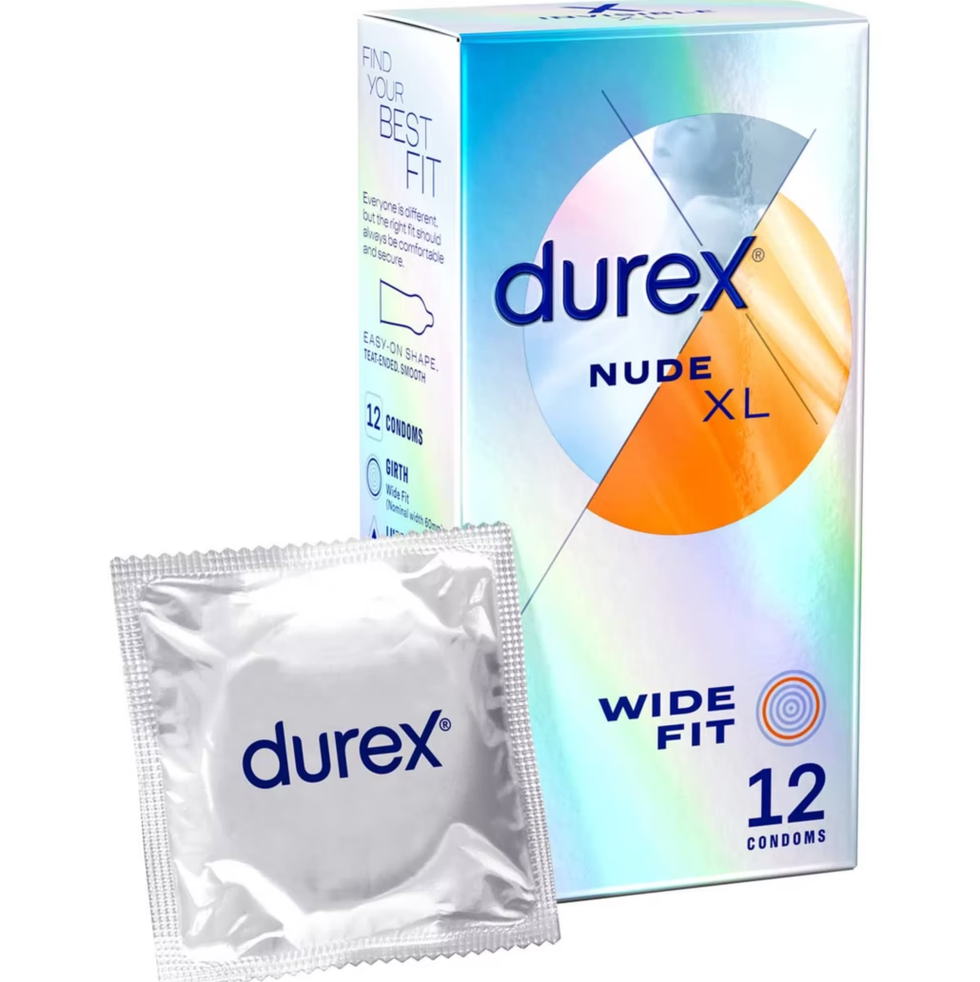
Unfortunately, most of us have heard the excuse that condoms ‘don’t fit’. To be clear, that’s not a thing — they’re just wearing the wrong-sized rubber.
Durex’s Nude range come in Close, Regular, and Wide Fit, meaning your partner with a penis is almost guaranteed to find one that hugs just right.
In terms of the condom itself, this is the brand’s thinnest offering yet, and has been lined with silicone lube for added glide. You’ll also be pleased to know they’ve tackled that plastic smell — in fact, these are barely noticeable...
| Type | Variety pack |
|---|---|
| No. per pack | 12 |
Smile Makers Come Connected Ultra-Thin Vegan Condoms
Pros
- 0.05mm thick, meaning you’ll feel every thrust
- 100% vegan — these don’t use casein or any other animal product
Cons
- One size fits most, but not all
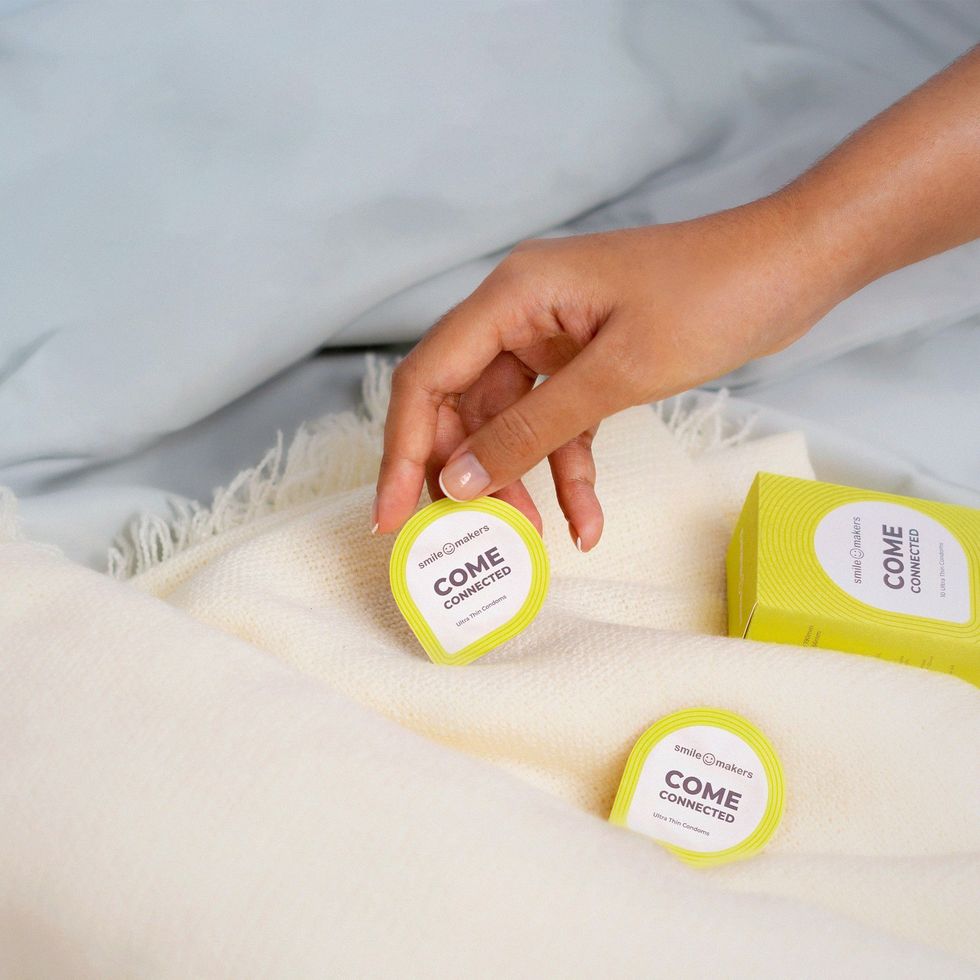
We’re with you; the fiddly foil packaging of most condoms is enough to make you drop the extra layer entirely. Luckily, Smile Makers went rogue, opting for cutesy buttercup covers instead.
But the Singaporean-based sexual wellness brand also got rid of all unnecessary fragrances, colours, and flavours, offering a 100% natural option that shouldn’t bring on another bout of BV.
| Type | Vegan latex |
|---|---|
| No. per pack | 10 |
Pros
- One for the latex avoiders, these are crafted from the brand’s non-latex SKYNFEEL material
- The Elite is a top contender for barely-there sensation
Cons
- Just one of each
Variety is the spice of life and boy, do we like options. Unsurprisingly, that rule also applies in the bedroom. This pack of five from SKYN includes:
- 1 × Intense Feel wave textured condom
- 1 × Cocktail Club passion daiquiri-flavoured condom
- 1 × Elite premium thin condom
- 1 × Hot lubricated with ‘warming gel’
- 1 × Cool lubricated with ‘cooling gel’
Essentially, keep your partner on his/her/their toes — or close your eyes and dive into a game of rubber roulette.
| Type | Variety pack |
|---|---|
| No. per pack | 5 |
Pros
- You’ll save yourself a trip to the shops
- A classic
Cons
- Make sure you like this variety before buying...
Okay shaggers, this one is for you. If the idea of running out of latex legends makes you sick with dread, or you and your flatmates consider condoms a shared essential, save yourself a run to Boots with this 144 pack of Durex’s bedside staple.
They’re regular fit, so unless your lover is particularly well-endowed they should work for most sexy scenarios.
| Type | Regular fit Durex condoms |
|---|---|
| No. per pack | 144! |
Pros
- Ribs and dips for added stimulation down there
- One review raved: “These are the best condoms I’ve ever used, they genuinely add to the pleasure for both parties”
Cons
- A slightly thicker option (0..07mm), but not by much
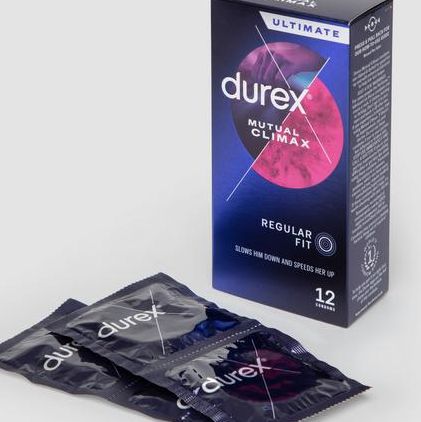
The solo orgasm is great and a fabulous way to end any sweaty sesh. But a mutual O that has you both shaking from the core? Now that’s a party.
Another from the current condom market leaders Durex, these protectors come with a textured outer (ribs and dips aplenty), as well as a lube infused with benzocaine to help delay your penis-having partner’s ejaculation by gently numbing their tip — so you can keep go-O-ing.
FYI, fans say these are a little snug on wider guys.
| Type | Delay |
|---|---|
| No. per pack | 12 |
Pros
- Available in a standard and large size
- You can subscribe for biweekly, monthly, or 3-monthly deliveries
Cons
- We don’t love that Simpson-yellow tinge
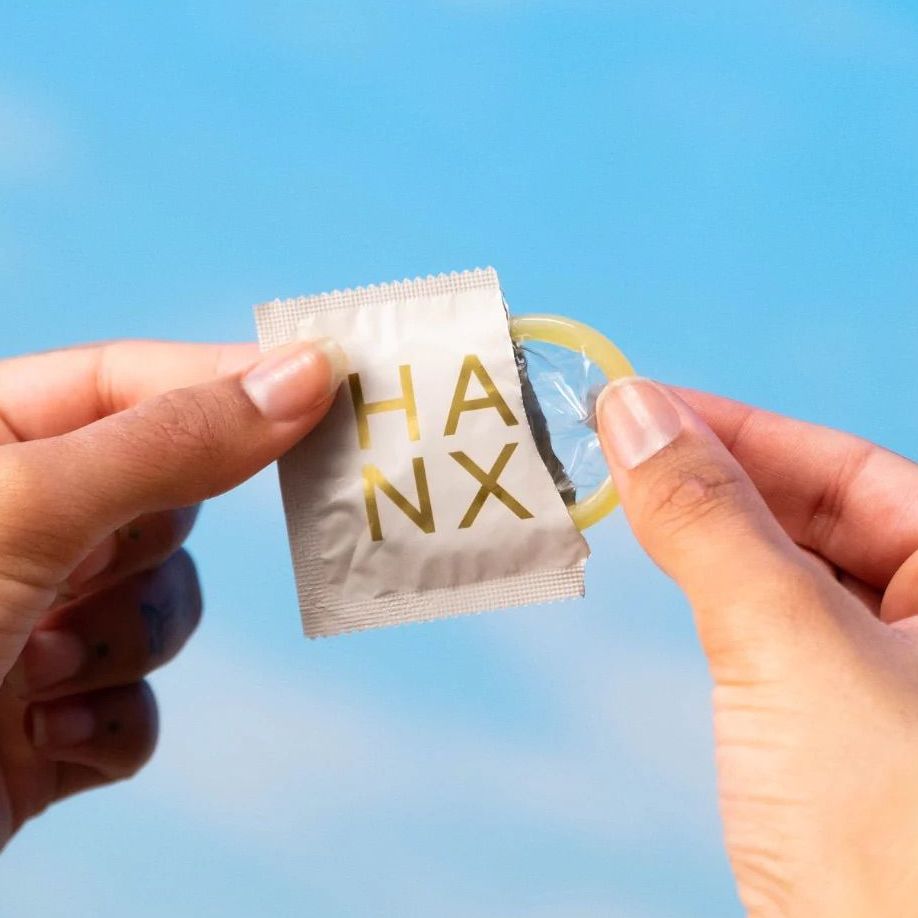
Yep, another 100% natural, vegan option that has been gynae-approved. Hanx’s ultra-thin make up ensures you get protection and pleasure, while that clear design also ensures you can fully examine your chosen tool.
Available in a standard or large size and in packs of three, 10, 30, or 50, with a discount the higher you go. Hurrah!
| Type | Vegan latex |
|---|---|
| No. per pack | 3, 10, 30, or 50 |

Pros
- Kind to the planet
- Female-owned company
Cons
- Only six in a box
- Some users say they would like more lube
You’ve likely heard of Flo’s organic period products, but the brand doesn’t restrict itself to products that go inside your vagina at *that* time of the month.
Extending its planet and body-friendly ethos to condoms, the Flo has created ultra-thin boner covers from vegan and cruelty free rubber, which comes from a cooperative of small agroforesters to support biodiversity. Talk about a sustainable shag!
To top it all off (pun intended, sorry), these penis pouches are ultra-thin, so you can feel every movement.
| Type | Ultra-thin vegan condoms |
|---|---|
| No. per pack | 6 |
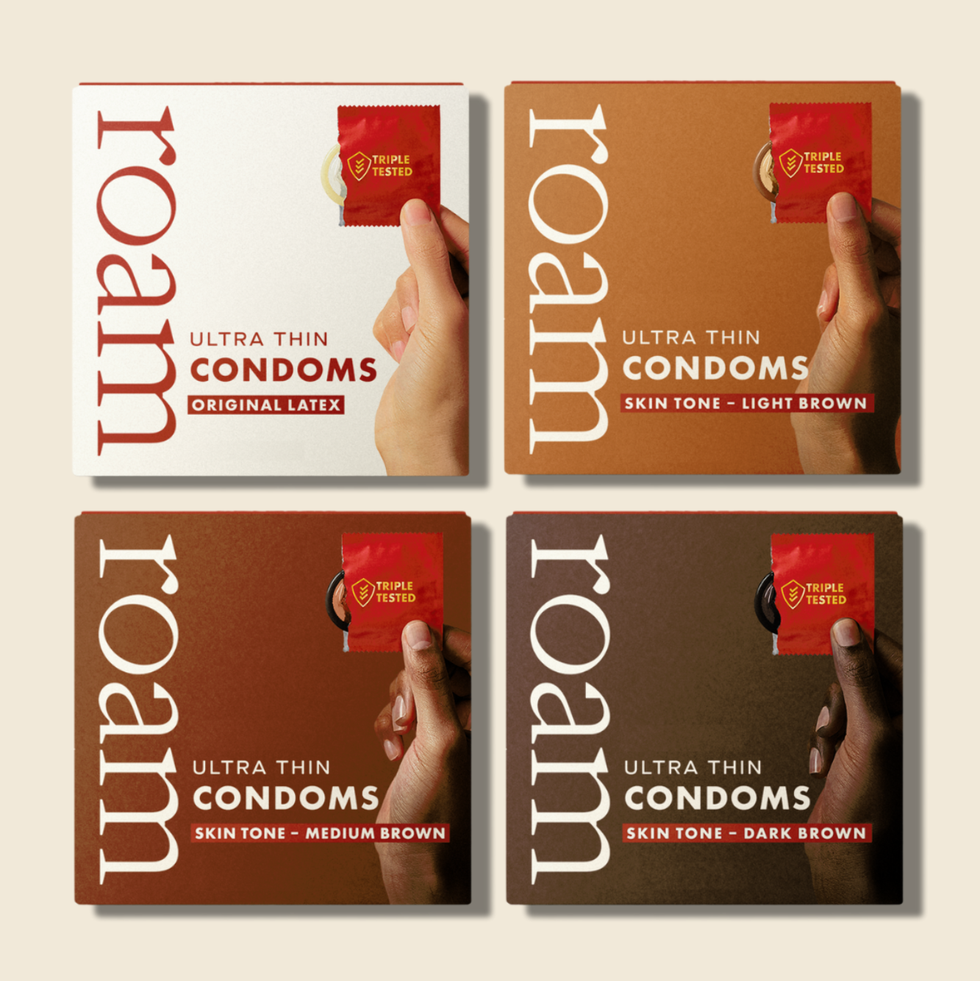
Pros
- Choose your fit: slim, regular, or wide
- Subscribe for a delivery to your door every 30 days — and £3 off every pack
- Triple tested for durability
Cons
- Just four shades — original latex, light brown, medium brown, dark brown
Roam’s jumped on the ultra-thin, vegan hype, offering another condom that also skips the unnecessary chemicals. But what really sets the brand’s rubbers apart is the fact they come in four skin-tone matching hues. Because, really, when does one size (or shade) really fit all?
Even better news: these covers come with 40% less packaging than traditional condoms. Sustainable and sexy!
Pair with the brand’s bestselling Adaptogenic Lubricant — a fancy way of saying it’s infused with CBD for increased comfort — and cue the care-free action.
| Type | Ultra-thin, coloured |
|---|---|
| No. per pack | 12, 24, 36 |

FAQs about condoms
We appreciate that buying a pack of condoms is, in many ways, the easiest part of the experience. To answer any outstanding questions you have about how condoms work and how to use them, we asked the experts: Evie Plumb, sex educator and founder of sex positive platform Cliterally The Best, and Susan Allen Augustin, co-founder and chief brand officer of Here We Flo.
How effective are condoms?
Since you first lived through that first squirm-inducing sex ed class, you will have likely been aware of the fact that condoms are *extremely* effective at preventing pregnancy. But in case the facts slipped your mind, here’s a refresher: “When used perfectly, condoms are 98% effective at preventing pregnancy and highly effective against STIs,” says Plumb. “In real-world use, they are 85% effective — this takes into account incorrect use or issues like breakage or slipping.”
How do you put a condom on?
To stop any accidental rips, let’s do a quick recap of how to put a condom on effectively. “First, check the expiry date and make sure the packaging is intact,” Plumb explains. “Then, pinch the tip to leave space for semen, which also removes air to prevent bursting and makes it more comfortable. Roll the condom down over the erect penis, ensuring it’s the right way round (the rolled edge should be on the outside, like a little sombrero).”
If you’re using lube with a condom (which, here at Cosmo, we would heavily recommend!), it’s best to avoid oil-based lubricants, Plumb adds, as it can break down the condom.
“After sex, hold the base of the condom while removing it carefully and dispose of it properly,” she adds. Simple!
Can you flush condoms?
We see your thinking here — who wants to come across a used condom in the bin, whether it’s yours or not? We hate to burst your (lubed latex) bubble here, but: “NEVER flush a condom,” Allen Augustin advises.
Not only is it bad for your pipes, Plumb explains, but it’s bad for the planet (and you wouldn’t want to have a non-eco-friendly lay!).
Instead: “The best way to dispose of any condom is to tie it in a knot and pop it in the bin — feel free to wrap it in some tissue paper if you want,” Allen Augustin recommends.
Do condoms prevent against STDs?
Before we answer your (very valid) question, let’s get into something else real quick (cue Hermione Granger voice): it’s sexually transmitted infections (STIs), not sexually transmitted diseases (STDs). Yup, that’s what the kids are calling chlamydia, gonorrhoea, syphilis, and all the rest of them these days — because ‘infections’ is less stigmatising than ‘diseases’.
Now we’ve got that out of the way, on to the good news. “Condoms are your go-to for reducing the risk of STIs,” Plumb explains. “They are the only contraceptive that protects against STIs and pregnancy.” So, no excuses!
Emilie Lavinia is Cosmopolitan UK's Former Sex and Relationships Editor. An accredited Sex Educator and Sexologist, Emilie explores identity, equity and innovations in sex, love, wellness and identity with her writing, broadcasting, coaching and commercial work. Emilie has written for the likes of The Guardian, Stylist, Grazia, Woman & Home, Red and Women's Health. She has appeared in documentaries exploring sex and wellbeing by ITV, Channel 5 and the BBC. Emilie has represented the UK as a United Nations Delegate and is a passionate advocate for women's health, LGBTQ+ rights and sex education and public health policy. She is a representative for Young Women's Trust, United Nations Women and The Porn Conversation and works with a number of charities. She loves big books, Bell Hooks, her infrared sauna and her Pomeranian, Ivy Valentine. She lives in London and can give you a rating out of 10 for every sex toy ever invented. Sign up to Emilie's Substack newsletter The Cuff for spice and advice or follow her on LinkedIn, X, Instagram, or her website: emilielavinia.com
Honey is the Senior Sex and Relationships E-commerce Writer for Cosmopolitan, Women’s Health and Men’s Health. She covers shopping guides and reviews of the best sex toys; deals events — including Amazon Prime Day and Black Friday; and sex, dating, and LGBTQ+ trends.
Her journalism career started in 2020 when she started Sextras, a podcast and digital magazine about sex and relationships. Find Sextras on Spotify or Substack, where she writes and chats about everything from positive masculinity and how to practise sex magic, to why the latest kink or porn category is blowing up.
She has an MA in Magazine Journalism from City, University of London, and previously reported for HR magazine. Her features also appear in Glamour, Refinery29, The Independent, and more.
When she's not asking everyone she meets invasive questions about their sex and dating lives, you'll find Honey singing around her flat, teaching herself a new craft, or working her way through a new '90s/'00s box set with her flatmate.

Proof that every vagina (yours included) is normal

The rise in young men who can’t get it up

How women with genital herpes navigate casual sex

7 women whose vulvas were changed by Ozempic