I’m 21 and I’m never going to have sex again, is the thought that dug its tenterhooks into my brain the second the doctor confirmed the diagnosis I’d been dreading for the previous two weeks: I had genital herpes. It was my final year of university, and the pandemic had already firmly destroyed any hopes I had of rekindling a sex life five months after my break-up. But now there was this to reckon with, too.
At this point, I hadn’t met anyone who admitted to having herpes, so there wasn’t anyone to ask about how the heck you’re meant to have a normal sex life with this new burden on your shoulders. My student GP wasn’t much help, either. When I asked whether I could ever have sex again, she simply told me to use a condom — which, considering I had sex with both men and women, was barely even 50% helpful.
I thought if I could only find someone else with herpes, then we could commiserate and have sex, because surely no one else was going to want to have sex with us in this condition? (I was wrong, obvs.)
What happens after a herpes diagnosis
Immediately, I added ‘HSV-2 [herpes simplex virus type two] positive’ to my dating app bios, thinking that if I told people upfront they’d be more likely to accept my new condition and I wouldn’t have to deal with what I thought was the inevitable in-person rejection that would come with telling someone I had herpes. Shockingly, that — and joining Positive Singles, a dating app for people with herpes — was not the most fruitful venture.
But a girl has needs, okay? I allowed myself three weeks of moping — which I spent researching everything there is to know about genital herpes and casual sex. (Warning: herpes Reddit forums can be simultaneously the most educational and bleakest places ever.)
Even though there is no legal obligation to disclose you have herpes in the UK, it seemed like the general consensus among people who have herpes was that telling potential lovers is the ‘right’ thing to do. Doing that in practice, though, requires a lot of confidence and having your facts straight.
Everyone's clicking on...
After repeating ‘I have herpes’ to myself over and over at random hours of the day, and then running through how I’d respond to every possible outcome, I finally worked up the courage to say it to someone who could actually respond in their own right.
How to broach the topic with a sexual partner
Around three pints into a date with a man I’d met on Tinder, I made my usual, “So what do you want to do now?” move. When he took the bait and asked to come back to mine, I looked him firmly in the eye and told him I had herpes. Baited breath ensued. “Okay,” he shrugged. “That’s really common, right?”
Grabbing my hand to head back to mine, he asked some sincerely curious questions about how herpes is transmitted. And, thanks to my newfound near-expert knowledge, I could recite the answers perfectly.
To my surprise, what followed was some of the best sex I’d ever had with a man. Not only was he already fairly knowledgeable about herpes, and willing to know more — which was a turn-on for my anxiety-riddled brain — he also knew more than a thing or two about fingering. And it was this that became the focus of the evening, not the herpes.


Not to brag, but I had eight orgasms that night. Maybe this herpes thing isn’t too bad, I thought. Equipped with my sudden confidence, I decided to keep those good vibes going. Less than a week later, I had the chance to test whether that was a fluke or not.
After a night out with a group of my old housemates, one of them sent me a message asking if he could come over — and I said yes. As things started to heat up, and we were making out on my bed, I sort of pushed him away and blurted out: “I just need to tell you that I have herpes!” Once again, he looked at me casually, said, “I don’t really care”, and resumed what he was doing. Soon the pieces started to fall into place: this was, like most nervous spirals, something I had built narratives around in my brain.
How to deal with a negative response
While, yes, stigma around herpes is very real, it will only get to you if you let it. Most sexual partners don’t care, and if they do — their loss!
Only once in five years have I had a partner reject me after a disclosure. Disinterested conversation in a pub garden round the corner from his house (ahem) lead to us kissing on his bed. As he made moves to undress me, I shared my condition with him. Suddenly, his whole demeanour changed. Calmly and without expectation, I started to explain that lots of people have it; it’s the same type of virus as a cold sore or chicken pox but just happens to be sexually transmitted; and when had he last been tested? But I could tell this was going nowhere, so I quickly got dressed and he drove me home.
Finally, the thing I had been most afraid of had happened, but I was surprised to notice I didn’t feel as rejected as I’d expected. Since then, if I’ve had even the slightest suspicion that someone isn’t going to react well to my having herpes, I try to drop it into conversation as early on as possible. Those who aren’t curious about asking questions, or even trying to understand how you could have possibly ended up with herpes (well, by doing exactly what we’re here to do…), I’ve learnt, are often not worth my time.
While I always approach the conversation assuming that people will have little to no existing knowledge of herpes (need I say that sexual education in this country is a disgrace?), I expect at least basic empathy for my situation in return, and always try to leave space for people to ask as many questions as they like. After all, I think back to my 20-year-old self and what little knowledge I had about herpes until I was forced to — but I hope by talking about it, no one will have to deal with the initial shock and shame that I did.
How to have safe casual sex with herpes, according to sexual health experts
If you, like I did, feel like your sex life has reached its expiry date following a herpes diagnosis, fear not. While you might experience some emotional turmoil immediately after your diagnosis, you can absolutely maintain a healthy sex life with herpes, according to Marian Nicholson, director of the Herpes Virus Association. Herpes is extremely common, so it’s likely the person you’re having sex with already has the virus.
“By the age of 25, seven out of 10 people have it,” Nicholson shares. “If you're having sex with someone over 25, there’ll be a 70% chance that that person already has type one [primarily spread through oral contact] or type two [through sexual contact]. If they’ve got the same type as you, they are fully protected.”
“We don’t expect people ever to catch the virus a second time. If they have the opposite type from you they have what is called partial protection, which means if they did catch it they would not notice.”
In the likely event that you want to have sex with someone who doesn’t have herpes, or know about it, here are some tips from sexual health experts on how to have safe casual sex.


Know you have it
It might not be spoken about, but (we can’t stress this enough!) herpes is a very common disease. “You’re not unusual in having the virus,” says Nicholson. “But you are unusual in knowing you have it. Only one in three people know they have it; this means that those of us who know we have it are actually safer partners.”
Those who know they have herpes will have had to have been tested for it — you can only be tested for genital herpes while you’re having an outbreak (that is, symptoms of herpes such as sores, blisters) — and can therefore take precautions to prevent passing it on. “If we know we’ve got it, we’re highly likely to avoid sex at the right time so we won’t pass it on,” Nicholson explains.
These people will be more attuned to signs they’re about to have a herpes outbreak, or to be aware of their triggers so they can prevent having one altogether (more on this later).
To disclose or not to disclose, that is the question?
While it makes sense to disclose in a long-term relationship, there is no legal obligation in the UK to disclose you have herpes to casual sexual partners, Nicholson says.
“Since only one in three knows they have it, any suggestion that there is a legal obligation to talk about it is utterly as ridiculous as putting a speedometer in one in three cars, and only charging those drivers with speeding — while the other drivers that don’t get fitted with the speedometer can go at any speed they like.”
However, Laura Domegan, head of nursing at sexual health charity Brook, suggests having an open conversation with sexual partners before having sex with them for the first time. “The stigma surrounding herpes can make people reluctant to discuss it, but we always encourage open conversations with partners before having sex,” she says.
“Choose a calm, private moment away from the bedroom. Share the facts: herpes is common, manageable and nothing to be ashamed of. Explain when it is most contagious and what steps you take, such as avoiding sex during outbreaks and using protection, so your partner understands the precautions in place.”
Use barrier protection
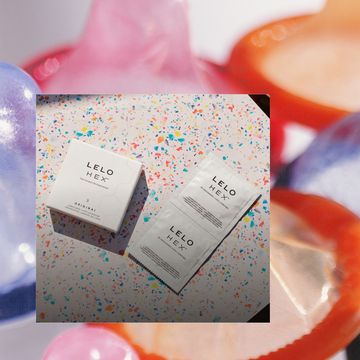
Regardless of whether you have herpes or not, you should be using barrier protection during casual sex. “When it comes to casual sex, use a condom,” says Nicholson. “We say that not so we don’t pass it on, but to stop you catching other STIs.”
According to the British Association of Sexual Health and HIV (BASSH), male condoms when used ‘consistently and correctly’ can prevent transmission of herpes from men to women by 96%, but from women to men by 65%. However, this is dependent on where someone experiences outbreaks and if the area is covered by a condom. “Herpes can still spread through skin-to-skin contact in areas not covered by a barrier,” explains Domegan.
It’s worth noting, too, that women are only one sixth as likely to transmit herpes to men as the other way round.
Women who have sex with women or those with vulvas can use dental dams to prevent transmission. “For women who have sex with women, it’s important to remember that you can get herpes through oral sex, genital-to-genital contact, or by transferring the infection on fingers,” explains Domegan. “Herpes can also spread by sharing sex toys, so it is important to wash them and cover them with a condom with each use.”
Don’t have sex when you’re having an outbreak
While the symptoms of herpes (blisters, tingling, itching, or burning, unusual discharge, or pain when you pee, according to the NHS website) might at first be unfamiliar to you, the more outbreaks you have, the more you’ll be able to understand what your triggers are and the signs you might be about to have a herpes outbreak.
“Most of us are lucky enough to feel warning signs called prodromes before an outbreak begins,” explains Nicholson. “These warning signs could be tingling, itching, stabbing, or burning. At that point, don’t have sex.”
It’s also best to avoid having oral, anal, or vaginal sex while having an outbreak and for some time after. “We also recommend waiting a week until after an outbreak has fully cleared up,” explains Domegan. This includes avoiding having oral sex while having a cold sore.
Antivirals
If you’re really worried about passing on herpes during casual sex, if you experience frequent outbreaks or don’t have prodrome symptoms, you can take antiviral medication. “For the unlucky people who don’t get prodromes, you might wish to take an antiviral pill, which works as a contraceptive pill for viruses,” Nicholson says. “While you’re taking it, the virus can’t multiply. You might choose to do that, so that you can have a sex life without bothering to think about it.”
Medicine such as aciclovir, famciclovir, and valaciclovir can all be prescribed by the NHS and sexual health clinics in the UK, and have been shown to reduce the risk of transmitting herpes by 80-90%.
These can be taken as suppression therapy, or be prescribed to reduce the severity of outbreaks on a one-off basis.
7 women with herpes on having casual sex
‘I’ve had better sex since my diagnosis’
“I’ve not only maintained a sex life since my diagnosis but have actually had better sex and better partners since. Having conversations about herpes weeds out people who aren’t meant for me really fast, so it’s really made more space for open-minded, quality people. I always disclose to people about my herpes status, whether it’s just a one night stand or we’re actually dating. I think it’s super important to look at disclosing your herpes status as a two-way conversation with someone, not just a confession, so I start the conversation by asking the other person when they’ve been tested last and what those results look like, then I share mine! People are usually super open and chill about it — most people are just uneducated and willing to learn!” — Tricia, 31
‘I’ve heard, ‘I have it too’, more than I’ve been rejected’
“When I found out, casual sex was off the table completely. I sought out relationships after my diagnosis because I didn’t think anyone would want to have casual sex with someone who has an STI, especially since herpes isn’t curable. It took me about four years to get fed up with the kinds of relationships and sex I was having.
Since then, I always tell partners I have herpes. Sometimes the conversation comes up way earlier because my job is running Something Positive for Positive People, a non-profit for people with herpes. I have a unique way of having to tell people given it’s my career and all over the internet if you search my name.
I have had negative reactions — someone from Tinder disclosed a health condition to me and I responded by saying I had tested positive for herpes. That was the last I heard from her. I’ve realised since that I tend to get one of three responses when I tell people: 1. I have it too. 2. Tell me more. 3. No thanks. So technically, the likelihood of moving forward is two out of three. I’ve heard, ‘I have it too’, more than I’ve been rejected, and I’ve had more people who don’t have herpes, or at least haven’t tested positive, decide to move forward with me sexually than rejections.” — Courtney, 31
‘I was scared no one would want to have sex with me’
“I didn’t really have to deal with disclosure until I broke up with my boyfriend a couple of months ago. I was really scared that no one would want to have sex with me and that it would be impossible for me to get laid. Anyway I’ve managed to have sex with four people in the past week, so the moral of the story is casual sex/ sex in general is still very possible and doable. Don’t give up! If you like having casual sex but you have herpes, don’t fret, just be honest with people and let your freak flag fly.” — via Reddit
‘Be kind to yourself’
“I got genital HSV1 when I was 19. The guy I was talking to gave me oral, and the next day showed up to work with a cold sore on his lip. He didn’t know that cold sores mean herpes and therefore didn’t think to tell me that he got them often as a child. Anyway today, I am very open and honest with potential partners. I’ve only ever had two outbreaks; so far only one guy has ever turned me down. Once I saw that I could still have a healthy sex life, I realised love can definitely still be out there for me. There are people out there who will not care. Be kind to yourself.” — via Reddit
‘I can’t have sex because of my outbreaks’
“I haven’t had sex in over a year because of my diagnosis. I have done sexual things like kissing or giving head, but nothing to the point where I’d need to disclose or risk spreading it to someone else. It truly sucks cause I can pull guys and have a few I know it would be fun to have sex with. But I can’t because of my outbreaks and not to mention the stigma of having genital herpes as well is awful. Being a young Black adult in college with this is awful because it is highly stigmatised in all three demographics.
I wish I found someone who either had it as well or is accepting of it and will still be with me. I know I won’t always be unlucky when it comes to outbreaks and finding someone to be able to have sex with. But right now it just sucks.” — via Reddit
‘My sex life really hasn’t changed’
“I’ve had a herpes diagnosis since September 2023. My sex life really hasn’t changed other than having to disclose now. I disclose because I wasn’t given a choice so I allow others to choose for themselves.” Ellie*, 33
‘People still want you’
“We all know it can be awful. It can be painful and depressing at times. But having herpes doesn’t mean your sex life is over. It also doesn’t mean you only have to be with other HSV+ people from now on. People still want you, but if you don’t think you’re worth anything then that’s how everyone else will think of you too.” — via Reddit
*Names have been changed
More resources
- BASSH 2024 guidelines for managing genital herpes
- Herpes Virus Association: ‘All you need to know about genital herpes’
- Herpes Virus Association confidential helpline: 0345 123 2305. Open between 8am and 6pm, Monday to Friday
Honey is the Senior Sex and Relationships E-commerce Writer for Cosmopolitan, Women’s Health and Men’s Health. She covers shopping guides and reviews of the best sex toys; deals events — including Amazon Prime Day and Black Friday; and sex, dating, and LGBTQ+ trends.
Her journalism career started in 2020 when she started Sextras, a podcast and digital magazine about sex and relationships. Find Sextras on Spotify or Substack, where she writes and chats about everything from positive masculinity and how to practise sex magic, to why the latest kink or porn category is blowing up.
She has an MA in Magazine Journalism from City, University of London, and previously reported for HR magazine. Her features also appear in Glamour, Refinery29, The Independent, and more.
When she's not asking everyone she meets invasive questions about their sex and dating lives, you'll find Honey singing around her flat, teaching herself a new craft, or working her way through a new '90s/'00s box set with her flatmate.