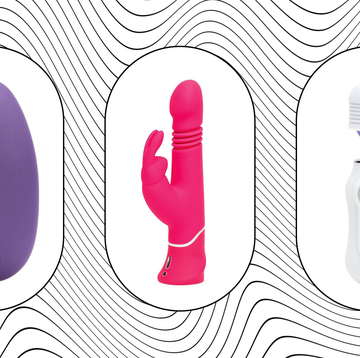
The word ‘cute’ isn’t, obviously, new. In fact, it first appeared in the English language in 1731, as a shortened version of ‘acute’, meaning shrewd or clever. In the centuries since, though, its meaning has changed, slowly becoming the adjective we know it as today; describing anything that inspires feelings of warmth, fuzziness, and nostalgia. Think: cuddly toys, that adorable dog you saw at the park on your hot girl walk, or your best friend’s baby.
But over the past few years, it’s taken on yet another meaning — and this new kind of ‘cute’ has seeped into our everyday lives more than ever before. This shift has seen the mainstreamification of things previously associated with being a kid: bright graphic clothes; bows, butterflies, and hearts splattered on everything; and loving Sanrio characters, to name a few.
An exhibition at London’s Somerset House last year described this craze as the ‘irresistible force of cuteness in contemporary culture,’ which has gone so far that anything that wouldn’t naturally be anointed with the term — like, say, phones, bags, and keys — is bedazzled with a host of ‘cute’ trinkets to help it qualify. These days, no surface is left without a rabbit-eared Sonny Angel baby, pink marshmallow Jellycat keychain, or star-shaped pimple patch — you can even buy a dedicated shelf for your trinkets. Cute!


Meanwhile, objects that would have once, quite happily, been benignly utilitarian-looking are now designed with the goal of inducing an ‘aww’ out of anyone. And — surprise! — even sex toys are joining the party.
What started with our ancestors using phallus-shaped stones, leather, and fruit as sexual enhancers has bloomed into a multi-billion pound global industry. For a long time, this phallic-shaped history dominated our present, too, with lifelike dildos, rampant rabbits, and fleshlights basically being the only things on offer.
But over the last decade, the sex toy industry has increasingly been embracing non-anatomical forms, with brands like LELO and TENGA building their brands around mysteriously-shaped orbs and probes, like the tear-drop shaped DOT clit vibrator and the Puffy penis stroker, which could easily be mistaken for a thermos flask.


Now, brands are taking their offerings one step further into candyland with sex toys shaped like gummy bears, ice cream cones, and hearts. This chute to cute was most notable with the success of the viral Rose sex toy in early 2021, which still maintains its cult status four years on, with endless iterations of the flower-shaped toy cropping up at different sex toy shops.
Since then, sex toys seem to be morphing into evermore fantastical shapes — from Satisfyer’s penguin-shaped clit sucker to Unihorn’s unicorn-shaped thumping, licking, and pulsing vibrator collection.
But why has our cute obsession infiltrated our sex toys? Cute is often antithetical to sexy, so can these toys ever really be a turn-on? Or is this a sign that our collective inability to grow up is now impacting our sex lives, too?

Unihorn Karma Lilac Clitoral Vibrator

Unihorn C-Horse Dual Stimulation Vibrator

Unihorn Cupid's Beau USB Bullet Vibrator

Unihorn Neigh Mo The Narwhal Clit Vibrator
What’s the appeal of cute sex toys?
Dr Lori Beth Bisbey, a clinical psychologist and sex and intimacy coach, says that, developmentally, it makes sense that our childish interests carry through to later life. “Sexual development starts in the womb,” she explains. “Young children will stimulate themselves in order to experience pleasure and to self-soothe. They use all sorts of objects and toys to do this, and as they grow into maturity they may still find some of the objects they used for self-pleasure useful and/or attractive.”
But there are lots of things we use in childhood that no longer serve us in our adult lives — prams, bibs, and dummies included. So what is it about unicorn and heart-shaped vibrators that’s so appealing?
Well, there are, obviously, loads of people who aren’t attracted to people with penises, and who could benefit from more *unusual* shaped sex toys. “There have always been toys with animal features for a subset of people whose kink is related to animals, like furries, or people who see themselves as ponies or pups,” says Bisbey.
“There are lots of lesbians and queer folk who don’t like penises, so having toys shaped like something else — or in odd colours and patterns — means they don’t get triggered.”
In fact, research into what drives sex toy popularity shows that people are dissatisfied with penis-shaped things more broadly (about time!). Just as more and more young women are embracing a ‘celibate’ or ‘boy sober’ lifestyle, it seems they don’t even want their sex toys to resemble male genitals.
Dr Sarah Johns, an evolutionary anthropologist at Kent and Medway Medical School and contributor to the aforementioned research, thinks this could be one reason why cute sex toys are becoming more popular. “People are not seeking penis substitutes, even when they purchase insertable toys,” Johns says. “The less-human-like designs allow women to enjoy penetrative masturbatory experiences but not have a disembodied phallus (which could be clearly sexual and ‘male’) in their bedside drawer.”

Aside from the obvious personal and political reasons women would want distance from anything man-related (don’t make us talk about the manosphere again, we beg), steering away from phallic-shaped toys actually makes a lot of sense when it comes to their pleasure. Around 82% of women can’t orgasm from penetrative sex alone — a fact that particularly affects straight women, who are less likely to orgasm during partnered sex than when flying solo, and 21% less likely to orgasm during sex than lesbian women.
“Female orgasms usually require clitoral stimulation (although clearly some enjoy the sensations of vaginal fullness), so it is unsurprising that designers take this into account and develop toys with a focus on clitoral stimulation over phallic design,” Johns continues. “The designs are likely to be more varied and incorporate features that provide a range of clitoris-friendly sensations (vibrating, flicking, sucking).”
But men are also jumping on the trend of less-anatomical toys, the research shows. “Male partners might also prefer a less realistic toy in their sexual play, as men often feel anxiety around — and dissatisfaction with — their penis, so may feel uncomfortable with a toy that looks very life-like,” Johns explains.
Cute toy, or marketing ploy?
Okay, but hear us out — it’s one thing to want sex toys that don’t look like body parts (we get that a masturbator modelled on pornstar Sasha Grey’s mouth isn’t for everyone) — but choosing something that could be mistaken for a kids’ toy is another.
TikTok, of course, has picked up on the hype for literal toy-shaped sex tech, with ‘Don’t Google’-style videos about the infinity sex toy (essentially a bear plushie pillow with an electric dildo on one side) garnering attention late last year. Under one video, which has three million views, one user commented, “The fact that it’s shaped like an animal is what truly disturbs me,” while another asked: “Who has the desire to hump stuffed animals?”
A quick survey of the Cosmo office about unicorn-shaped vibrators elicited similar responses, including: ‘Why are they sexualising these unicorns?’ and, ‘I don’t want a little animal’s tongue on me.’
Could this trend even signal a darker cultural shift? “These childish sex toys, along with other juvenile products designed specifically for adults — like ‘plushies’, Play-Doh for grown-ups, and adult Halloween costumes — nicely illustrate the infantilised state of contemporary society,” says Keith John Hayward, professor of criminology at Copenhagen University and author of Infantilised: How Our Culture Killed Adulthood.
While you might enjoy spending what little disposable income you have on reminders of when you had no agency over your life (no shame, girl, same!) — and not because adulthood had been robbed from you by a pandemic, stagnant wages, and a housing crisis, but instead because you were an actual child — Hayward thinks this is all a concerning marketing ploy to keep everyone blissfully unaware for longer.
“Infantilisation takes many forms, but in the case of novelty sex toys what’s happening is something called ‘toyification’; a deliberate marketing strategy in which nostalgia and other postmodern techniques are used to juvenilise products and ensure that nothing in society is taken seriously,” he explains.
The problem is that it’s not just adults who are going to be impacted by this shift, says Hayward. “By marketing adult sex toys in this cartoonish, anti-adult way, companies, whether knowingly or not, are at the same time making their products more accessible and appealing to young teenagers and even children. So, while on the face of it, these infantile sex toys might seem like harmless, fun items, in reality they symbolise something much more worrying: the simultaneous depreciation of mature adulthood and the premature sexualisation of children.”
A discreet way to masturbate
Okay, we admit this is all a bit of a buzz kill. And look, we’re not saying that you need to be fretting over what your seal-shaped vibrator says about your maturity level next time you reach for it — no one should use anatomical toys if they’re not into them.
Besides, all of this could just be part of a more innocuous marketing ploy: catering to a growing need for discretion. Case in point: for the amount of TikTok comments questioning exactly why the infinity sex toy is animal-shaped, there are just as many unaware of its actual purpose, with many assuming it’s simply a travel pillow.
According to Johns, the fact that ‘cute’ sex toys like this can easily be mistaken for a non-sexual inanimate object could be a major part of their appeal. “These toys could be important for people in shared living spaces who may want to be discreet,” she explains.
Indeed, more young people than ever are living at home late into their 20s, so the desire for discreet sex toys that can’t be heard or easily noticed by family members or flatmates is understandable. Add to that any underlying sense of shame around masturbating, and tech that could pass for just another trinket makes buying and using vibrators significantly more accessible.
Purely in the name of journalistic research, I carried around Unihorn’s mini vibrator on my (admittedly already heavily trinketed) keys for a month to see if anyone would ask what it was. Spoiler alert: they didn’t.
Reviews of Unihorn toys confirm that their covert appearance is a major part of the appeal (oh, as well as the sensations, of course). “Super cute packaging and it doesn’t look like an adult toy so I’m not scared for anyone to find it,” one person wrote in a review, while another said that “typical shaped vibrators” were getting “boring”.


Probs a fair assessment, as if you’ve already bought into the trinkets craze, buying (literally) into cute sex toys seems like only one tiny step further. “The kawaii aesthetic is popular at the moment, so current designs could just be reflecting broader consumer trends,” adds Johns.
What’s more, adds Annabelle Knight, sex and relationships expert at Lovehoney, these kinds of cute sex toys could actually end up being a great antidote to shame around solo sex. “While cute designs could easily sit on your desk as imposters, they sometimes also serve as conversation starters and create a sense of inclusivity, showing that pleasure doesn’t have to be intense or intimidating; it can be playful and fun,” she says.
And ultimately, that is what pleasure should be: enjoyable. But it might be worth thinking about whether disguising your masturbation mate as a unicorn is really encouraging you to open up about sex, or if it’s holding you back from reaching your full (X-rated) adult potential.
The best cute sex toys to shop in 2025

Pros
- Sex toy or bath toy? No one will know
- Suction and tongue stimulation
- Comes on a magnetic charging 'puddle'

Cons
- You're spending nearly £100 on a rubber duck, with frills
- Only 7 vibration patterns


Pros
- Berry cute...(sorry, we had to!)
- For internal and external stimulation
Cons
- She's small, so fiddly to hold

Pros
- Easy to clean
- Vibrates and sucks
Cons
- You'll never be able to look at a panda the same again...

Pros
- Take her in the bath!
- 16 vibrating patterns
Cons
- Battery only lasts for 45 mins

Pros
- It's a dildo but it looks like a lolly pop!
- Texture for added stimulation
Cons
- Unfortunately it's inedible

Pros
- 11 suction and 12 vibration patterns
- She's waterproof (duh)
Cons
- Only one 'mouth' size
Honey is the Senior Sex and Relationships E-commerce Writer for Cosmopolitan, Women’s Health and Men’s Health. She covers shopping guides and reviews of the best sex toys; deals events — including Amazon Prime Day and Black Friday; and sex, dating, and LGBTQ+ trends.
Her journalism career started in 2020 when she started Sextras, a podcast and digital magazine about sex and relationships. Find Sextras on Spotify or Substack, where she writes and chats about everything from positive masculinity and how to practise sex magic, to why the latest kink or porn category is blowing up.
She has an MA in Magazine Journalism from City, University of London, and previously reported for HR magazine. Her features also appear in Glamour, Refinery29, The Independent, and more.
When she's not asking everyone she meets invasive questions about their sex and dating lives, you'll find Honey singing around her flat, teaching herself a new craft, or working her way through a new '90s/'00s box set with her flatmate.