
As a brand that feels passionately about trans rights, we sadly can’t celebrate progress without also spotlighting the hate, discrimination, and lack of understanding so many people in the community are still facing — as evidenced by yesterday’s Supreme Court ruling that the definition of a woman is rooted biology, according to the Equality Act 2010.
This ruling has left many trans people worried that they’ll be further excluded from same-sex spaces, such as public bathrooms and changing rooms, and that anti-trans rhetoric will now ramp up and go unchecked.
Sadly, while we’ve come a long way in terms of trans rights and visibility, we also still have a very long way to go.
Trans rights in the UK today
In 2017, the Conservative Party, under Theresa May, vowed to reform the Gender Recognition Act (GRA). May merely wanted to make a relatively simple change to the way legal gender recognition works in the UK — removing the requirements that trans people be diagnosed with gender dysphoria and have the documented approval of two medical professionals to change their legal gender. Her decision sparked the beginning of a transphobic panic in some circles.
Six years later, the Conservative government blocked Scotland’s own attempt to reform the gender recognition process. Westminster abandoned its own plans for reforming the GRA long ago, after years of delays and six different equalities ministers. In the meantime, hostility has grown towards the LGBTQ+ community, particularly trans women and trans and non-binary young people.
Former PM Rishi Sunak also vowed to ‘review’ the Equality Act to ‘make it clear that sex means biological sex rather than gender’. This move would block trans people from accessing toilets, sports teams, or domestic abuse refuges that correspond as women-only spaces.
Everyone's clicking on...
In the past few years, funding has been withdrawn for tackling LGBTQ+ bullying in schools too, the government’s LGBT Advisory Panel was disbanded and teachers have been left confused about the best way to support trans students, with fears that guidance will force them to ‘out’ trans, non-binary, and gender-conforming students to their parents, leaving them at risk of abuse.
Those seeking gender-affirming healthcare must endure NHS waiting lists that are now measured in years, with no hope that the waiting times will come down any time soon.
Meanwhile, anti-LGBTQ+ violence hit a 10-year high in 2023 and Home Office stats suggest there’s been a 70% rise in hate crimes targeting trans people since 2020. Further data says 41% of trans men and women have been victims of gender-related hate crimes in the last year, too.
At times it can feel like trans people have no power and nowhere to turn; and that the only true political champion we had was Nicola Sturgeon, who steadfastly backed Scotland’s gender recognition reforms, and who resigned in February 2024.
As a result, you’d be hard pressed to find a trans or non-binary person in the UK who has not lost a trans friend in recent years. Whether that friend was murdered like trans schoolgirl Brianna Ghey or whether that friend died by suicide, the toxic mix of political attacks on trans rights, increasing online abuse, real-world violence, and horrendously long waiting times for vital healthcare make the UK a frightening place to be trans right now.
How to support the trans community
In short, the trans community has never needed your support more. We asked three trans activists what Cosmopolitan readers could do now, today, to show solidarity and allyship.
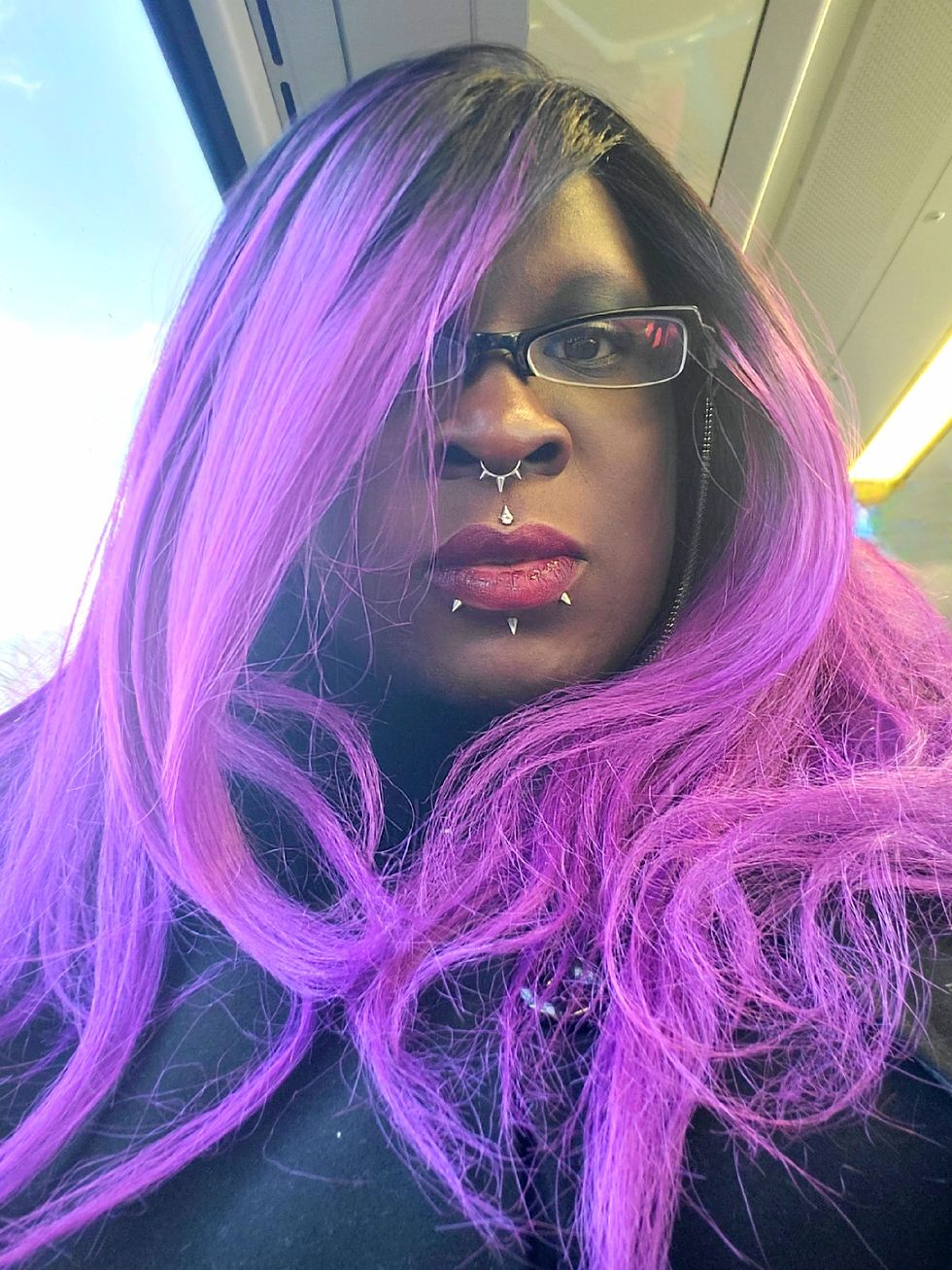
Asterisk Ravensbourne (she/they) is a regular speaker at trans rights protests
- Remember the basics: Don’t use slurs.
- Don’t believe everything you read: Certain media outlets sensationalise stories. Try to remember that when trans women use women’s toilets, changing rooms, or other single-sex spaces, it’s just because they need to pee or access those areas for themselves.
- Do your own research: Whenever I read anything, I make sure to look it up in a separate, trusted place. For example, I won’t just read a news story on Olympic regulations without looking them up myself. If you’re curious about something you’ve read about trans people, do the research and then ask questions.
- Don’t forget about trans men: The focus at the moment is on trans women, which is being done politically to spread misinformation and encourage fear. But the conversation is rarely about trans men, so we should discuss their rights and issues, too.
- Don’t conflate transgender women with drag queens: Lots of people love drag today — it’s a very popular form of entertainment, but if you think that trans women are drag queens, then that’s very transphobic. Essentially, it’s saying that trans women are men dressing themselves up as women, and that our womanhood is just a costume we can put on and take off whenever we want. Educate yourself on the differences.
Shash Appan (she/her) is a founding member of Trans Aid Cymru, a mutual aid group for trans and non-binary people in Wales


- Think of your own environment: There are instant things you can do to make trans people feel more welcomed and understood. Things like using more gender-neutral colours and avoiding gender stereotypes. Little things can give the wrong signal. If I see a lot of ‘here’s my baby boy’ with blue everywhere, it can make me feel on edge.
- Deconstruct gender roles: Cis people (those whose gender identity aligns with the sex they were assigned at birth) need to think more about gender’s role in their lives — for example, how men aren’t allowed to have emotions apart from when watching football — and question why things are the way they are.
- Get involved: Go to local events run by trans people who are open to allies. That can go a long way into learning how trans people need help, but not pity. You could join or donate to a local mutual aid group too. Set up across the UK, trans mutual aid groups can donate to those in need or organise practical support, such as lifts to appointments.
- Open up your workplace: Try targeting trans people for new roles in your company. Ask a trans friend if they can help you reach potential hires by posting the role in a trans group, or ask HR to work on inclusive recruitment strategies. And then make yourself the co-worker a trans colleague knows they can go to for support.
- Be out and proud: In every aspect of your life, be a trans ally — even if it causes friction. You’ve got to have no compromises it.
Cara English (she/her) is head of public engagement at trans charity Gendered Intelligence, who also runs Open Lavs (a project for trans people to find public toilets) and FiveforFive (a mutual aid fund for trans women and trans femme people)


Donate your money: What we need is to be able to have quasi equality when it comes to material conditions. We start off so much lower than everyone else. We’re excluded from the workplace, we’re made homeless, and we’re beaten. We need opportunities to actually exist in society.
If you’re on social media, looking up hashtags such as #TransCrowdFund will help you find people to donate to. In 2022, Gendered Intelligence and the Good Law Project brought NHS England to court, arguing that the disproportionately long waiting times for trans healthcare were discriminatory — and we lost. Some of the financial needs that trans people have is paying for private healthcare. Government funding to the NHS is insufficient, and as a result, the system is failing trans people on a colossal scale.
You can help by directly donating to trans and non-binary people’s fundraisers, which you can search for on all the general crowdfunding websites. Fundraisers help with the immediate needs of vulnerable trans people. I run a mutual aid fund for trans women and femmes called FiveforFive, which gives money every month to those individuals in real need, as well as to organisations that are helping to support trans women and femmes.
Another way to help out is by setting up a monthly recurring donation, which provides vital funds and more sustainable support over the long run.


