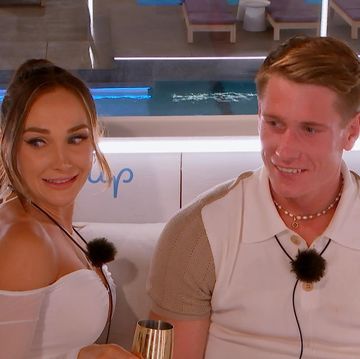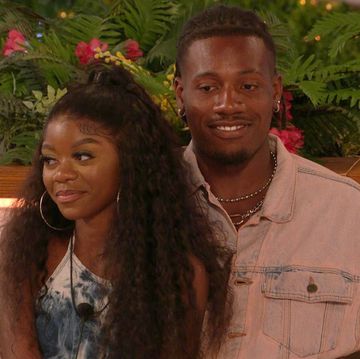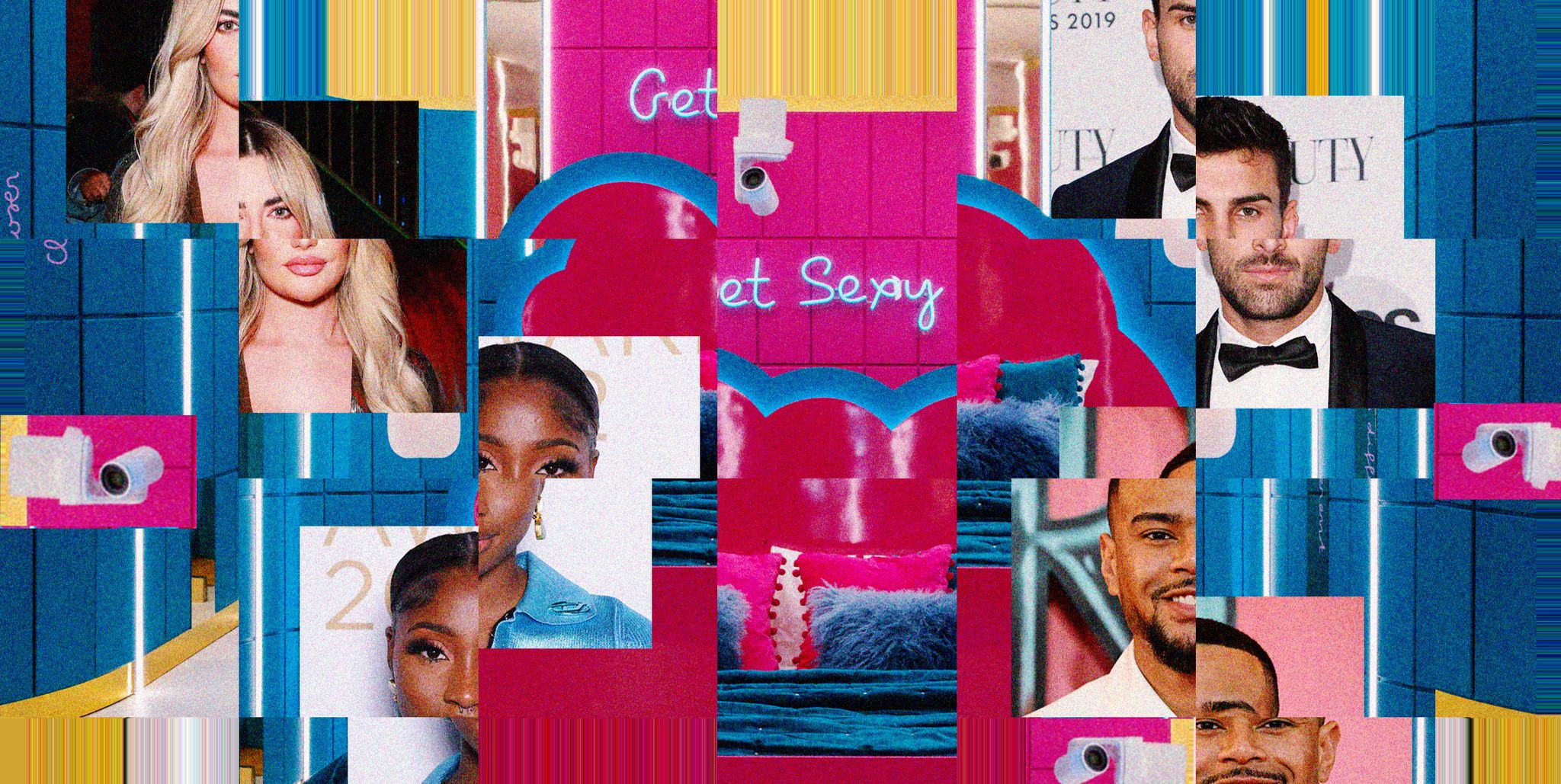
In case you missed the memo – Love Island is back. Which means the soundtrack to our evenings for the next few months is Iain Stirling’s dad jokes, greased up 20-somethings asking “what’s your type” until the phrase loses all meaning, and of course – awkward euphemisms about doing bits (and you know, some of them might find love or whatever). God, I’ve missed it.
But, the fact that a group of horny - sorry, lovelorn - singletons imprisoned in a gorgeous villa together often end up having sex has always been a bit of a speed bump for Love Island. Back in the Wild West Days of the show, when constants were free to drink and smoke as much as they pleased, couples hooking up in the group dorm was broadcast with only the lightest-touch of censorship.
Things started to change a few years ago after the show was hit by multiple tragedies and began to clean up its image. There’s now a set of rules Islanders must follow, including a ban on nudity, masturbation, and getting drunk. The introduction of ‘The Hideaway’ in 2018 also provides couples with an opportunity to get intimate away from the rest of the group - although cameras are still present.
Love Island’s new PG-15 vibe has divided viewers, and the show’s ratings have been dwindling in recent years. Although last year’s finale saw a bump, with 3.4 million of us tuning in to see Ekin-Su Cülcüloğlu and Davide Sanclimenti take the crown, Monday’s launch drew in only 1.4 million live viewers (and a total 2.5million streams across all platforms).
Although we’re seeing less of it on screen, who’s doing bits (and where and how) are still some of the most talked about moments of the show. Previous contestant Megan Barton Hanson has even said she hopes so see more intimacy this season, in hopes that it will take away some of the shame and stigma around sex in general.
“Sex is a healthy thing and if both people are consenting, there should be no shame! I hope in this season there's more sex, more talk about it and less shame!” the previous Islander told Closer.
Everyone's clicking on...
Megan, who hooked with Wes Nelson and Eyal Booker on the 2018 series, says she was ‘slut-shamed’ after leaving the villa. “'Straight after the show, every question I was asked was: "Are you embarrassed about having sex on TV?" Why should I be embarrassed?,” she said.
Adding; “The boys never got asked that question. I know that for a fact because I was always next to Wes. He wasn't asked that once.”
Love Island has certainly opened up a lot of important conversations about sex and relationships during its time on air. In 2018, Woman’s Aid put out a statement on gaslighting following Adam Collard's behaviour in the villa. A year later, the charity again called out the show – raising concerns over Joe’s possessive behaviour towards Lucy. And who can forget last season’s incident where Faye Winter lashed out at Teddy Soares – prompting nearly 25,000 Ofcom complaints.
Sex and relationships expert and author of The Big O, Oloni thinks Love Island can also be a vehicle to help us better understand desire and sexual chemistry. "A big part of sex is attraction and it gives us an insight into how people behave when they’re attracted to someone. Are they quiet and shy about it and want to be chased? Or do they go after what they want?" she told Cosmopolitan UK.
But, with multiple contestants saying they experienced ‘slut-shaming’ and real-world consequences of their on-screen trysts – in 2016 Zara Holland lost her Miss Britain crown after she hooked up with Alex Bowen on-air – so far it seems like the show has contributed more to our collective judginess, rather than dampened it.
As well as reigning in the PG rating, contestants themselves seem oddly squeamish about talking about “the bits” they’ve been doing – sometimes on camera – the night before. Over the seasons, Islanders have come up with increasingly creative euphemisms, from Indiyah Polack’s ‘the salon’, (where the girls would use beauty treatments as code for certain sex acts) to the girls of 2021’s NQV system. Using this kind of coded language is not only confusing af to keep up with but perhaps contributes to the idea that sex is something secretive and dirty, too.
Hannah Charnock, a historian of sexuality says this kind of coded language reflects a much wider trend of us Brits shying away from frank discussions about sex. They can also unintentionally “reflect and reinforce certain assumptions about sexual activity. For example, the 2021 islanders’ qualification metaphors reinforce hierarchical understandings of sexual activity and the “right” order that couples should engage in sex acts,” Charnock says in an article for The Conversation.
Oloni is on the same page; "in past years I’ve seen Love Island use metaphors when it comes to describing sexual acts when the Islanders are talking on the balcony and I think that it would really help normalise the conversation around sex if we never used them but instead said what it was straight up. When we use metaphors it’s as though we’re concealing something that’s unnatural."
Shows like Love Island could provide an accessible jumping off for us to have more frank, interesting, and judgement-free conversations about sex. But while the show is still trying to find the line between salacious and sexy - and protecting contestants' privacy and mental health, perhaps that’s too much to ask.

Lois Shearing is Cosmoplitan's Former Senior Sex and Relationship Writer. They have been writing about sex, sexuality, gender, politics, and relationships for almost ten years. Their writing on these topics has appeared in Mashable, The Independent, Metro, The Advocate, and Byline Times, among others. In 2021, they published their first book, Bi the Way with JKP. They are currently working on two other books, set to be published in 2024. In a previous life, they worked as a content marketer and content writer for various tech start-ups. They continue to be interested in the tech sector and its impact on our lives, relationships, and work, with particular regard to the ways AI will shape our relationships in the future. Outside of work, they are deeply passionate about queer community organising, and run the only support resource for bisexual survivors of sexual violence in the UK: the Bi Survivors Network. You can find them on Instagram and X.