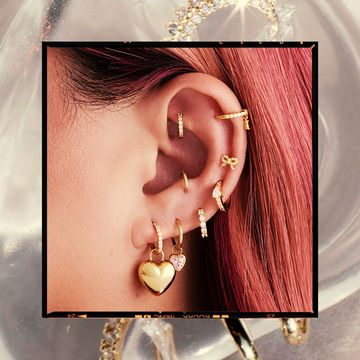
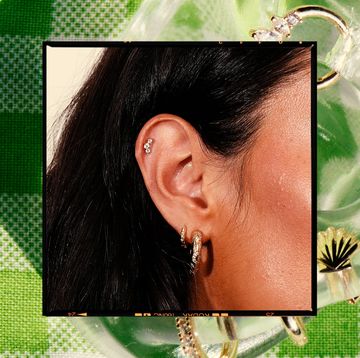
A tragus piercing has become a mega-popular choice in the world of curated earscapes -yeah, trust us, that's a thing - and rivals the humble lobe piercing as a must-have for any fledging pierced-covered girlie. The big difference being that it's a cartilage piercing i.e. much thicker skin, but for needle-crazed jewellery fans, it's a go-to staple.
You understand our forever-growing obsession, right? Take a scroll on Insta or Pinterest and you'll spot well-decorated ears amongst the GRWMs and makeup tutorials, and if like us, you've joined many people - via TikTok - on their piercing journey, then we know you get it. Thanks to endless jewellery options and the arrival of boutique piercers like Maria Tash, cool-girl piercings like the helix and septum piercing are becoming the must-have accessory just as much as a cult It bag.


As for the tragus, due to its focal point on the ear and equally subtle look, it's a fave piercing that suits both a simple stud and a small hoop, and with its close proximity to the daith piercing, or a row of lobe piercings, it complements an earring stack nicely.
If you're considering the tragus for your next, or first ear piercing - and, honestly, we don't blame you with Rihanna and Zoë Kravitz both fellow tragus lovers - but you need some more facts and extra motivation before committing to the needle, I'm here to help. It's been top of my wishlist for a while now and I finally bit the bullet, getting pierced at Laura Bond Piercing Studio in Edinburgh. Scroll for the full debrief.
Plus, we've enlisted expert piercers Sarah Crowe at Laura Bond Studio and Charlie at Monica Vinader's Piercing Studio for their insider knowledge.


What is a tragus piercing?
The tragus is the small piece of cartilage, sort of triangular in shape, which covers the entrance of the ear canal and is positioned closest to your face. The piercing originated in the 1980s and has grown in popularity ever since. You can check where it would sit amongst any other piercings you have in this cute chart from luxury piercing and jeweller Pamela Love.


Does getting a tragus piercing hurt?
To me, a tragus piercing always seemed like it'd be pretty painful, mainly due to how thick that area of the ear feels compared to other parts. When I'd previously spoken to piercer Charlie she'd told me "It's no more painful than a regular cartilage piercing". Fast forward to sitting in the chair at the Laura Bond studio and she was right, that quick pinch feeling was the same as when I had my helix pierced and it's over in a flash.
My biggest advice would be to ensure you book with a trusted piercing studio that follows best practices. Piercer Sarah at Laura Bond helpfully explained each step of the process whilst I was having it done, keeping any needle nerves at bay. After marking the spot for precision, she used a single-use sterilised needle to create the piercing and once pierced the jewellery is fit. This is probably the most painful bit, FYI, as it can take a little finessing to secure the jewellery into place.
How long does a tragus piercing take to heal?
As with all piercings, especially when you venture beyond the lobe, an important factor to consider is the healing time. A tragus typically takes between six to eighteen months to heal. A year and a half sounds looong, I know, but Charlie insists this is "just the time needed for the skin to fully heal properly." The good news is, "unlike a regular cartilage piercing, the tragus is more tucked away and less likely to get caught in your hair or clothing which will help dramatically when it comes to healing".


How do you take care of a tragus piercing?
Aftercare is key for the healing process to go swimmingly. Gently cleaning your new piercing in the morning and evening with saline solution until it's fully healed is gospel. Sarah recommends PierceMed mist - spraying both the front and back of your piercing - and it works a treat. Moisture is the enemy for a new piercing so dry it afterwards. Sarah tells me the cool setting on a hair dryer can work well or just dab with kitchen towel. Apart from cleaning, Sarah says you really just want to leave it alone as much as possible, avoiding fiddling with the piercing during the healing time. Which sadly means no swapping in new jewellery until it's fully healed.
What type of jewellery should you use for a tragus piercing?
Piercing studios will use a labret bar which features a flat back fastening that's more comfortable than a standard butterfly-back earring. Sarah says piercing with a stud is the better option. "Studs are less likely to move around during the healing process, which is crucial for minimising irritation and promoting proper healing. The tragus area can be sensitive, and a stationary stud helps reduce the risk of trauma or discomfort that might occur if a hoop were to shift or snag on clothing or accessories."
You can choose from lots of different stud options, ranging in shape and stone from stars and diamonds to teardrops and gemstones. Then after it's healed you can mix things up with the jewellery and experiment with hoops.


Useful things to know pre and post-piercing
Here are some handy tips I picked up from my experience getting pierced that'll give you the 411, including small lifestyle changes - temporarily of course - and things to consider before and after your appointment.
- No booze - it's best to avoid drinking any alcohol during the 24hrs leading up to getting pierced. This'll help minimise any excessive bleeding during the procedure... and no one wants to get pierced on a hangover anyway right?
- A consultation is everything - at the Laura Bond studio - like with other boutique studios - you'll have a consultation beforehand. This was a godsend. I had the chance to browse all the jewellery as the studio team gathered my favourites and held the studs to my ear for a "try-on". It's a great opportunity to chat through any questions.
- Not everyone can get a tragus piercing - the tragus is anatomy-dependent. Sarah explains "each person's ear is unique, and the tragus must have enough tissue for a safe and successful piercing." Your piercer will examine if it's the right one for you.
- Bring a friend - your BFF will totally make the experience more enjoyable and, if needed, help calm any nerves. Sarah says it always keeps spirits high when friends and family visit the studio together.
- Are headphones a no-go? - Airpod fans, I'm sorry but you'll have to switch from in-ear headphones to over-ear styles - a stylish swap, IMO - during the healing process to avoid irritation. Charlie points out that talking on the phone can also be uncomfortable, so stick to your non-pierced ear for long calls.
- Beauty sleep - piercers will advise not to sleep on your piercing side for a while so all you fidgety sleepers out there should pick which ear wisely. The Laura Bond team also recommend using a donut travel pillow as another sleep solution.
- Swimming post-pierced - avoid booking a holiday directly after getting pierced as it's advised not to swim in lakes, pools or hot tubs for the first two to three weeks when the piercing is still fresh.


Jewellery to shop for your tragus piercing

Laura Bond 9k solid yellow gold trinity crystal flat back labret stud earring 6mm
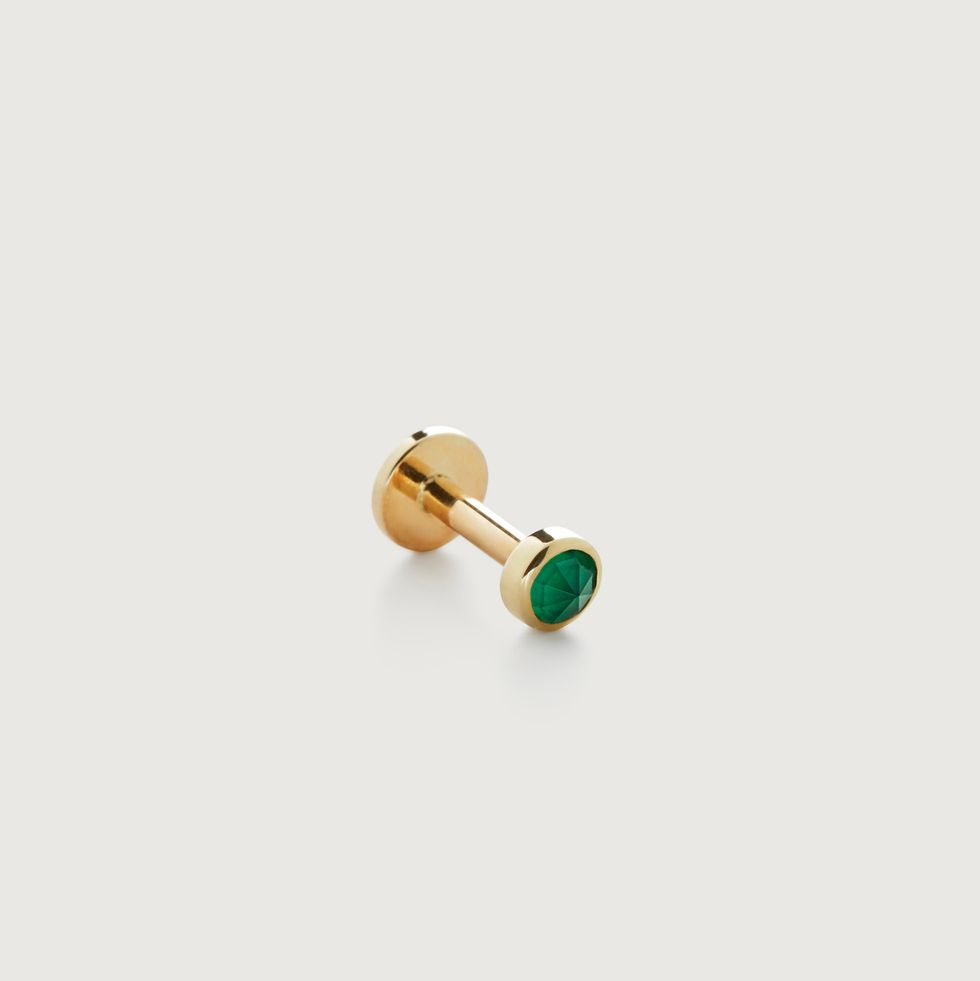

Laura Bond 9k solid white gold tiny trio flat back labret stud earring 6mm


Monica Vinader Mini Nugget Cluster Flat Back Piercing Stud


Sophie Leen is the Bookings Editor for Cosmopolitan UK and Women's Health UK. She specialises in creating fashion and shopping content across both digital and print platforms, as well as producing all of our fashion editorial photoshoots, which have included our digital cover with Olly Alexander and our curve influencer’s letter to the high street story. Sophie also looks after our Try Before You Train franchise where our team have tested and reviewed over 100 gymwear items.