There's no denying there's been a shift in culture when it comes to the way we drink (and think about!) alcohol – from a rise in celebrities sharing their personal stories of going sober, to the boom in people joining in with Dry January or Sober October, we're in the midst of a great boozing reset.
But alongside this, there's a second wave of drinkers who are making changes that don't involve total abstinence: those known as 'sober curious' or 'mindful drinkers', who are still willing to have a drink... but in moderation. A cocktail or wine every now and then, minus a side of hangxiety the next day, if you will.
If you've heard the term 'mindful drinking' before, but aren't fully aware of what it means – wonder no more! We asked the brilliant Laura Willoughby MBE, founder of Club Soda (an organisation that offers support for those wanting to change their relationship with alcohol) to explain, and have also gathered some marvellous tips from Camille Vidal, founder of La Maison Wellness, a wellness company advocating for mindful drinking and healthy hedonists.
(Note: reducing alcohol consumption, or going sober overnight, may not be an option for everyone. For some people, total abstinence could be the only way to go – if you're worried about your relationship with alcohol or fear you may be dependent upon it, speak to a doctor or trusted organisation, such as Alcohol Change UK).
What is mindful drinking?
Being a mindful drinker means you actively pay attention to how alcohol impacts on your life – in all areas, from your quality of sleep to your relationships to work. Exploring mindful drinking is a good middle ground, which could be thought of as similar to those who describe themselves as being 'flexitarian' after having reduced the amount of meat they consume. Unlike going teetotal, it doesn't necessarily mean cutting out all forms of alcohol forever, but rather reducing your intake or perhaps taking a pause and doing a 'sober sprint' for a few months.
Describing yourself as a mindful drinker can also be helpful if you aren't yet sure of your end goal, too. "It's less rigid than 'I am completely alcohol-free from now until forever'," explains Laura, who also authored the book How To Be A Mindful Drinker. "It's about taking time to evaluate your drinking habits and how they do (or don't fit) in with the life you'd like to lead."
"If you're 'sober curious', that's almost like the pre-cursor to actively engaging in mindful drinking," she adds. "Sober curious people are those who are starting to reflect on their relationship with alcohol and thinking they might like to change it. Those who are mindful drinkers are actively doing so, or are taking action following a contemplative period."
As for why mindful drinking is having such a moment right now, Camille theorises that it's likely due to a "combination of wellness and well-being becoming more top of mind" alongside "the increasing availability of alcohol-free options, making mindful drinking easier and more enjoyable".
Plus, there's been a much-needed drop in stigma associated with people who are choosing to drink less, or even nothing at all. "As the stigma around mindful drinking fades, more people feel encouraged to explore it, and when they do, they experience firsthand how much better they feel," she adds.
What are the benefits of mindful drinking?
Where do we start? As well as improved sleep, relationships, a happier bank balance and a reduced chance of drunk dialling your ex/former evil boss/anyone else who has wronged you, there are also some seriously positive health elements to think about, says Camille. "We already know that drinking less improves our well-being, sleep, and mental clarity, but beyond that, the latest medical studies show reducing alcohol consumption [reduces] the risk of cancer."
Charities, such as Breast Cancer UK, a charity highlighting that 30% of cancer cases are preventable, are now keenly promoting the message that it's a good idea to embark on a prevention journey by having at least some alcohol-free days each week.
How can I be a mindful drinker?
"Firstly, ask yourself 'What kind of life do I want to live and how does alcohol fit into it?'," advises Laura, suggesting it could be that you want to achieve more during your weekends, or have more control over the amount you drink. It may also be that you want to cut back, rather than cut out booze full stop. Actively considering all these things, rather than continuing to blindly reach for a pint after a stressful day at work (without properly processing whether or not you really want it) is a great first step.
You need to carve out time for reflection too, she adds: examine where you do and do not drink, and ask yourself 'Where was I when I last drank more than I wanted to? Who was I with that day?'. "It's about spotting patterns, which will then give clues about your behaviour and what it is you want to change (or avoid)."
Books for your sober curious journey


Mindful Drinking: How Cutting Down Can Change Your Life by Rosamund Dean

The Sober Curious Reset: Change the Way You Drink in 100 Days or Less by Ruby Warrington
The majority of Club Soda members, she adds, abstain from alcohol entirely for an initial period of time – just to gain clarity and test themselves in social situations without an alcoholic crutch. "Taking time off from drinking will never do you any harm," she says. "If only a month feels doable, then do a month, but for a lot of people three months is a charm – it gives you time experience lots of different scenarios with alcohol, and see how you respond to them."
Many people decide to keep up their sobriety after the three months, others feel ready to drink again, just in a different way.
What are some helpful tips for being a mindful drinker?
If you've taken that step back to reflect on your drinking habits and decided to make a change, but are wondering what to do next, it's time to create your own rules. "Moderation needs rules," says Laura, offering up some solid examples:
- 'I only drink on a weekend, never during the week, because I want to feel fresh at work'
- 'I no longer drink alcohol when I'm alone'
- 'I've realised whiskey makes me aggressive, so I won't drink it anymore'
- 'Taking shots in clubs makes me get drunk too quickly and feel out of control, so I no longer do them'
"Some Club Soda mindful drinkers alternate between regular and alcohol-free beers at the pub, or now only drink single measures," she adds.
Other mindful drinkers have adopted the tactic of making sure their first two drinks at a social event are non-alcoholic ones, so that they can test the waters before deciding whether or not to get drink alcohol, or stay for the duration. "British people have developed a terrible habit for feeling like we have to 'drink through' and stay at social occasions we aren't actually enjoying," laughs Laura (which - can we just add - is so true).
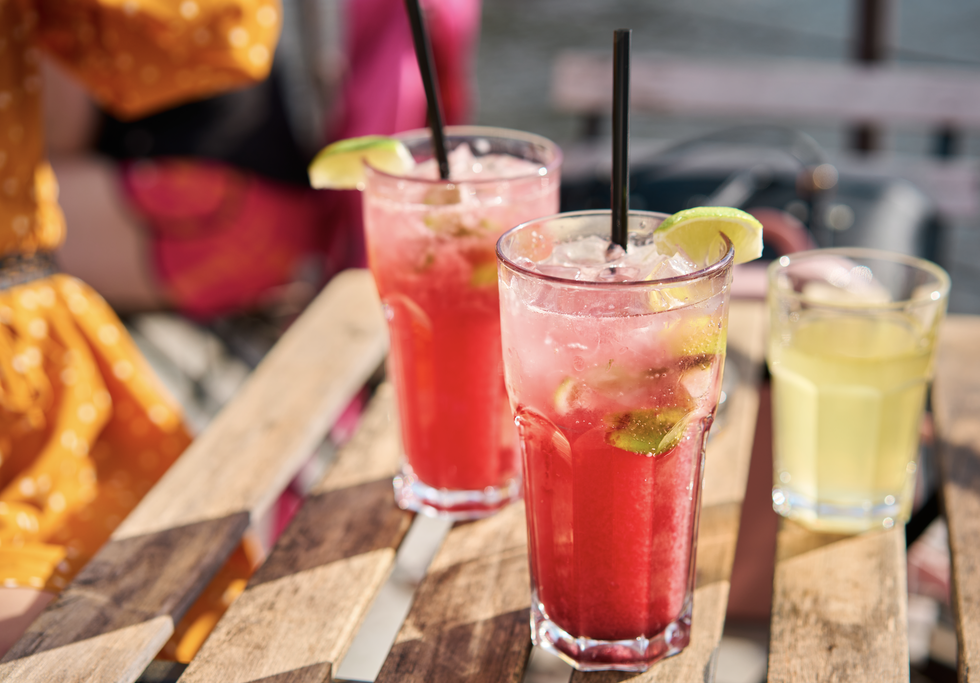
Calling the venue ahead of time can help you to feel more confident when ordering a non-alcoholic drink too, rather than shuffling in awkwardly and stammering, "Erm, do you have any... zero percent gins? Or, oh... never mind." You could also offer to host pre-drinks at your home and make mocktails for your friends, then commit to only having a couple of drinks at the party, or club, you're heading to later on.
Telling friends directly that you've cut back on the amount you drink, then asking if they have any health goals that you can offer to support them on too, also works well. "If it looks as though peer pressure might be starting to creep in when somebody asks what you're drinking, phrase it like a challenge, say, 'It's your challenge to find me the best alcohol-free drink in the bar. GO!'," says Laura.
Experimenting with what's on the market is a good way of keeping your brain engaged (brains = love novelty) and a chance to find a new favourite too – maybe you'd prefer a kombucha over Prosecco, but you've never taken the time to find out.
Keeping things fun is crucial too, says Camille, who hopes to encourage more people to host their own alcohol-free Full supper club, a new fundraising initiative from Breast Cancer UK that offers hosting packs with delicious recipe cards (including tasty AF drinks). Thinking about the good you're doing for a worthy cause can also be a positive motivator, as well as a chance to connect with friends.
Lastly, focusing on all the wins that you gained during your break from booze, or by cutting back, will also help you stick to the goals or rules you've set for yourself. "Remember how brilliant it feels being able to fit three activities into a weekend, rather than just the one because you're hungover," says Laura. "Think about how much clearer your skin looks, or how your friendships have improved. Whatever it is that you've noticed and appreciated, hang on to that."
This article is not intended to be a substitute for professional medical advice. Always seek the advice of your physician or other qualified health provider with any concerns you may have regarding your alcohol consumption.
Jennifer Savin is Cosmopolitan UK's multiple award-winning Features Editor, who was crowned Digital Journalist of the Year for her work tackling the issues most important to young women. She regularly covers breaking news, cultural trends, health, the royals and more, using her esteemed connections to access the best experts along the way. She's grilled everyone from high-profile politicians to A-list celebrities, and has sensitively interviewed hundreds of people about their real life stories. In addition to this, Jennifer is widely known for her own undercover investigations and campaign work, which includes successfully petitioning the government for change around topics like abortion rights and image-based sexual abuse. Jennifer is also a published author, documentary consultant (helping to create BBC’s Deepfake Porn: Could You Be Next?) and a patron for Y.E.S. (a youth services charity). Alongside Cosmopolitan, Jennifer has written for The Times, Women’s Health, ELLE and numerous other publications, appeared on podcasts, and spoken on (and hosted) panels for the Women of the World Festival, the University of Manchester and more. In her spare time, Jennifer is a big fan of lipstick, leopard print and over-ordering at dinner. Follow Jennifer on Instagram, X or LinkedIn.
Kimberley Bond is a Multiplatform Writer for Harper’s Bazaar, focusing on the arts, culture, careers and lifestyle. She previously worked as a Features Writer for Cosmopolitan UK, and has bylines at The Telegraph, The Independent and British Vogue among countless others.