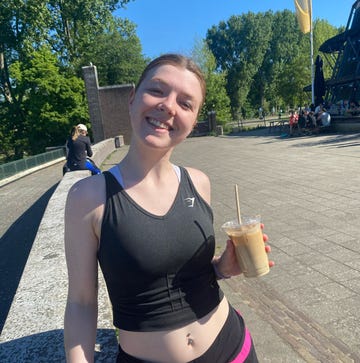
It's officially autumn, which means it's time for cosy evenings on the sofa watching horror films, chunky knits (I mean, maybe? This is the UK after all...) and definitely pumpkin spice lattes.
But, experts are now warning that the tasty drink has a major health-related downside that we should all be aware of... and it's definitely something to keep in mind when embarking on your next PSL fix.
"The pumpkin spice latte has become an autumn tradition – comforting, nostalgic, and instantly recognisable," says Katie Sanders, a dietician verified on healthcare review platform Doctify. "But behind the seasonal hype is a serious nutrition story: sugar."
Yep, the drinks contains a shedload of the white stuff (sorry to be the bearer of bad news)...
Exactly how much sugar is in a pumpkin spice latte?
As an example, if you opt for a PSL from Starbucks (made using semi-skimmed milk), the sugar content is:
- Tall (354 ml): 34g sugar
- Grande (473 ml): 44g sugar
- Venti (591 ml): 52g sugar
"For comparison, a regular venti latte (just coffee and milk) contains about 18g sugar, all from lactose," the diet expert notes. "That means the PSL adds an extra 34g – more than 8 teaspoons of free sugar – in the form of pumpkin spice syrup and toppings."
Everyone's clicking on...
Why is this bad? Well, one large PSL is enough to exceed the entire recommended daily sugar allowance for an adult in a single cup. Yikes!
NHS guidance says it's best to limit sugar intake to 30g per day (about 7 teaspoons) and states that going over this amount can lead to an increased risk of diabetes, heart disease, poor liver health and tooth decay. None of which sound super appealing...
Data also shows that, on the whole, most of us in the UK "are already over the safe sugar limit before seasonal drinks are even considered," Sanders points out. "A single large pumpkin spice latte, at over 50g of sugar, simply adds to an intake that's already too high."


How to reduce the sugar in your PSL order
So, you know the facts – but what can you do about them? Tweaking the milk used in your order can make a small amount of difference, says Sanders.
- Cow's milk (any fat level): adds 16–17g sugar in a grande, all from lactose (not free sugars, which is the type associated with poorer health outcomes)
- Unsweetened soya or almond drinks: contributes almost no sugar
- Unsweetened oat drinks: adds around 5g, which does count as free sugar
- Sweetened soya, almond or oat drinks: can add anywhere from 7–24g of free sugar in a grande, depending on the brand
Context is important, adds Sanders, explaining that free sugars (think: packets you pour in, syrups, honey) compared to intrinsic sugars (the kind that occur naturally in fruit, veg and dairy) are very different things. "Eating an apple is not the same as drinking apple juice. In whole fruits, sugar is packaged with fibre, vitamins, minerals and protective plant compounds.
"The fibre slows digestion, helping to prevent sharp spikes in blood glucose and supporting gut health. Milk works in a similar way. It contains lactose, a natural sugar, but it also provides protein, fat, calcium, iodine and B vitamins. The combination of nutrients means that lactose in milk is not counted as a free sugar and is not associated with the same risks as syrups and added sugars."
Syrups are where you'll see the biggest difference when it comes to reducing the sugar content of your PSL, the expert adds. Ask for fewer pumps, or see sugar-free syrups are an option instead.
"You could also choose a smaller size, meaning less syrup and sugar," Sanders suggests, along with skipping the whipped cream and opting for an unsweetened plant milk.
Being mindful about your sugar consumption throughout the rest of the day is also a wise move, she suggests. As the old saying goes: everything in moderation.
"If your overall diet is rich in vegetables, fruit, beans and pulses, lean proteins and whole grains, the occasional pumpkin spice latte won't derail your health," says Sanders. "The problem comes when high-sugar drinks and snacks become a daily habit, pushing intake well above the recommended limit.
"Healthy eating isn't about cutting out everything you enjoy, food and drink should also bring joy. There's certainly room for a PSL within a balanced diet, if it's treated as an occasional pleasure rather than an everyday choice."
This article is not intended to replace professional medical advice or diagnosis. Always seek the advice of a qualified health provider if you have questions regarding a medical condition.
Jennifer Savin is Cosmopolitan UK's multiple award-winning Features Editor, who was crowned Digital Journalist of the Year for her work tackling the issues most important to young women. She regularly covers breaking news, cultural trends, health, the royals and more, using her esteemed connections to access the best experts along the way. She's grilled everyone from high-profile politicians to A-list celebrities, and has sensitively interviewed hundreds of people about their real life stories. In addition to this, Jennifer is widely known for her own undercover investigations and campaign work, which includes successfully petitioning the government for change around topics like abortion rights and image-based sexual abuse. Jennifer is also a published author, documentary consultant (helping to create BBC’s Deepfake Porn: Could You Be Next?) and a patron for Y.E.S. (a youth services charity). Alongside Cosmopolitan, Jennifer has written for The Times, Women’s Health, ELLE and numerous other publications, appeared on podcasts, and spoken on (and hosted) panels for the Women of the World Festival, the University of Manchester and more. In her spare time, Jennifer is a big fan of lipstick, leopard print and over-ordering at dinner. Follow Jennifer on Instagram, X or LinkedIn.