Sometimes, even the most satisfying dinner can still leave us craving a little snack before we hit the hay.
We’ve all been there; we’re catching up on our latest Netflix binge before bed, with a bowl of popcorn or a packet of crisps to keep us company.
But these late-night munches may be having a much bigger impact on our body than first thought.
Registered nutritionist Caroline Farrell argues that pre-bed biscuits or other snacks have an adverse effect on our metabolism and blood sugar.
“If we eat before bed, your digestive system becomes active, diverting energy and resources toward breaking down and absorbing nutrients,” she tells Cosmopolitan UK.
“Eating food before bed can lead to blood sugar spikes followed by drops, affecting sleep quality and potentially causing night-time awakenings.
Everyone's clicking on...
“The body's metabolism tends to slow down in the evening, making it more likely for excess calories to be stored as fat.”

Our body might not even need those late night snacks we’re chowing down on before catching a few zzz’s, with Farrell pointing towards poor quality diet and habitual behaviours seeing us pilfer the snack cupboard unnecessarily.
“There are a few potential reasons why we like to eat before bed,” she explains.
“Some people may not be eating enough during the day, which can see them crave food later.
“They may have also eaten a high-sugar or high-carbohydrate meal earlier in the day, which can see blood sugar levels drop low at around bedtime: a common example is someone having a large bowl of pasta.”
Farrell continues that we may crave sweet snacks before bedtime because it has become a habitual behaviour.
“If you're used to eating before bed, your body may start to expect it, leading to feelings of hunger,” she explains.
“After a savoury meal, something sweet can provide a contrasting taste experience, making the meal feel more complete and satisfying. Also, If you have a habit of having dessert after dinner, your body and mind can become conditioned to crave it.”
However, all is not lost if we’ve found ourselves continuously cracking open the biscuits before bed.
Farrell explains we can amend our eating habits by changing our dinnertime meal to ensure it contains proteins, that keep us fuller for longer: lean meats, poultry, fish, tofu, beans, or Greek yogurt.
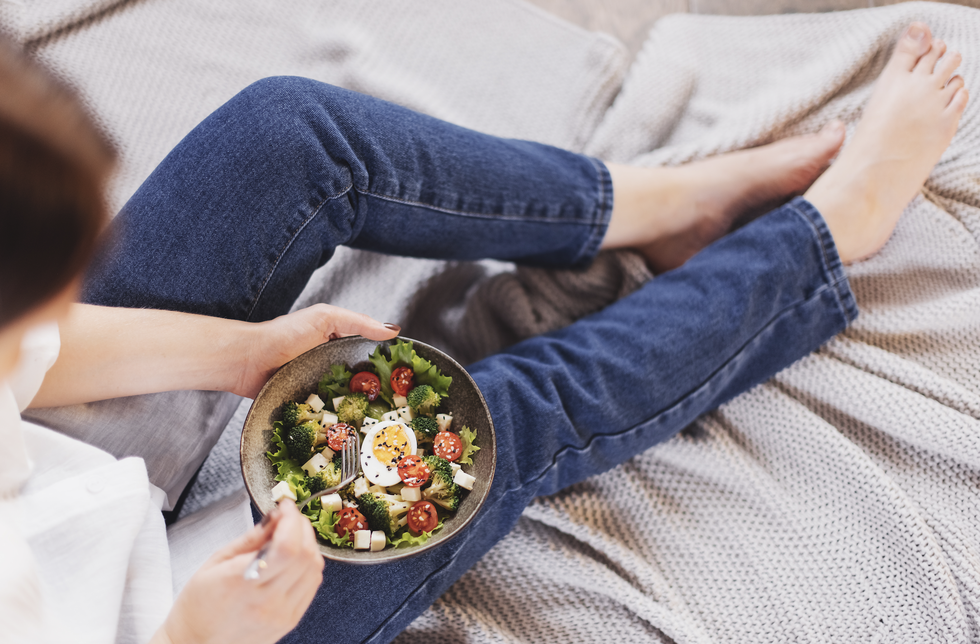
“f you find that you tend to get hungry close to bedtime, plan a small, balanced snack a couple of hours before bed,” she advises. This can prevent late-night hunger pangs. I like to recommend yoghurt with cherries as cherries can raise melatonin – our sleep hormone.
“Dehydration can sometimes be mistaken for hunger so try drinking a glass of water to see if your hunger subsides.”
And while there’s no set cut-off time where we’re meant to eschew the snacks, Farrell recommends that we stop eating for the day around a couple of hours before we sleep.
“This is because eating too close to bedtime can lead to digestive discomfort, such as heartburn or indigestion. Also, consuming a large amount of food or high-sugar items just before bedtime can cause fluctuations in blood sugar levels, which can disturb our sleep.”
Kimberley Bond is a Multiplatform Writer for Harper’s Bazaar, focusing on the arts, culture, careers and lifestyle. She previously worked as a Features Writer for Cosmopolitan UK, and has bylines at The Telegraph, The Independent and British Vogue among countless others.