Hands up if you’ve got curly textured hair and have ended up with a haircut that you felt just did not work for you? It probably wouldn’t take me long to find hundreds of us.
Sometimes, what looks great in the salon chair isn’t such a hit when you come to style it yourself. Then, of course, you may have had a bad experience with a hairdresser who wasn’t that experienced in working with curly hair types; Reddit is full of women who have shared bad salon experiences that left their curls and coils looking worse for wear. But there is some haircut intel that can help you on your way to choosing a winning style – and help you know what to avoid.
Obviously, how you style your hair day to day, whether you wear it natural all the time, regularly smooth it out, or mix things up, has a biiiiiiig impact on how you get on with a specific style. This is why it’s important to have a good chat with your hairdresser before asking for a specific cut – ensuring it’s right for you, your hair and your lifestyle. But, generally, there are some things hair experts recommend avoiding on curly textures. Here’s what two pro hairstylists had to say…
What to ask for and what to avoid when getting a curly haircut
Avoid: Wet cutting
Instead: Dry cutting


Booking in for dry curly cuts – which several salons specialise in – can help with definition and give you a more balanced overall silhouette. “I prefer to cut curls dry, as when cutting wet, the shrinkage can sometimes be underestimated, which can lead to the finished style being much shorter than intended or uneven layers,” says Dionne Smith, professional hairstylist and Cosmopolitan Contributing Hair Expert. “Shrinkage can be between 20–70 per cent, depending on curl texture, so it’s not always easy to gauge. I would always recommend dry cutting in its natural state, where you can see the real curl, shape and length.”
Hairstylist Michelle Sultan also avoids cutting curly hair wet, as doing so “can mean the length and the curl pattern are misplaced or misjudged.” Continuing, she says, “Once the hair is dry, it may shrink to a shape or end up being cut much shorter than intended.” However, she notes that wet cutting can sometimes work on some curl types. “Loose, very loose curl textures can be cut wet; we’re talking tight to loose waves and type 3A, very loose curls [only].”
Avoid: One-length cuts
Instead: Try a curl-by-curl cut


Sharp, blunt cuts look great, but may not be the best choice for curly textures. “Another thing I find is best to avoid when cutting curly hair is very straight, precision, one-length cuts,” says Michelle. “Instead, I choose to layer the shape to help the curls fall correctly on top of each other and to provide proportion and shape to each haircut.”
Dione agrees: “As curls and coils shrink and change at different rates, this can sometimes look very boxy and heavy at the bottom, and that straight line can look like an uneven not so not-so-well-done finish. I would recommend cutting the hair dry, curl by curl, to remove bulk so you can actively see the shape/silhouette you're achieving as you go.”
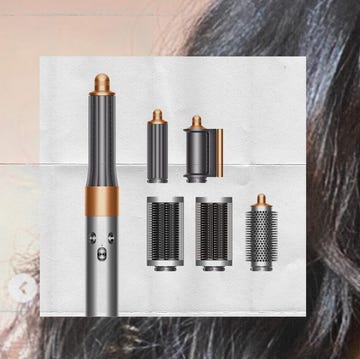
Michelle also says a curl-by-curl is a great way to go. “Some people may disagree, however, I find it works fine for me to cut the hair once it’s been smoothed out or delicately straightened,” she adds. “I do this mostly with the BaByliss Air Wand with the pik attachment, then I’m able to see what needs to be trimmed, because I have a clear idea of the shape. However, this can only be done by someone very experienced in cutting hair of all textures.”
Avoid: Very short, choppy layers on tight coils
Instead: Go for longer, graduated layers


Keeping layers longer is best on tighter coils for the definition and shape of the overall style, rather than opting for lots of short and choppy ones. “When the layers are too short [on tight coils], it can look puffy, uneven and very disconnected,” Michelle explains. “I would always recommend longer, graduated layers that maintain cohesion while enhancing the coil pattern.”
Avoid: Cuts with thinning scissors and razor cutting
Instead: Use regular, sharp hairdressing scissors


This is a controversial one; when used correctly, thinning scissors and razor cutting can create great haircuts, but they also have the power to do a lot of damage – something commonly seen when they’re on curly hair textures.
“I have been told by many clients over the years that they’ve gone to salons where they’ve had their hair thinned out using thinning scissors or razors,” says Michelle. “These are two techniques I would never, ever use on curly hair, as they definitely don’t work well. I know that some hairdressers have used them to reduce volume in curly hair; however, a haircut done correctly should always provide the right proportion and shape at all times, whether the hair is worn curly or straight.”
Dionne agrees and says she doesn’t recommend either technique. “I have never been fond of razor cutting on curls and coils as it can fray the cuticles of the hair, making it frizzier and creating split ends, and can also disrupt the curl pattern.” Instead, she recommends “slide cutting or point cutting [the techniques you most usually see hairdressers using, FYI] with a quality pair of sharp scissors is best for curls and coils, as this softens and keeps the curls’ integrity.”
All noted? Now you're curls are ready to hit the salon chair!
Lucy Abbersteen (she/her) is a freelance beauty writer for Cosmopolitan UK. Having started her career at Marie Claire UK, she's since also written for titles including Stylist, Refinery29, woman&home and Glamour. Over the years she's done everything from report on the beauty trends at fashion week to grill some of the world's leading hairstylists and derms. Her writing covers everything from buzzy nail trends to haircare know-how and industry deep dives. She even has her own website: lucyabbersteen.com