9 Best Dry Scalp Treatments and Products of 2024, According to Dermatologists
Whether you’ve got dandruff, eczema, or a classic itchy, dry scalp.

We may earn commission from links on this page, but we only recommend products we love. Promise.
One of the most common texts I get from friends, acquaintances, and anyone who knows I’m a beauty editor is something along the lines of: “My scalp is freaking out for XYZ reason—what are the best dry-scalp treatments?” And I get it: I also deal with the occasional dry scalp, where my skin feels tight, irritated, itchy, and inflamed as hell. So whether you’re feeling dry from scalp eczema, scalp acne, dandruff, hair dye, or sulfates, I have a laundry list of scalp recommendations for you, including tons of products and tips from experts.
But before I discuss the best dry-scalp treatments, I’m also giving you the must-know information about dry scalp, according to dermatologists Marisa Garshick, MD, and Anar Mikailov, MD. Like do you have dandruff or dry scalp, what even causes dry scalp, and when you should see a dermatologist for dry scalp. But first, here’s a quick peek at my fave products:
✔️ FYI: We updated this article in April 2023 to give you the most up-to-date info on dry-scalp treatments, including the difference between dry scalp and dandruff, when to see a doctor for dry scalp, and dermatologist-approved treatments.
Our top picks for dry-scalp treatments in 2024:

So before I get into the best dry-scalp treatments you can buy, I’m breaking down all the need-to-know info about dry scalp:
What is the main cause of dry scalp?
Dry scalp is essentially caused by lack of hydration. “Like our skin, our scalp can become dehydrated and get flaky,” explains dermatologist Anar Mikailov, MD. Dry skin on your scalp could occur after something as simple as shampooing without conditioner, washing and shampooing too frequently, or using shampoos that contain harsh, drying ingredients, like sodium lauryl sulfate (aka sulfates) and synthetic fragrance. You could even experience scalp dryness and irritation from hair dye and buildup from too much dry shampoo or hairspray.
Scalp dryness can also be a symptom of another bigger scalp concern. For example, psoriasis (a chronic autoimmune condition) can lead to much thicker scales that are extremely itchy and can cause some inflammation and bleeding if peeled off. FYI, though, if you think you have scalp psoriasis, set up an appointment with your dermatologist, because you’ll likely require prescription medication (like a topical steroid) to treat the scaling. Similarly, dry scalp can be a result of dandruff, which brings us to…
How can you tell the difference between dandruff and dry scalp?
The difference between dandruff and dry scalp is that dandruff is caused by an overproduction of yeast, while dry scalp is caused by a lack of moisture, says dermatologist Marisa Garshick, MD. “Dandruff typically results in inflammation and excess oil on your scalp and may appear as thick, yellow-tinged greasy scales that stick in your hair and can sometimes clump together,” she explains, “while dry scalp tends to feel tight, itchy, and irritated, and might have white patches or flakes,” rather than the oily plaques you get with dandruff.
But keep in mind that you can have both dandruff and a dry scalp, which is exactly why a dermatologist is the best person to help you figure out what you’re dealing with. Dandruff with a dry scalp can look like a combination of both: Maybe you’ll have thick, oily scales with an itchy, irritated scalp that feels tight. Or maybe your dandruff swings back and forth between oily and dry, depending on the seasons. That being said, how you treat each concern can be very different.
“Those with dandruff should consider treatments containing exfoliating ingredients, like salicylic acid, as well as medicated antifungals, like ketoconazole, pyrithione zinc, and selenium sulfide,” says Dr. Garshick. “On the other hand, for dry scalp, look for soothers, including aloe vera and centella asiatica, to help with itch; exfoliators—like salicylic acid and salt or sugar-based scrubs—to slough off dead skin; and moisturizers, like shea butter, hyaluronic acid, and glycerin, to hydrate your skin.”
How do you get rid of dry scalp?
To get rid of dry scalp, you’ll need a comprehensive approach including moisturizing products and some lifestyle changes. Dr. Mikailov says it could help to cut back your shampoo to only twice per week so you’re not constantly removing your scalp’s natural oils. You’ll also want to avoid any products that can cause dryness, including anything with strong sulfates (sodium lauryl sulfates and sodium laureth sulfates), and fragrances, if you have a sensitive scalp. Dr. Mikailov says for some people, essential oils that are common in “natural” dandruff solutions, like peppermint and rosemary hair oil, can also actually be irritating and lead to more flakes.
Should I see a dermatologist for my scalp?
You should see a dermatologist for your dry scalp if over-the-counter treatments (like the scalp serums, oils, and shampoos I listed below) aren’t relieving the dryness, or if you’re also experiencing itchy, inflamed patches or plaques, says Dr. Garshick. “Speak to a board-certified dermatologist, as sometimes further evaluation with patch-testing, in the event your dryness is caused by allergies, or a prescription medication may be needed if you have persistent dandruff or psoriasis,” she says.
What is the best treatment for extremely dry scalp?
The best treatment, if you have an ~extremely~ dry scalp, is going to include cutting out the ingredients that could be drying you out (see: sulfates and fragrance), and incorporating moisturizers, exfoliants, and soothers to help calm inflammation and hydrate your skin. Here are my absolute favorites, whether you have dry scalp and dandruff, prefer natural skincare products, or have itchy, flakes:

Pros
- Moisturizes your scalp with honey
- Has a lightweight, milky texture that doesn’t leave behind an oily residue

Cons
- Contains fragrance, which can irritate some sensitive scalps

I squeeze a little bit of this milky, lightweight scalp serum through my part whenever my skin feels a bit tight or irritated because it helps moisturize with honey and glycerin, then locks all that moisture in with a bunch of skin-loving oils (hi, safflower seed oil, sunflower seed oil, rose hip oil, and evening primrose oil). Plus, all of these moisturizers work double-duty with gold-star-level soother ectoin to help calm down some of the inflammation on my scalp.
THE REVIEWS: One reviewer writes, “I definitely had a flaky, dry scalp all winter. I used this, and after the first use, I knew it was gonna be good. My scalp felt so moisturized, and I didn’t have any flakes.”

Pros
- Spray bottle makes it easy to target specific dry, itchy patches
- Least expensive option on this list
Cons
- Essential oils can cause irritation for some sensitive scalps
Don’t feel like dropping a ton of cash on your dry-scalp treatment? Same, which is why I’m obsessed with this drugstore option from Head & Shoulders. Perfect for treating my scalp in-between washing my hair, this cooling spray (which uses menthol, peppermint, and tea tree oil, all of which my scalp actually loves) soothes my dry, itchy scalp. I just part my hair in sections and mist it wherever I need some relief, then lightly massage in with my fingertips.
THE REVIEWS: “During the winter, I always had dry scalp, and it was embarrassing to go one to two days without washing my hair,” writes one reviewer. “I tried this and was using it right after the shower two to three times a week, and it changed my scalp! It felt so soothing from the tea tree oil. I’m so excited I finally found something that works for me after YEARS of dealing with dry scalp.”

Pros
- Exfoliates flakes and buildup with 2 percent salicylic acid
Cons
- Might be stripping, so follow with a deep conditioner
Dermatologist Anar Mikailov, MD, recommends this over-the-counter dandruff shampoo for those with dandruff-prone, dry scalps to exfoliate and control excess fungal growth. Why? Because it’s filled with 2 percent salicylic acid to gently lift and remove scales and dead skin, leaving you with calmed, flake-free skin when you suds up once a week for two to three weeks. Although this formula is sulfate-free, it does contain some other harsh surfactants, so make sure to follow it up with a moisturizing deep conditioner to keep your hair and scalp hydrated.
THE REVIEWS: According to one tester, “Flakes where? Dry scalp where? I absolutely love this shampoo. I have had a dry scalp for as long as I can remember. My scalp was clean and absent of flakes or dryness, and my hair was still soft and manageable. I am a believer.”
Bread Beauty Supply Scalp-Serum: Cooling Greens Exfoliating Scalp Treatment

Pros
- Uses gentle acids to chemically exfoliate dead skin and flakes
- Moisturizes scalp with sunflower seed oil, vitamin E, and arginine
Cons
- Contains botanical extracts that could irritate some sensitive, dry scalps
Generally, it’s best to avoid drying AHAs and BHAs when your scalp is dry, says dermatologist Marisa Garshick, MD. But (!) if you’re dealing with flakes, try this gentle exfoliating serum to help chemically buff them away with gluconolactone and lactic and mandelic acids, she says. Bc unlike other irritating exfoliants, this one is filled with moisturizers—like sunflower seed oil, arginine, and vitamin E—along with soothing centella asiatica.
THE REVIEWS: “I have an easily irritated, super-sensitive scalp when it comes to products that state they’re supposed to ‘cool or refresh the scalp,’” writes one tester in a review. “This does not cause any flare-ups or irritation for me at all! I love that it has a very gentle, cooling sensation—not like someone dumped a whole bottle of peppermint oil on your head.”
Pros
- Boosts collagen production on your scalp with peptides
- Reviews said it helps reduce irritation
Cons
- Some testers said it leaves a greasy residue
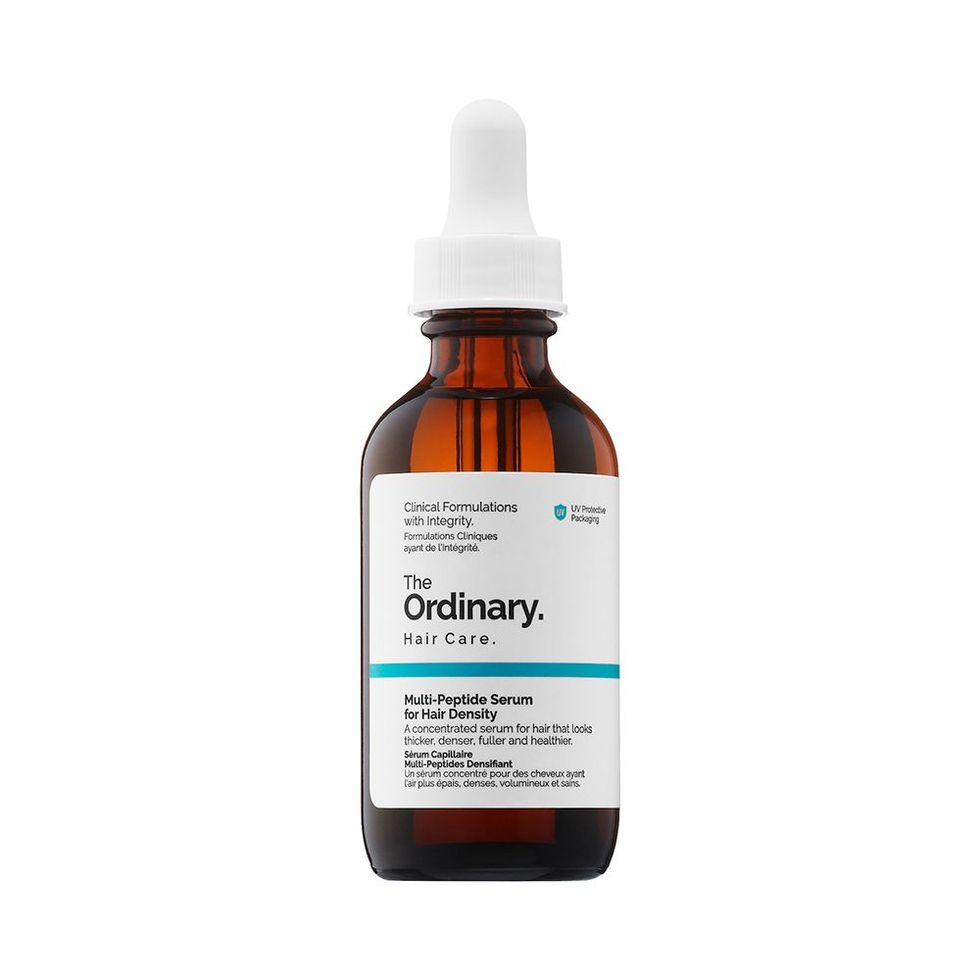
Hate to be the bearer of bad news, but minoxidil (the active ingredient in Rogaine) is the only topical treatment that can make your hair grow faster, and it can definitely be a bit drying since you have to use it nearly every day until the end of time to keep seeing results. But you can give this dry-scalp treatment a try, because it includes two peptides to help stimulate collagen production, which can slowly boost your scalp’s health and ultimately create an optimal scalp environment for hair growth. Plus, it’s filled with moisturizers like glycerin, arginine, and glycine soja-germ extract (an ingredient that helps draw water into your skin) to help ease some dryness and flakes.
THE REVIEWS: According to one review, “I have been using this for around two months. Obviously, hair growth isn’t overnight, but I do find it’s made my hair feel thicker and definitely look fuller, especially around my temples.”

Pros
- Seals in moisture with a handful of natural oils
Cons
- Can be irritating for some sensitive scalps (contains fragrance)
Anyone with 4c hair knows that no matter how gentle and moisturizing a shampoo is, it’s still somewhat drying, especially if you’re already dealing with an irritated scalp. Enter: this pre-shampoo oil, which combines a whole bunch of oils (meadowfoam seed oil, babassu oil, rapeseed oil, maracujá oil, and chia seed oil) that lock in the moisture on your scalp and hair to help offset some of the dryness when you shampoo. Just drip 2 to 3 full droppers onto your dry scalp, massage in, then wait 10 to 15 minutes before hopping in the shower to cleanse. Or leave it on while you sleep for a major scalp-moisturizing moment.
THE REVIEWS: “I suffer from severe dry scalp,” writes one tester. “I used this oil underneath my protective styling, and it definitely helps keep my scalp from feeling raw and filled with dandruff. I tried plenty of ‘all natural oils,’ but this oil has worked the best on my hair. It moisturizes my hair so well that I can extend my wash days out a week or two. I love it so much.”

Pros
- Gently vibrates to help massage your scalp
Cons
- Takes one AA battery that’s not included
If harsh actives still feel a bit irritating for your dry scalp, try this handheld scalp massager with soft, silicone bristles. It has two vibrating modes to help gently exfoliate some of the flakes off your scalp (and feels hella relaxing too, IMO). Just squirt your shampoo directly onto the teeth, then massage it into your roots in the shower when your hair’s wet. Or you can also massage all of your scalp treatments and serums into your dry scalp with this tool before bed.
THE REVIEWS: “The brush is silicone, so it is soft and hasn’t irritated my sensitive scalp,” writes one reviewer. “Plus, the vibration feels amazing on my scalp.”

Pros
- Free of any potentially irritating ingredients
Cons
- Some testers say it left their scalp a bit oily
Truly, this is the MVP of gentle shampoos, because it’s fragrance-free, sulfate-free, essential oil-free, silicone-free, and oil-free. Instead, it’s filled with moisturizing squalane and soothing bisabolol to help calm irritation and dryness while lightly cleansing. I, personally, cut down on shampooing and swap this in once or twice a week when my scalp is in a bit of a tizzy, then offset it with a clarifying shampoo every four washes to break down any buildup and oils.
THE REVIEWS: “I’ve had a sensible/itchy scalp and frizzy hair for most of my adult life,” reads one review. “I’ve been using Seen products for a couple of years now, and WOW, it’s all gone. The shampoo gives me a gentle but effective cleanse too.”

Pros
- Soothes irritation and itch with colloidal oatmeal, aloe, and honey
Cons
- Can be irritating for some with sensitive skin (contains lavender essential oil)
I’m blessed with scalp eczema, which can sometimes lead to a super-itchy, dry scalp, which I’ve started treating with this Eczema Honey oil. It’s lightweight, but contains so many calming ingredients to help relieve some of my itch: aloe vera, colloidal oatmeal, honey, and vitamin E, which all also help moisturize my skin too. I massage it onto my scalp at night before bed, let those oils coat my scalp and hair, then wash it out in the morning.
THE REVIEWS: “I’ve always struggled with an itchy, flaky scalp,” writes one tester. “Within one week of using this scalp oil, I had a noticeable change. I’ll be ordering more and using it daily.”
How to choose the best dry-scalp treatment:

Look for moisturizing ingredients
Make sure your dry-scalp treatments includes one of these dermatologist-approved moisturizers: (1) humectants, like hyaluronic acid, honey, panthenol, and glycerin; (2) rich butters, like shea butter and cocoa butter; and (3) penetrating oils, like argan oil, jojoba oil, and grapeseed oil. All of these will actually help hydrate your skin, while sealants (like castor oil, olive oil, and coconut oil) help lock in moisture and prevent water loss that can lead to a disrupted skin barrier and irritation.
Consider your hair porosity
Quick lesson: Hair porosity is all about how much moisture your hair can hold. Low-porosity hair has a difficult time absorbing anything, while high-porosity hair soaks up water, creams, and custards like a sponge. That said, you can sometimes get a dry scalp, even if your hair is super low porosity and typically oily. In that case, look for lightweight serums, not oils, to help moisturize and soothe your scalp. But if your hair is high-porosity and already on the drier side, feel free to load up your scalp with heavier oils and butters to not only increase moisture but help lock in water.
Meet the experts:

- Marisa Garshick, MD, is a board-certified dermatologist at MDCS Dermatology in New York, NY, and a clinical assistant professor at Cornell. Dr. Garshick specializes in general medical dermatology as well as cosmetic dermatology.
- Anar Mikailov, MD, is not only a board-certified dermatologist at the Lahey Hospital & Medical Center in Burlington, MA, but also the founder of KP Away, a skincare line devoted to treating keratosis pilaris.
Why trust ‘Cosmopolitan’?

Beth Gillette is the beauty editor at Cosmopolitan with nearly five years of experience researching, writing, and editing hair stories that range from shampoo for oily hair to hair-growth shampoo. She’s an authority on all hair categories but is an expert when it comes to dry-scalp treatments, thanks to years of dealing with her own itchy, flaky scalp. She regularly tests and analyzes scalp products efficacy, while working with the industry’s top dermatologists and trichologists to assess new formulas and brands.
Ruby Buddemeyer was the beauty editor at Cosmopolitan for three years and has written hundreds of beauty stories about hair, skin, and makeup, including shampoos for thinning hair and protein treatments. Interviewing experts, testing products, and reading reviews is how she compiled this list.
Brooke Shunatona is a contributing writer for Cosmopolitan with more than 10 years of experience writing about beauty, fashion, and lifestyle articles, including hair diffusers and 2023 hair trends. Her dry-scalp treatment picks were based on product reviews, ratings, and personal testing, along with information from experts.
Beth Gillette is the beauty editor at Cosmopolitan, where she covers skincare, makeup, hair, nails, and more across digital and print. She can generally be found in bright eyeshadow furiously typing her latest feature or hemming and hawing about a new product you "have to try." Prior to Cosmopolitan, she wrote and edited beauty content as an Editor at The Everygirl for four years. Follow her on Instagram for makeup selfies and a new hair 'do every few months.
Ruby was the beauty editor at Cosmopolitan, where she covered beauty across print and digital. Her work has appeared on The Zoe Report, Fashionista, and StyleCaster. Follow her on Instagram.

Readers Also Read

Amazon Corset Dresses for ‘Wuthering Heights' Vibes

Unique Gifts That Your BF Will Actually Like

The Best Shoes for Styling Wide-Leg Jeans

Ranked: The Best Products From The Ordinary


