The Best Keratosis Pilaris Treatments and Products I’ve Tested as a Beauty Editor
I'm not here to B.S. you—if it's on this list, it means it actually worked on my bumps.

We may earn commission from links on this page, but we only recommend products we love. Promise.
If you know me, you know I have a bumpy skin texture because you've probably heard me complain about it erm every other day. The culprit? Keratosis pilaris—aka "KP," "chicken skin," or "strawberry skin"—which extends all over my thighs, butt, cheeks, and most notably, the backs of my arms. As a refresher, “keratosis pilaris is caused by excess keratin building up in your hair follicles, leading to tiny, hard, red bumps (in lighter skin tones) or brown bumps (in darker skin tones) on your skin,” says dermatologist Mona Gohara, MD. About 40 percent of adults have keratosis pilaris, and unfortunately, there's no cure, but you can make it look and feel better.
I've tested every keratosis pilaris treatment out there, from DIY methods to prescriptions recommended by my dermatologist—oh, and all the wacko internet "cures"—to find the treatments that actually get the job done. If it's on this list, it means I used it for at least three months at some point in my life and stand by its efficacy. And while my KP isn't gone (and never will be, womp), it is dramatically reduced—probably 50 percent better than it ever was, thanks to a gentle, consistent routine. Below are 11 products and three professional in-office keratosis pilaris treatments that I recommend in 2024, along with advice from three KP experts, dermatologists Dr. Gohara, Karan Lal, MD, and Mary Thomas, MD.
Our top moisturizers and treatments for keratosis pilaris:
Best Moisturizing Lotion for Keratosis Pilaris
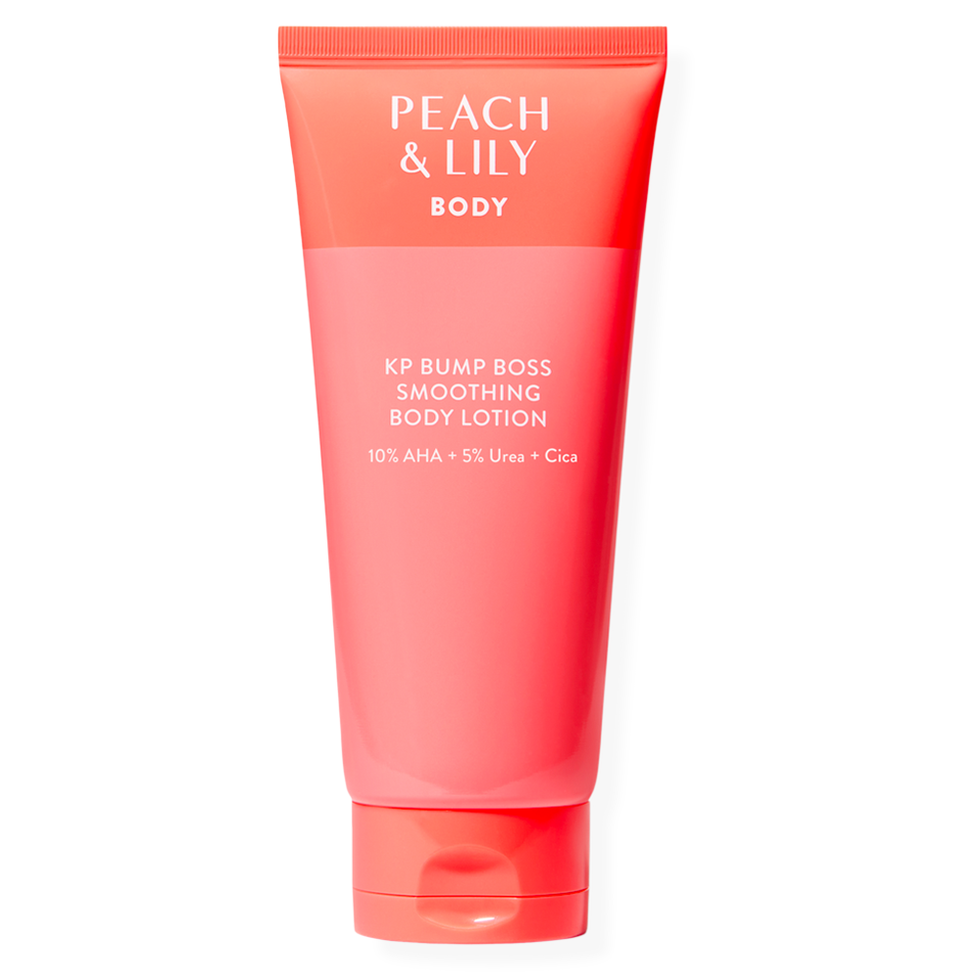
Peach & Lily KP Bump Boss Smoothing Body Lotion
Read more


Just remember:
Dousing your keratosis pilaris in acid and trying to scrub it off will make your KP come back harder and angrier. So, before you buy every product, you need to understand what's causing the bumps, or you'll never be able to correctly treat them without making them worse. Below, I've also included my own KP treatment routine that I use on my face and body, how to "get rid of" keratosis pilaris, and what causes KP bumps in the first place.
Pros
- Uses hydrating acids (yes, that's a thing) to help offset dryness
- Formulated with some soothers to mitigate irritation
- Fragrance-free

Cons
- Feels a tiny bit too sticky to use on humid or hot days
- High-strength acids, so you may need to start slow

Why we love it: It’s not only filled with 10 percent AHAs (6 percent lactic acid and 4 percent glycolic acid), but it also uses 5 percent urea—which, if you’re unaware, is one of the best freakin’ ingredients for keratosis pilaris.
Why? Because urea is technically a humectant, meaning it draws water into your skin to keep it hydrated, but it also has mild exfoliating properties. So you’re getting an extra dose of bump-smoothing magic without the drying side effects.
One Cosmo editor says: "This is the latest product I’ve added to my KP arsenal, and I’ve been genuinely impressed with how it’s helped smooth my arm bumps and even take the edge off my redness. The lotion also uses centella asiatica (aka cica, an anti-inflammatory herb) to soothe, along with shea butter and squalane to moisturize, and I legit think this combo is one of the main reasons why my skin tolerates the high-strength acids so well without getting itch. Tbh, when I’m feeling lazy, this is the only product I’ll use some weeks for my KP."—CHLOE METZGER, FORMER DEPUTY BEAUTY DIRECTOR
| Key ingredients | Lactic acid, glycolic acid, urea, cica, shea butter |
| How often to use | Once a day (or twice a day, if your skin can handle it and you're not using any other scrubs, retinoids, or acids) |
Pros
- Smoothes skin with granactive retinoid, a less irritating form of retinol
- Doesn't pill when I apply moisturizer on top
Cons
- Can be super drying and irritating if used too frequently
Why we love it: Retinoids speed up your cellular turnover and help your skin shed faster, making it harder for keratin plugs to form in the first place, says Dr. Gohara. Is retinol the most effective treatment for keratosis pilaris? No—AHAs are (like lactic acid). But! This retinol body serum definitely helped soften my bumps when I used it in place of my acid-based lotion twice a week. And as an added bonus, it can help firm and tighten skin over time.
One Cosmo editor says: "My KP has been especially stubborn this winter, and all of my usual products aren't cutting it. My dermatologist recommended trying this body retinol serum, and it's completely smoothed my skin. My best friend even asked me how my arms got so soft. This formula is potent but not irritating, and it pairs really well with rich body butter."—BETH GILLETTE, BEAUTY EDITOR

Features at a Glance
| Key ingredients | Granactive retinoid, vitamin C, panthenol, shea butter |
| How often to use | One night a week, slowly building up to every other night (and don't use on the same night as any other active product, including scrubs or acids) |
Pros
- Doesn't contain fragrance or essential oils
- Has a fine grit to evenly exfoliate skin
Cons
- Can be irritating to sensitive skin types
- Will make KP worse if used too often
Why we love it: Please, please don't try scrubbing the hell out of your KP—it won't work. “Exfoliating with harsh scrubs or loofahs can actually create more inflammation and dryness, making your keratosis pilaris way worse,” says Dr. Gohara. Instead, once a week, gently massage a body scrub filled with skin-smoothing AHAs (alpha hydroxy acids) over your wet skin—body only—in the shower, letting it sit for 60 seconds before rinsing off.
One Cosmo editor says: "I've been through a few tubes of this in the last five years, and it's a formula I always come back to for sloughing away body bumps. It's a gentle scrub that doesn't irritate my sensitive skin and easily washes away in the shower (so many scrubs can turn my tub into a whole mess)."—BG
| Key ingredients | Lactic acid, glycolic acid (chemical exfoliators); pumice (physical exfoliator) |
| How often to use | Once a week (and don't use any other scrubs) |

Pros
- Super gentle and moisturizing on even hyper-sensitive skin
- Has a rich feeling without looking greasy
Cons
- Expensive for how much product you get
- Might be too heavy for oilier skin types
Why we love it: When you have KPRF (keratosis pilaris rubra faciei, i.e., KP on your face), it can feel like everything that touches your sensitive skin somehow makes your KP angrier. But this cream is incredibly moisturizing without any fragrance, harsh ingredients, common allergens, or known irritants, which is exactly what your face needs to handle the acid-based products you're throwing at it.
One Cosmo editor says: "I have an obsession with this gentle face cream. Just note that it is on the richer side, so on days when I'll be outside in the summer heat, I'll save this one for nighttime and instead use my other favorite, the lightweight Paula's Choice Rescue & Repair Moisturizer."—CM
| Key ingredients | Squalane, shea butter, arginine |
| How often to use | Every day, twice a day |

Pros
- Doesn't contain gritty exfoliants, so won't tear your skin
- Lasts a surprisingly long time, thanks its bar-soap formula
Cons
- Can dry out skin *very* easily
- Has a strong sulfur smell in the shower
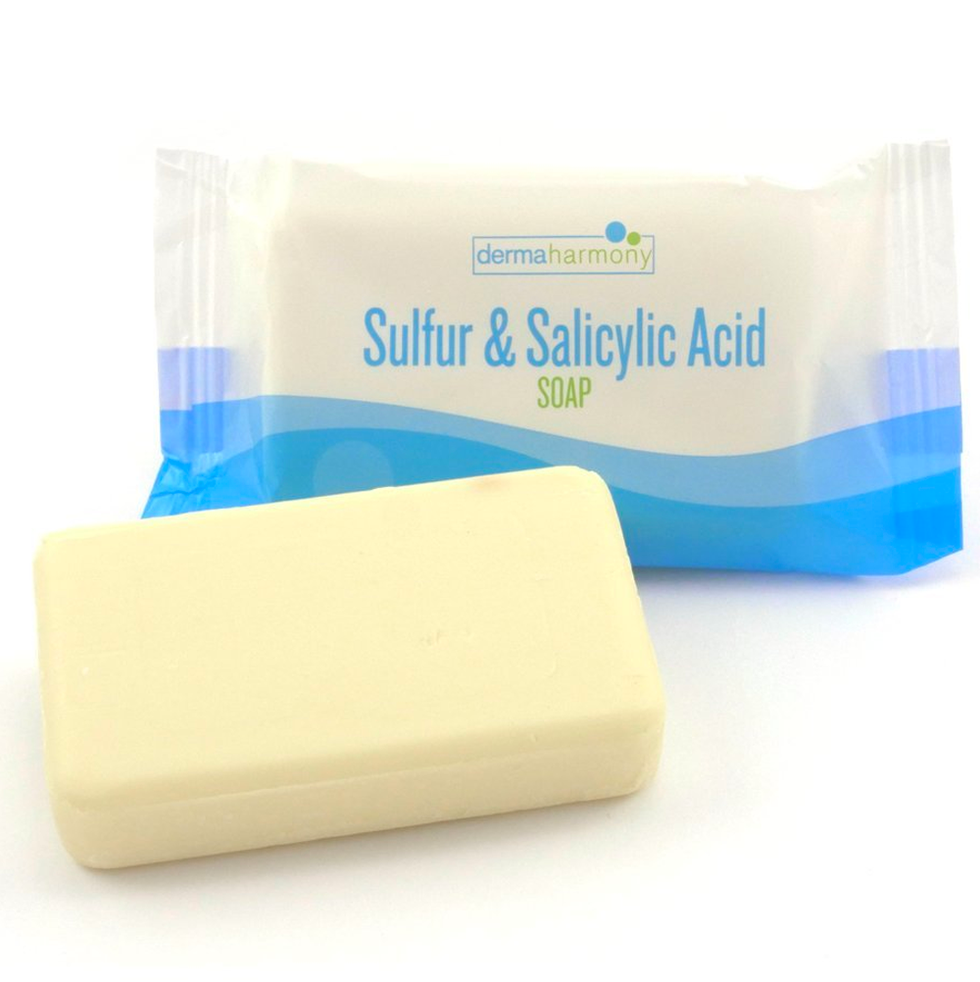
Why we love it: Reminder: Your keratosis pilaris is made of built-up keratin (i.e., the same stuff in your fingernails). And sulfur—the main ingredient in this bar soap—is a "keratolytic" agent, meaning it works to dissolve the bonds in your keratin plugs, helping them to shed faster. We <3 keratolytics, which is why I also love this soap: It's filled with 10 percent sulfur and 3 percent salicylic acid (another keratolytic agent with redness-reducing properties), making it a KP-kicking powerhouse.
One Cosmo editor says: "This soap (and sulfur in general) is strong and can be pretty drying. So once or twice a week, I gently rub it over my wet skin (body KP only!), wait five seconds, then rinse off."—CM
| Key ingredients | Sulfur and salicylic acid |
| How often to use | Once or twice a week (and don't use on the same day as your other scrubs or retinoids) |

Pros
- Surprisingly gentle, even for reactive skin
Cons
- Takes a longer time to see results (but worth the wait)
Why we love it: The only thing more frustrating than KP on your body? KP on your face. It’s rare, especially for adults, and yet here I am, living my best bumpy-cheeked life. This 5 percent lactic-acid-based serum is the gentlest AHA I’ve found, and its hyaluronic-acid base helps keep KP hydrated.
One Cosmo editor says: "I’ve spent a lifetime (literally) trying to destroy my facial KP, and here’s what I’ve learned: Use only the gentlest of acids, never scrub, and keep your skin as moisturized as possible. I dab this serum on clean, dry skin every other night, wait 60 seconds, then layer on a rich, gentle moisturizer."—CM
| Key ingredients | Lactic acid (gently exfoliates), hyaluronic acid |
| How often to use | Every three days or every other day (and don't use on the same night as retinoids) |


Pros
- Helps soften KP bumps while hydrating your skin
- Isn't *too* strong, so most people can use it daily
Cons
- Feels a little sticky and tacky, especially in the heat
- Can sting (for a second!) if you have cuts or scratches
Why we love it: You can’t talk about keratosis pilaris without mentioning this O.G. hall-of-fame staple. Amlactin is pretty much the only answer I’ve ever gotten to “how to get rid of keratosis pilaris” and I've had a bottle of it in my bathroom since middle school (I'm serious). The lotion is filled with 12 percent lactic acid that helps dissolve your keratin plugs while also moisturizing your skin.
One Cosmo editor says: "It really, truly works, but only if you use it every day (on your body only!) for...the rest of your life. The only downside? Its high percentage of lactic acid makes it kinda sticky, so during humid months, I only slather this one on at night."—CM
| Key ingredients | Lactic acid, mineral oil |
| How often to use | Once or twice a day (but don't use on the same day as retinol) |

Pros
- Locks in moisture to help soften bumps
- Only two ingredients, so zero allergens or irritants
Cons
- Doesn't work well under makeup
- Shiny, especially when layered over moisturizer
Why we love it: So this isn't really a moisturizer—it’s an occlusive, i.e., something that traps hydration into your skin and makes the products underneath it (like your regular moisture) way more effective. It doesn't sound exciting, especially since it can't burn or scrub your skin off, but moisture is the true key to soothing keratosis pilaris.
One Cosmo editor says: "I've been using the Elta MD moisturizer on my facial KP for six straight years now (ahem, that's more than 2,000 freakin' days), and it was a huge game-changer for my bumps. After slathering on a thick layer of my regular face cream, I smooth a dab of this occlusive over my KP while my skin is still "damp." It’s incredibly shiny and almost greasy-looking (think: slugging-level shiny), so I only use it at night, but trust me—this stuff helps."—CM
| Key ingredients | Petrolatum |
| How often to use | Every night (or day, if you can handle the shine) at the end of your skincare routine |

Pros
- Feels truly lightweight and non-greasy
- More potent than traditional lactic-acid creams
Cons
- Not super moisturizing for winter months
- Makes your skin prone to sunburns, so requires daily SPF use
Why we love it: Glycolic and lactic acids are the gold standard for treating KP, and for good reason: Both AHAs (alpha hydroxy acids) break down your keratosis pilaris bumps to leave your skin smoother. The only difference? Glycolic acid—like the 10 percent found in this body lotion—is stronger than lactic acid, so it's more effective, but it also tends to be more irritating on sensitive skin. But this formula works well for even my super-sensitive skin.
One Cosmo editor says: "I've been using this lotion for a full year now—I usually alternate with Amlactin depending on the weather—and I can tolerate it on my arms and legs every single night, as long as I layer it on top of my body moisturizer (which I prefer to do anyway, since it isn't very moisturizing on its own)."—CM
| Key ingredients | Glycolic acid, shea butter and grapeseed oil, green tea extract |
| How often to use | Every day or night (but may be too strong to use on the same day as a scrub) |
Skinfix Resurface+ Glycolic and Lactic Acid Renewing Body Scrub

Pros
- Seriously good at breaking down dry patches and bumps
- Filled with coconut and grapeseed oil to help moisturize skin
Cons
- Has lemon and orange extracts that can irritate allergic skin
- The strongest scrub on this list, so may be too potent for some skin types
Why we love it: This body scrub from Skinfix has two powerhouse acids: 7 percent glycolic acid and 6 percent lactic acid to help break down KP bumps while buffing away the surface layer of your skin.
One Cosmo editor says: "This one is super-popular among my friend group for smoothing bumps (especially butt bumps), but I found it a bit too strong for my ultra-sensitive and allergic skin.That being said, it's legitimately effective, so I still recommend it as a gold-star option for anyone with not-too-sensitive skin who hasn't had great success with the other scrubs on this list (and remember: I truly do not recommend anything that I don't believe in for KP)."—CM
| Key ingredients | Glycolic acid, lactic acid, willow bark extract, grapeseed oil, coconut oil |
| How often to use | Once or twice a week (and not on the same day as other retinol or acid-based products) |
Botox for Keratosis Pilaris

Okay, this is actually the treatment I’ve been most excited about for my facial KP. No, I’m not talking about regular Botox, but “Skin Botox,” a highly popular South Korean treatment for getting glass skin. Basically, instead of getting Botox (or any neurotoxin, like Xeomin, Dysport, or Daxxify) injected into your muscles to prevent movement, “Skin Botox involves injecting small amounts of neurotoxin into the outer layers of your skin to target pores, blood vessels, and oil glands,” says dermatologist Karan Lal, MD.
Find a Botox provider in your zip code
The result? Smoother, calmer, more even-looking skin—which is an absolute dream if you have splotchy, bumpy, keratosis pilaris on your face (or anywhere!). Just note: “Because your skin is constantly shedding and it’s a huge organ, it’s probably going to last only six to eight weeks,” says Dr. Lal (and I can attest to that), but if you have the means—see: $300 to $1,000—and your KP is seriously bothering you, it may be worth testing out, especially before an upcoming event.
Microneedling for Keratosis Pilaris

Professional microneedling (like SkinPen or Dermapen), involves a dermatologist or physician puncturing your skin with itty-bitty needles to trigger fresh collagen and elastin production, resulting in smoother, brighter, tighter skin. And, when done carefully and correctly—i.e., by a doctor who can pick the correct needle length—it can even help smooth your keratosis pilaris over time.
Find a microneedling provider in your zip code
“Microneedling can help flatten out KP bumps by removing the excess keratin clogging your follicles,” says Dr. Lal. Just remember that skin with keratosis pilaris tends to be extra sensitive, so your KP will likely look extra blotchy and irritated for a few days after treatment. But, after a few sessions spaced four to six weeks apart, you should start to see fewer bumps and smoother skin (or at least know whether or not microneedling is working for you).
Laser Treatments for Keratosis Pilaris

Remember: Nothing can truly get rid of your keratosis pilaris (since it’s part of your DNA), but certain in-office laser treatments can help reduce your redness/hyperpigmentation, along with your bumpy texture. Realistically, there are tons of different types of lasers and wavelengths your dermatologist might use on you, but here are the most common for KP:
IPL (Intense Pulsed Light)
IPL “uses different wavelengths of light to target the walls of the blood vessels and cause them to collapse,” says Dr. Lal. “IPL can help not only with redness, but also the hyperpigmentation that can come from keratosis pilaris.”
PDL (Pulsed Dye Laser)
PDL “targets and constricts red vessels in the skin,” says dermatologist Mary Thomas, MD. Unlike IPL, PDL is an actual laser that emits a concentrated wavelength of light to treat hyperpigmentation and flushing by heating up and destroying blood vessels to neutralize redness, and studies have shown PDL to be effective for treating KP on the face, as well as the body.
Nd:YAG laser
Nd: YAG lasers, like Aerolase or ClearSilk, are “great for KP because they act on the water in the skin—which is a big component of your skin—to heat it up without destroying the top layer of your skin,” says Dr. Lal. “It’s an amazing treatment for redness and texture, and it’s safe for all skin tones.”
Laser hair removal
“If a patient’s main concern is the roughness, then I usually try laser hair removal,” says Dr. Thomas. It’s theorized that trapped hair coiled in the follicle can contribute to KP bumps on the body (but not so much on the face), so “if you destroy the hair completely, those bumps can’t happen anymore,” she says.
Are lasers really worth the $$$?
For what it’s worth, I’ve had my facial KP lasered a bunch of times over the years, and I’ve always seen a noticeable decrease in redness, but some lasers were far more effective than others for my specific skin type and color. So, before you drop cash on a laser treatment, ask your dermatologist or plastic surgeon to give you an honest guesstimate as to what you might expect for results.
Of course, they can’t know for sure, but a potential 10 percent reduction may not be worth the money for you, while a 25 percent reduction may be, you know?
What is the main cause of keratosis pilaris?

“Keratosis pilaris is caused by excess keratin building up in your hair follicles, leading to tiny, hard, red or brown bumps on your skin,” says dermatologist Mona Gohara, MD. Annoyingly, no one knows exactly why KP happens in the first place though. "There are theories about keratosis pilaris being a disorder of the hair follicle, or being related to the sebaceous glands, or being hormonally driven," says Dr. Thomas. "But we still don't know enough, so research now needs to be at the cellular level to figure out the exact gene that causes KP," she says.
How do I get rid of keratosis pilaris permanently?

I know this isn't what you want to hear (and neither do I), but because keratosis pilaris is part of your DNA, you can't cure it or get rid of it permanently. That's not to say you can't manage the bumps and discoloration, though—the most effective at-home KP treatments are a combo of chemical exfoliants to dissolve the roughness and rich moisturizers to soften your skin—but these treatments are only effective as long as you use them. “As soon as you stop, your bumps will come right back,” says Dr. Thomas.
How to choose a keratosis pilaris treatment:

How do you figure out which of these products is best for you? It'll be a game of trial and error because every skin type is different. If you're not sure where to start for your body KP, grab an acid-based lotion and an acid-based scrub and test them out for four weeks. Not seeing a difference? Try switching just one of your products (i.e., swap your scrub for a sulfur soap or your body lotion for a body retinol) and keep at it. Your brain will tell you to go harder, stronger, faster, and to ignore all of this advice—but don't. Patience is your BFF when it comes to KP.
Irritation makes KP worse, so throwing every treatment on in hopes that it solves your problem will actually lead to angrier, more irritated skin. Personally, my KP looks best with 90 percent moisture and 10 percent exfoliation. Here's my own personal treatment plan as of right now, though keep in mind what works for me may not work for you:
For the keratosis pilaris on my face:
- A sulfate-free face wash morning and night
- A gentle lactic acid serum every other night
- A fragrance-free moisturizer morning and night
- A second thicker moisturizer (on top of the KP only) at night
For the keratosis pilaris on my body:
- A thick, rich, moisturizing body cream every single night
- An acid-based lotion on my KP every other night
- An acid-based body scrub once a week in the shower (ONCE! Seriously! Trust me!)
Be consistent with the right ingredients.
Keratosis pilaris often goes away on its own when teens go through puberty or as adults age into their 20s and 30s. Of course, you're looking at someone who failed both of those metrics, so it's not a guarantee. Luckily, with the right products (hi, chemical exfoliants and moisturizers), you can reduce the look and feel of your keratosis pilaris within a month, as long as you're hella consistent with daily (gentle!) keratosis pilaris treatments.
Also, remember that your KP will ebb and flow: It can get rougher in the winter, smoother in the summer, and inflamed with stress and hormones, which is why you need to be consistent with a gentle routine.
Meet the experts:

- Karan Lal, MD, is a double board-certified adult, pediatric, and cosmetic dermatologist at Affiliated Dermatology in Scottsdale, AZ. You can also catch Dr. Lal responding to viral beauty trends and myths on Cosmo's TikTok.
- Mona Gohara, MD, is a board-certified dermatologist in Hamden, CT. Dr. Gohara is an associate clinical professor at Yale School of Medicine and president of the Women’s Dermatologic Society. Her areas of expertise include medical and surgical dermatology and skin of color.
- Mary Thomas, MD, is a dermatologist at the University of Toronto in Ontario, Canada, who has authored multiple studies on keratosis pilaris. Dr. Thomas is the head of the membership committee of the Skin of Color Society with a focus on bringing diversity and inclusion into the field of skincare.
Why trust Cosmopolitan?

Beth Gillette is the beauty editor at Cosmopolitan with more than seven years of experience researching, writing, and editing hair stories.
Chloe Metzger was the former deputy beauty director at Cosmopolitan with nearly 10 years of experience researching, writing, and editing skincare stories that range from cystic acne treatments to skincare routines. She’s an authority in all skincare categories, but is an expert when it comes to keratosis pilaris and sensitive skin, thanks to her own lifetime of dealing with rosacea breakouts and her own keratosis pilaris on her face (hi, keratosis rubra faciei) and body.
Additional reporting for this story was done by Siena Gagliano, former associate editor at Cosmo.

Chloe Metzger is the deputy beauty director at Cosmopolitan, overseeing the editorial content and growth strategy of the hair, makeup, and skin space on digital, while also obsessively writing about the best hair products for every hair type (curly girl here; whattup), and the skincare routines that really, truly work (follow her on Instagram to see behind-the-scenes pics of that magazine life). She brings nearly a decade of writing and editing expertise, and her work has appeared in Allure, Health, Fitness, Marie Claire, StyleCaster, and Parents. She also has an unhealthy adoration for Tom Hanks and would like to please meet him one day, if you could arrange that. Thanks.

Readers Also Read

45 Gift Ideas Mom Won't Stop Talking About

Found: The Best Amazon Deals to Shop Today

Our Honest Review of JW Pei’s Celeb-Approved Bags

Before You Try Dermaplaning at Home, Read This


