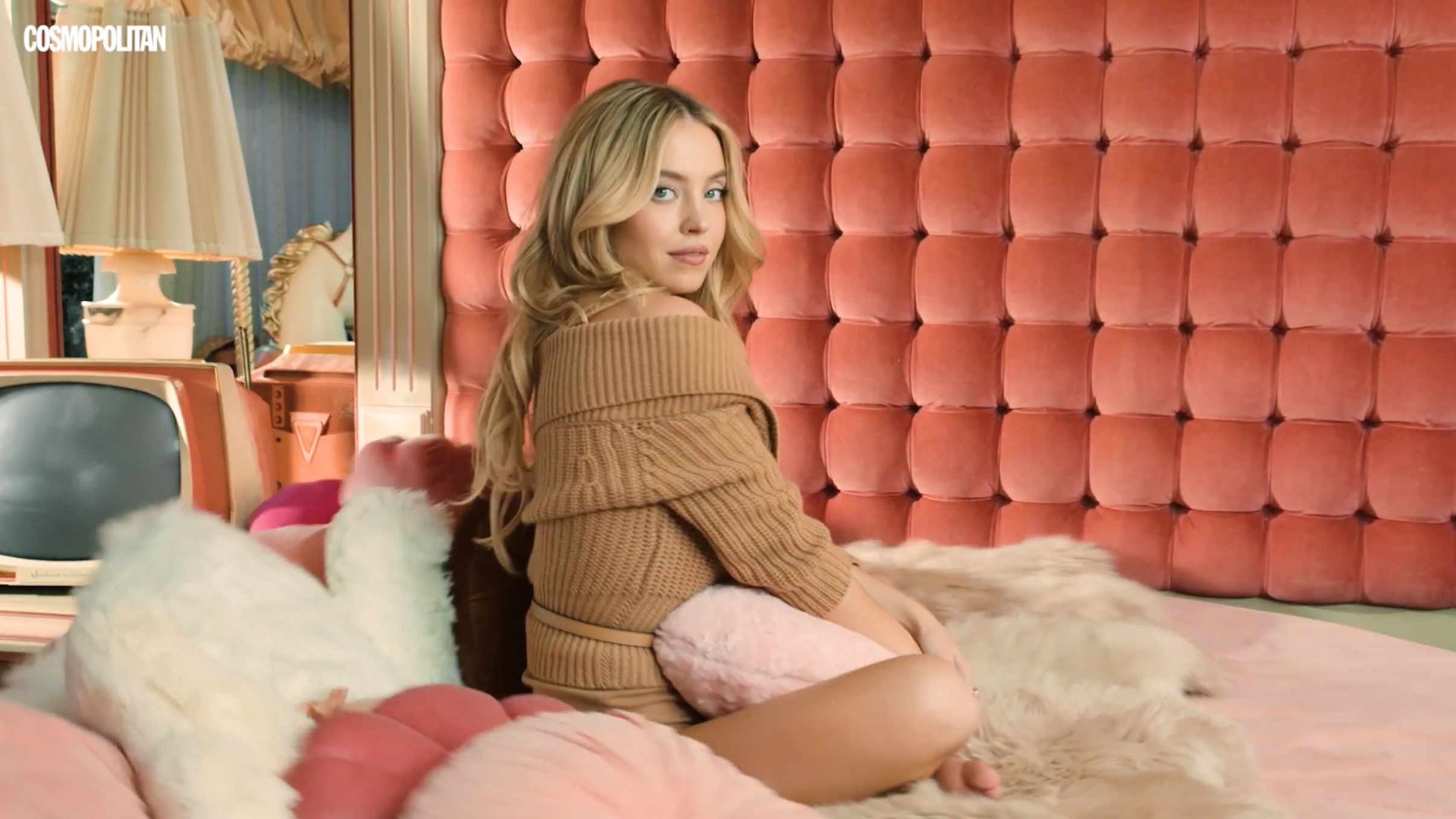
Every few trend cycles, the purveyors of modern beauty standards (it girls, the media, and beauty conglomerates) collectively decide that messy hair is having a “moment.” We’re all urged to embrace flyaways and loosely done updos to channel the perceived effortlessness of Gossip Girl’s Serena van der Woodsen, The Summer I Turned Pretty’s Taylor Jewel, or whichever pop culture figure is championing the messy hair agenda at the time.
This season, we’ve been met with yet another messy hair resurgence. Unkempt styles were all over the Fall/Winter ‘25 runways, a full “messy” hair product line dropped, and “easy-going” top bun tutorials could make up their own TikTok subgenre. But every time I learn that messy hair is “back,” I’m reminded (through the relatively few reference pictures we’re featured in) that Black women can’t really participate in this trend in its true form. Our version of untidy hair comes with a huge asterisk. It needs to be blow-dried or meticulously curled with laid edges, with only a couple of pieces out of place. Or we need goddess braids, Senegalese twists, or some other protective style that can take up to ten hours, thrown into a loosely done ponytail. We’re not allowed to look genuinely disheveled and excuse it as fashion. Our mess has to be carefully maintained.

I first learned this lesson in 2011. It was the height of Miley Cyrus’s rule as Tumblr’s resident boho-chic queen. Inspired by her street style, on the first day of seventh grade, I spent about a minute pulling my kinky 4C hair into an imitation of Miley’s signature top bun, with the carefully placed tendrils and flyaways included. I was going for a natural look, and I avoided using any products so that I could really lean into the easy-breezy “just hopped out of bed” aesthetic that Tumblr promised me was in fashion. I threw on a flower crown headband and, for some reason (maybe an attempt to nurture my creative expression), my mother let me walk out of the house that way.
It was in my second-period math class that one of my classmates matter-of-factly told me that I looked like a field slave, which obviously caused me to spiral and resent every style blog that told me messy buns were the move. Could he not see my adorable floral headband? How could he not recognize that I’d gotten the same effortless hair memo that every white girl in our class was also experimenting with, with their loosely done ponytails and beach waves? Why does a truly understyled bun read as cute and natural on them, and “slave-like” on me? It’s the painful way I learned that I don’t have the wiggle room to let my hair look underdone without social repercussions.
In the decade following my middle school messy bun debacle, the mainstream beauty industry has definitely evolved into a more welcoming space for Black women. There have been large corporate initiatives enacted to ensure that makeup brands offer more inclusive shade ranges and widespread efforts for media brands to platform more Black hair examples in their trend coverage. But when it comes to messy hair, the mood boards and reporting still exist as if it were 2011. The hair types featured usually fall below the 3B mark, and the lead imagery usually highlights a white person. And when Black hair is featured, it simply doesn’t even look that messy.
Study after study has laid the facts out plainly: Black people with actually disheveled hair (or even properly done natural styles like locs or Afros) face a social penalty. The research says non-Black people will perceive us as less professional, less attractive, and less competent than any given white person rocking the carefree tousled bun.
So when legacy brands and teenagers on TikTok don’t feature people who look like me in their “messy hair” galleries—I get it. And when I search “messy bun inspo” with a “Black” or “coily” specifier on Pinterest, only to be met with looks that are still sleek and put together, I understand why. There’s a general understanding that in a genuinely uncontrolled state, our hair is political, provocative, and can even further subjugate us. Which is unfair, to say the absolute least. On a deeper level, it means that we don’t have permission to be average or imperfect, permission everyone deserves.
“I think the initial issue is the fact that the way our textured hair naturally grows out of our heads has largely been considered 'messy' by the masses—but not in a trendsetting way,” says Julee Wilson, Cosmo’s beauty editor-at-large. “It can be seen as unkempt or unprofessional. But I believe the twists and turns of our crowns are part of our magic and overall dopeness. Per usual, our gravity-defying, shape-shifting hair is only deemed trendy or “in” when it’s adopted by our White counterparts.”
Who gets to be mediocre is the real question. When social expectations exclude us from effortless looks (kinks awry, uncombed and all) the message is that we can’t simply exist to receive respect. Our respect hinges on our presentation. But Black women deserve the chance to look “messy” as much as anyone else.
And while right now we’re not seen as the image of the perfect messy hair look, I’d like to think that one day our natural kinks’ “mess” can be widely accepted as carefree and beautiful in their own way. That’s the silver lining of society's seemingly semi-annual fascination with effortless hair, Julee tells me. “Perhaps this 'messy' trend will shine the spotlight on a beauty aspect that is so deeply inherent to us.”

Annabel Iwegbue is a culture editor at Cosmopolitan, where she primarily covers pop culture, lifestyle, relationships, and digital trends. She previously wrote for Harper's Bazaar, The Knockturnal, and Black Film. She's originally from Charleston, South Carolina, and is currently based in Brooklyn, New York. She holds a B.A. in Journalism and Cinema Studies from New York University. You can check out some of Annabel’s work here and also find her on Instagram and Twitter.