The 8 Best Indoor Palm Plants to Buy if You Want Your Apartment to Feel Like an Oasis
Calling! All! Plant! Moms!
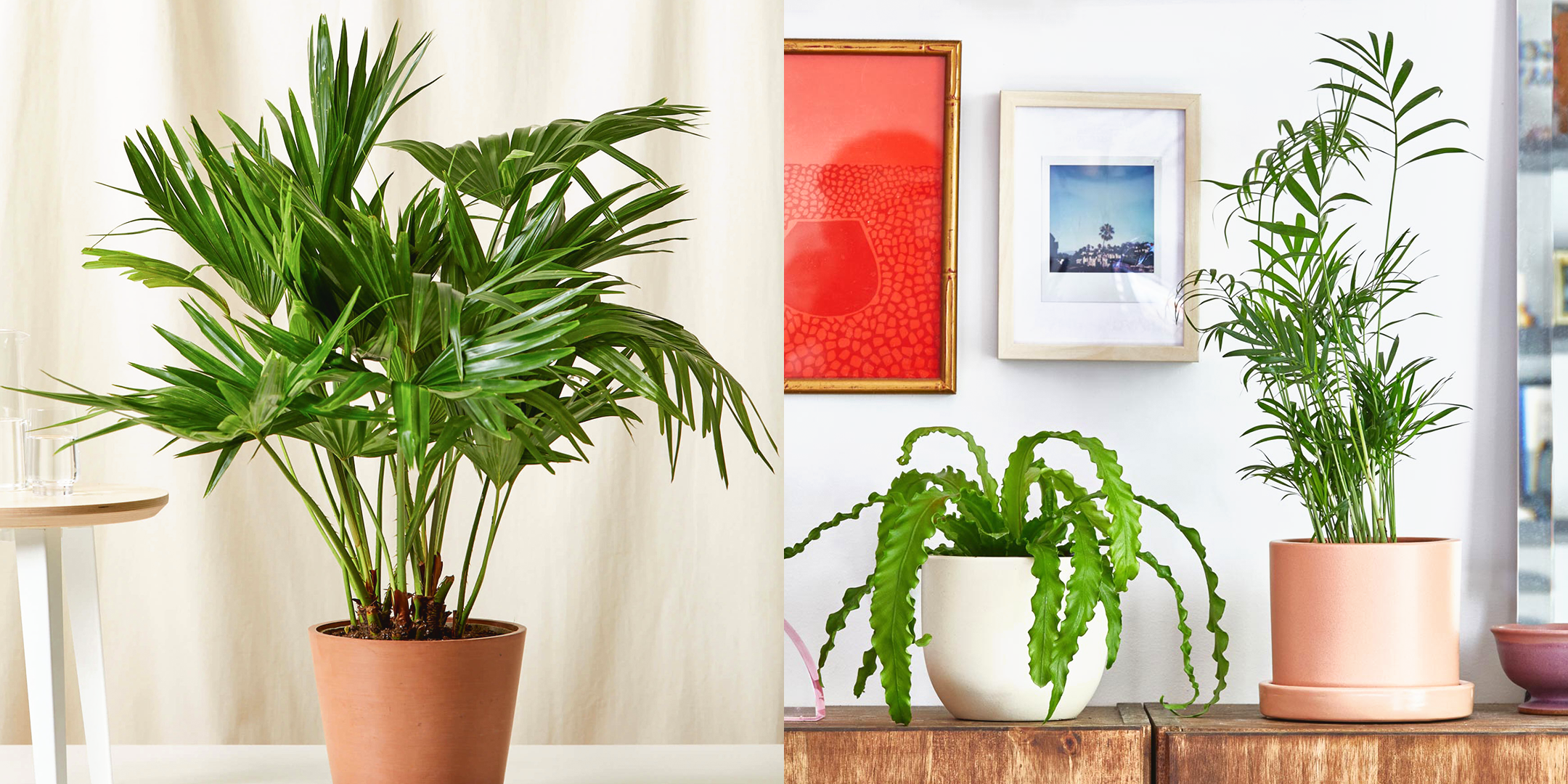
We may earn commission from links on this page, but we only recommend products we love. Promise.
We are at the very beginning of what I call ~the gray months~. Ya know, the time between December and March when just about everything outside turns some sad shade of gray, making you feel bleh inside and out. It can be an especially rough time for my fellow summer lovers (RIP 8 pm sunsets) who spend most of the winter daydreaming of beachy vacays and being able to show off fresh pedis in strappy sandals. A slushy, not-so-wonderful winter wonderland may be just a few short steps from your doorstep, but you can still have some tropical oasis vibes in your life—and specifically in your home. How, you say? I'm glad you asked. All you need to do is bring in a palm plant. They're pretty, they're practical, and TBH, they're way cheaper than a flight to Tulum.
Admittedly you might be a little bit hesitant about becoming a plant parent. Trust me, I get it. I've managed to kill a succulent or two in my time. But most palm plants are relatively low maintenance. So says Diana Cox, a plant enthusiast-turned-expert and the founder of The Gardening Talk, a website dedicated to all things green and leafy. She promises that palm plants are a great option for beginners, or those who can be a tad forgetful when it comes to watering (whoops!).
Knowing which indoor palm plant is best for your experience level, space, and environment can def be a bit overwhelming, I know. So does Sarah Barnard, a WELL and LEED accredited designer and certified California naturalist, who says, “With so many species of palm trees available, it's important to research your specific variety to ensure you are well-prepared for success.” Luckily, Barnard and a few other savvy plant experts are giving you allll their inside tips and recommendations to help you on your journey toward palm plant parenthood. Can I get two big green thumbs up?! TYSM! Now keep on scrolling for all the leafy goodness.

Pros
- Easy to care for
- Hardy

Cons
- Can grow very big, so not ideal for small living spaces

This palm plant is both a grower and a shower! Although it can take years, the European fan palm can reach upwards of nine feet tall, meaning this bad boy will try to raise the roof if your ceiling isn't high enough. Besides being large and in charge, European fan palms are known for their hardiness, making them an ideal choice for those living in colder climates, explains Cox.

Pros
- Low maintenance
- Doesn’t require much water
- Non-toxic to cats and dogs
Cons
- Does best in bright light, so a window is a must
No, we aren't talking about the updo here. But we are talking about a super popular and easy-to-care-for palm plant. The ponytail palm (which low-key looks like that meme of a Bratz doll with the messy hair) can add a pop of vibrant green to any space. It's also basically a little air purifier, because the unique shape of its leaves helps trap pollutants, says Cox. Also, kinda random, but the ponytail palm is actually part of the asparagus family, explains Barnard. The more ya know!

Pros
- Adapts well to light changes
- Great for smaller spaces
- Non-toxic to cats and dogs
Cons
- Grows slowly
In a dream world, I would have 10 massive palm plants in my living room. However, my 450-square-foot apartment isn't exactly conducive to this fantasy. For those who live in tight quarters but really want a fronded friend, opt for the easy-to-care-for and compact parlor palm. Small enough to fit on your desk or tabletop, this little guy makes the perfect addition to tiny homes, studio apartments, and dorm rooms.

Pros
- Pretty low maintenance
- Thrives in indirect sunlight
Cons
- Requires room to grow
- Moist soil is a must at all times
The cascade palm, also referred to as the cat palm, is basically the Zendaya of the plant world (meaning it manages to look beautiful at all times without much effort). This easy-to-care-for palm, native to southern Mexico and Central America, will have your indoor living space looking all types of tropical, explains Cox. Sadly, for you studio apartment dwellers, this one requires a lot of space, as its leaves grow outwards.

Pros
- Drought-tolerant
- Low maintenance
- Non-toxic to cats and dogs
Cons
- Has sharp barbs on the stems (so be careful when handling!)
If your home is adorned with bold statement pillows, colorful rugs, and/or a gallery wall made entirely of mix-and-match frames you thrifted, then your maximalist heart will absolutely LOVE the drama of a Chinese fan palm. This bb’s striking texture and sprawling fronds resemble a glamorous folded fan. Since this plant can handle dry soil, Lindsay Pangborn, the Director of Brand Marketing at Bloomscape, recommends the Chinese fan palm for jet setters who spend more time out of their home than in it. No water, no worries!

Pros
- Robust and vibrant
- Non-toxic to cats and dogs
Cons
- Needs lots of water, high humidity, and plenty of indirect sunlight
She's a little fussy, but with patience, love, and care the majesty palm will have your home feeling like a palace. The regal-looking plant, native to Madagascar, requires a good bit of water and thrives in high humidity, explains Cox. Despite this, its vibrant fronds make the majesty palm’s high-maintenance status totally worth it.
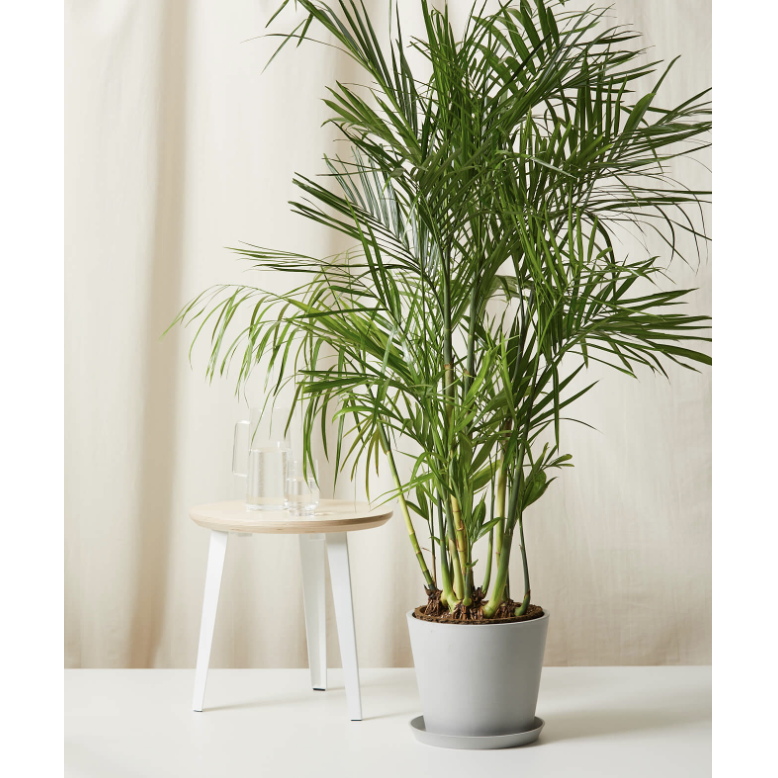
Pros
- Easy to care for
- Can thrive with limited light
- Non-toxic to cats and dogs
Cons
- Make sure you have enough space to house this bb, since it can grow upwards of eight feet tall
One of my biggest complaints about my apartment is the lack of natural light, which makes for quite the challenge as I try to maneuver my plants around what little sunlight does make it through the windows. Having a vampire-approved living space doesn’t mean plant ownership is out of the question though. The Bamboo Palm does surprisingly well in environments with less-than-ideal lighting. So, fellow cave-dwellers rejoice! Plus, this bad boy is also known for its air-purifying properties, says Pangborn.

Pros
- Hardy
- Non-toxic to cats and dogs
Cons
- Susceptible to discoloration if not watered properly
Want the modern feel of Kim Kardashian’s mansion without committing to a totally bare and overwhelmingly beige aesthetic? Barnard recommends the decorative kentia palm for those who are into the minimalist aesthetic. Pop this green beauty in a terracotta pot and you'll have yourself a gorgeous addition to any space. This babe does best with bright indirect sunlight and damp soil, Barnard shares. And beware of yellowing fronds—they might mean you're overwatering!
Tips for Caring for Your Indoor Palm Plant

- Fight rot. Palm plants are notorious for root rot, says Cox, so be sure to opt for a loose, porous soil mixture (Cox recommends cactus or palm soil) to help your green friend avoid the dreaded soggy bottom.
- Be mindful of color. Just like your face turns a shade of red after drinking one too many martinis, the color of your palm’s fronds is a direct indication of its health. “When a palm’s fronds turn brown, it often has to do with too infrequent watering, the water quality, providing too much fertilizer, or due to cold weather," says Pangborn. "When the fronds begin to yellow, this is often due to a lack of ideal lighting, too frequent watering, or when there is an insect infestation."
- Consider placement. Be mindful of where you place your new plant bb. Avoid sitting your plant next to heat sources like your furnace. In addition to intense heat, Barnard suggests keeping your palms away from air conditioning. Plants get cold too, ya know!
- Pick the perfect pot. Just like you with your clingy ex, happy, healthy palm plants also need room to breathe. Barnard suggests choosing a planter large enough to ensure the roots have space to grow, which will increase your palm's longevity. Also, consider planting in a ceramic or terracotta pot, which both have porous textures that allow for drainage and breathability.
About the Experts

Sarah Barnard, WELL AP + LEED AP, is a certified California naturalist and a leading designer of personalized, sustainable spaces that support mental, physical, and emotional well-being. She creates highly personalized, restorative spaces that are deeply connected to art and the preservation of the environment.
Diana Cox is a gardener, plant lover, and mother of two who took her passion for plants online as the founder of The Gardening Talk. Diana shares her knowledge by teaching gardening classes and introducing others to the joys of plant care through her blog.
Lindsay Pangborn is the Director of Brand Marketing for the modern e-commerce greenhouse, Bloomscape. She has 15 years of green industry experience that has included public gardens, greenhouse growing, landscape maintenance and design, and marketing for an international plant breeder. Lindsay received a horticulture degree from Ohio State University.
Readers Also Read

Your Horoscope for the Week of March 29

Plan Your B-Day Around Snagging These 40 Freebies

Amazon Travel Must-Haves You Don’t Have Yet
Amazon’s Outdoor Decor Section Is Where It's at


