
This Thursday is the finale of Reacher season 3 and I can’t wait to find out how titular character Jack Reacher will use his big, big muscles to defeat an illegal gun trade. Think it’s weird that a Cosmo editor who has written articles critiquing patriarchal media and arguing for more female-driven narratives is obsessed with this TV show? Well, the truth is, I’ve given up on trying to solve the world’s problems and I’ve surrendered to the sweet embrace of smooth-brained, dad-friendly TV. Lately, it’s the only thing getting me through the hellscape that is our current political moment. In the aftermath of the Severance season 2 finale, I’m thinking we don’t love Severance because it’s good. (Sorry not sorry.) I think we’re obsessed with it because we’re jealous. The truth: We all want to be severed.
Look outside, the world is falling apart. The Secretary of Defense is texting literal war plans to random journalists, President Trump is using a law from 1798 to disappear immigrants to an El Salvadorian prison, and the U.S. economy appears to be barreling toward a recession. I live my life in pursuit of something—anything—that might numb my brain to the point of oblivion so that I could just tune it all out. I want to lose all awareness of the dismantling of Social Security, the ever-growing threat of climate change, and whatever Elon Musk is. I want to be severed, but I can’t. The only thing that comes close? Dad shows. The ones about confident, masculine men who are tough but noble, violent but never cruel. The ones that rely on classic Western tropes where the man saves the girl and gets laid in exchange for all his good work. I’m talking Reacher, The Night Agent, and even, when I’m in a really dark place, The Recruit.

These days, I never feel more at peace than when I’m watching these mediocre shows about white men saving the world one corrupt politician/military op at a time. It’s magic. I see a big, strong man with righteous anger and a willingness to sacrifice himself for a chance at the American dream and I’m transported. My breathing is calm, my brain thoughtless. Just like that, I’ve severed myself from the reality of Israel continuing its assault in Gaza and all is well because I’ve got a macho, fearless man to save me.
In the past year, I have watched all two seasons of Prime Video’s Reacher not once, not twice, but many times over. Same goes for The Night Agent, Netflix’s thriller about a young, hot spy who stumbles his way into two major conspiracies and has to betray his country to save it. I am not, by any means, proud of this. I’m a modern woman, a feminist! And yet, even I, the girl who convinced her 3rd grade gym teacher not to let team captains pick girls last, can’t help but be swept up in the fantasy of having a man save the day.
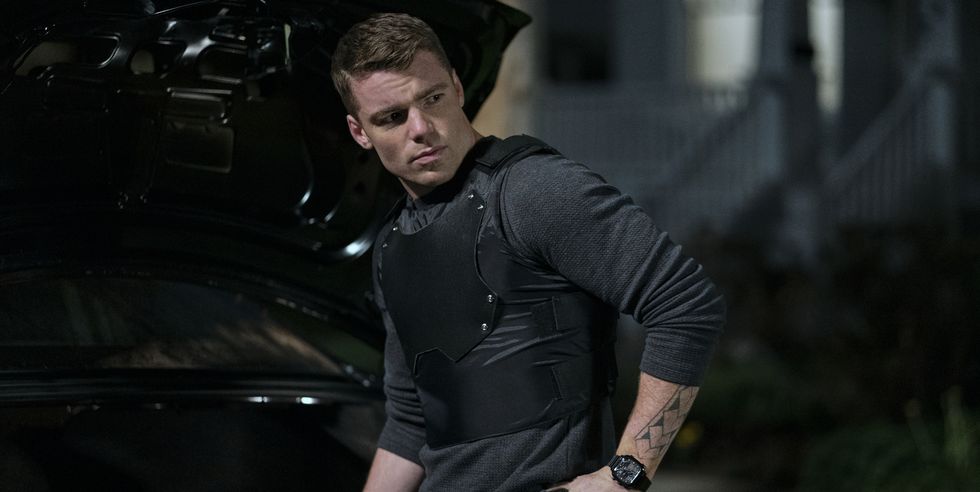
In my usual, fully brain-powered state, Jack Reacher, played by Alan Ritchson, is not exactly my type. He’s a behemoth of a man—think Gaston from Beauty and the Beast. He punches his way out of arguments, loves a good gun fight, and is freakishly patriotic, despite having suffered directly from government corruption after being unjustly demoted by the military he loved to serve. He’s a MAGA-coded hero who could be read as embodying toxic and violent masculinity. But he also respects women and isn’t a racist asshole. He fights against corruption even if that means going against the very law enforcement systems he reveres. He’s a fantasy of what masculinity could be. He’s also got biceps that are bigger than my head and a chest like a brick wall.
How can I resist?
Of course, if Jack Reacher were to come barreling through my door and ask me how he could make the world more tolerable, it’d be pretty hard to give him any real instructions. Sure, I could tell him to scare some sense into certain government officials or recruit his ragtag team of former military cops to expose rampant corruption, but what would that really do? In the real world, one person, no matter how large—and he is incredibly large—can’t fix everything. Right now, it feels like even Reacher wouldn’t make a dent.

But that’s also what makes these shows so comforting. The heroes aren’t actually trying to fix real-life problems. They’re not trying to end wars or famine or the housing crisis. Their problems are not my problems. Their problems can be solved.
Plus, there’s something undeniably comforting to me about a world in which men can—gasp!—actually be good. A world where instead of electing an adjudicated sexual assaulter to the White House, they beat the shit out of him and go along their merry way. A world in which I don’t have to worry about losing access to my bodily autonomy, freedom of speech, or Social Security. A world that’s safe.
So, three months into 2025, I’m just a girl, standing in front of a big, strong TV man, hoping he can save her from this crushing sense of impending doom. Like the workers on the severed floor in Severance, when I’m watching these shows, I have no awareness of the outside world, no bills to pay, no family to disappoint, no social encounter to overanalyze. As a biracial female viewer, I don’t even have to relate to or invest emotionally in any of the characters. I have one job: to watch a man play the hero. That’s it. And, god, does it feel good.
Of course, it’s a privilege to be able to escape, even from the span of an episode of television. Everyone deserves this feeling of lightness, a reprieve from the stresses of the real world, especially those currently living in Gaza or Ukraine or in any other unfair, unsafe situation. And that’s why the escape I’ve found in dad TV will always be fleeting. Circumstances demand action, and I want to fight. I can’t stay severed forever. But for now, maybe, I’ll let myself press play on one more episode.


