Participating in the Olympic Games is a massive honor for the athletes competing in their respective sports—especially because they get to travel to gorgeous countries all over the world for the sporting event. They usually stay in the Olympic Village when they touch down in the host country.
For the 2026 Winter Olympics, participants will stay in six complexes across the Village, which spans across Cortina, Bormio, Livigno, Anterselva and Predazzo. Per the Associated Press, there’s a temporary village in Cortina that will house 1,100 athletes and officials, hotels and alpine lodges in Anterselva and Bormio that will each house 400 participants, and nearly 1,000 people will be staying in Livigno.
Oh, and this year, the Games have really stepped up the perks and amenities throughout the village, including a complimentary glam suite from Italian beauty brand, Kiko Milano, and a recreational area with foosball, air hockey, TVs, and a photo booth sponsored by Coca-Cola.

According to Forbes, athletes can also foster plants to combat loneliness in the village thanks to a partnership with the Cero (“zero”) Stress Plant Shop. When it’s time for them to head home, their plant is donated to local fans and charities and they’ll be given a pack of seeds to grow the same plant, wherever they are. Now, a moment of silence for Brooklyn McDougall’s plants, named after the Heated Rivalry guys:
There are a ton of rules athletes have to follow while they stay in the Village, which, according to several athletes, has more of a college dorm vibe. They share rooms, common areas, and bathrooms, and are typically grouped by sport, despite their age differences. You may be asking, who even sets these rules in the first place? And why do they lean more on the strict side? Well, The International Olympic Committee, or the IOC, puts most of these rules in place so athletes can stay at the top of their game during this really exciting time. Ahead, find all the rules athletes have to follow in the Olympic Village.
So, who can stay in the Olympic Village?

Great question! Technically, only athletes competing in the games are allowed to stay in the Olympic Village—but they can bring their coaches and sport-specific team officials around if needed.
Athletes and sport-specific team officials must arrive 5 days early
Yep. According to the IOC during the 2020 Tokyo Games, training venues were only available five days before each event, which is why athletes and sport-specific team officials are instructed to arrive at that time. If they show up more than a week before the start of their discipline/sport, they'll be denied entry into the Village unless an exception has been made.
They can only leave the Village within 48 hours after their last competition
Oh, yeah, and they reportedly can’t stay in the Village more than 2 days after they wrap up their competition or when they’re eliminated. Their Olympic Identity and Accreditation Card, which grants them access to the building, will be deactivated within that time frame, per the Period of Stay Guidelines.
Protests and political, religious, or racial propaganda are not allowed
Yeah... this rule was put into place ahead of the 2020 competition amid Black Lives Matter and Anti-AAPI Hate protests that were happening at the time. It’s faced significant pushback since then, but in a nutshell, athletes aren’t allowed to protest or push any political, religious, or racial propaganda at all Olympic venues, including:
- On the field of play
- In the Olympic Village
- During Olympic medal ceremonies
- During the Opening, Closing, and other official Ceremonies
Any protests that happen outside Olympic venues must comply with local laws.
They can technically post on social media from the Village
The IOC encourages all athletes to share their experience at the Games with others through their personal social media accounts and websites... but they have to follow specific guidelines, ofc. First things first, athletes can take photos and record audio and videos within the Olympic Village, except for restricted areas like medical spots or doping control stations. They’re also required to respect the privacy of others and are not allowed to capture content of other residents unless they have their consent beforehand.
Obviously, their posts have to be consistent with the Olympic values, meaning they can’t be discriminatory or obscene. Posts aren’t permitted for sharing if they are:
- Commercial
- Captured in medical areas
- Uses AI or AI-generated content or outputs
- Live videos or longer than 2 minutes each
Drinking alcohol and partying are also prohibited...
...But that doesn’t mean the athletes aren't encouraged to celebrate. Laurent Michaud, director of the Village for the 2024 Paris Games, told Sky News that there will be an Olympic Village sports bar for the athletes to hang out at in between tournaments—without alcohol. “It’s going to be a great place so they can share their moment and the environment here,” he said, “No champagne in the village, of course, but they can have all the champagne they want to in Paris.”
Generally, athletes aren’t allowed to party, smoke, or drink alcohol on Olympic Village premises. “Staying longer in the village increases the potential for problems,” John Coates, the IOC member who was in charge of overseeing Tokyo preparations, said at a briefing for the Olympics and Paralympics in 2020, per USA Today.
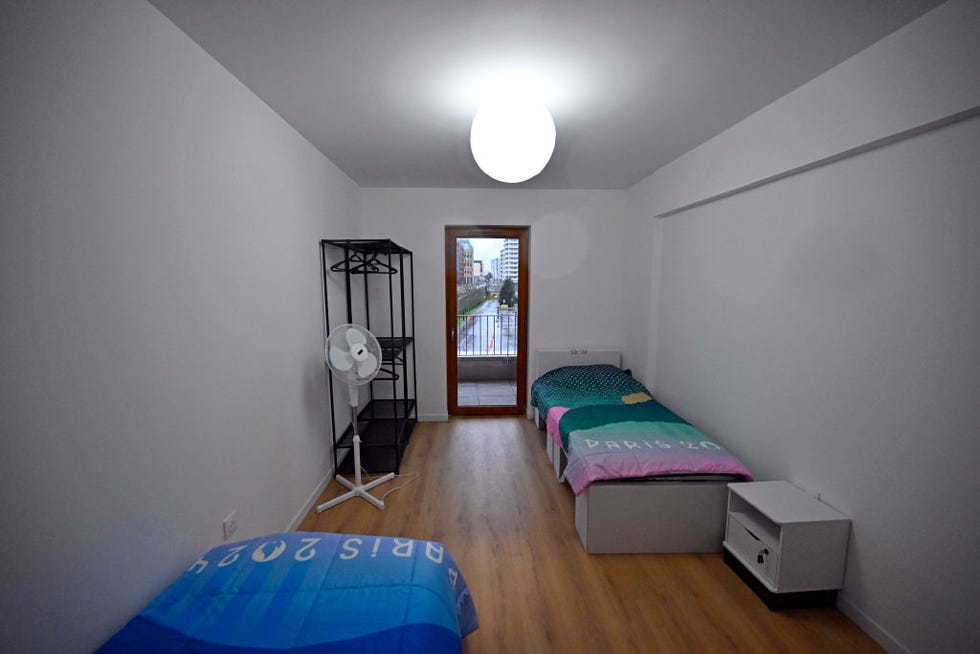
Let’s talk about that intimacy ban, too
It was officially lifted for the Paris games in 2024, meaning that the athletes were able to match each other’s freaks. Per CBS News, the intimacy ban was originally put in place during the 2020 Tokyo Olympics to promote social distancing and COVID-19 safety measures. At the time, athletes were reportedly asked to limit physical contact with each other. In 2024, Laurent Michaud revealed that the Village held about 14,250 residents at the 2024 Paris Games, and they aimed “to have 300,000 condoms for the athletes.” However, the 2016 Rio Games passed out 150,000 more condoms where that came from, making it a total of 450,000.
“Everyone talks about how there are so many condoms for each athlete, but they don’t just give them to you,” Swiss swimmer Alexandre Haldemann told USA Today during the 2016 Rio Games. “You have to go and get them yourself, and you can take as many as you want.”


