32 Feminist Books Every Person Should Have on Their Reading List
Welcome to Fight the Patriarchy 101.

We may earn commission from links on this page, but we only recommend products we love. Promise.
If one of your New Year’s resolutions for 2024 is to read more, then we’ve got you covered. There are a ton of book genres to explore, from sweet (or steamy) romance novels to historical fiction to celebrity memoirs, and that’s just the tip of the iceberg. But if one of your other resolutions is to educate yourself on important issues, then books are your friend in that arena as well. Whether you’re trying to learn more about reproductive rights, mental health, immigration, or a different topic entirely, a good book is the first place to start. If you’ve decided it’s time to learn more about feminism, we’ve rounded up 26 essential reads to help guide your journey.
Some of these books will give you a window into the history of feminism, while others dive into more contemporary ideas and experiences. Many of them focus on intersectionality and examine how white feminist leaders have often ignored and oppressed women of color and those from other marginalized groups. Others include personal essays about fighting the patriarchy that may inspire you to think differently. And it’s not all nonfiction—we’ve included some feminist fiction and poetry sure to get you fired up. Here are 33 of the best feminist books you can read now.


This may have been written back in 1963, but the subject matter is (unfortunately) timeless. At the time, it described "the problem that has no name" AKA all of the institutionalized beliefs that cut down women's abilities and kept them at home. Although a lot has changed since the book was written (women weren't even allowed their own credit cards back then) it touches on issues that are still very much an issue now.

Jumping back even earlier to 1949, philosopher Simone de Beauvoir was ahead of her time, discussing the treatment (or rather, mistreatment) of women in society. The book was so controversial at the time it was banned by the Vatican, but has been credited as a major contributor to the start of second-wave feminism. It's a necessary read for anyone who wants to get a well-rounded view of historical feminism.

Speaking of historical feminism, The Yellow Wallpaper, written in 1892, is considered an integral part of early feminist literature. It's a collection of journal entries written by a woman whose physician husband is treating her for "a slight hysterical tendency" (something lots of women were labelled with at the time). She reflects on women's lack of life outside the home, and how oppressive the patriarchy can be, both things that are still being worked through over 130 years later.

Adapted from her TEDx talk on the same topic, Chimamanda Ngozi Adichie fills this book with anecdotes and perspectives on what it means to be a feminist. Rather than seeing the label as an insult, she discusses how we should embrace it and continue challenging gender stereotypes that keep inequality alive.

You might be familiar with the Spielberg movie version, or the brand new version, but if you haven't read the original book yet, stop what you're doing and pick this up. Depicting the lives of two African American sisters in Georgia through their letters spanning nearly 30 years, the book documents the trauma and triumphs of their lives, and how they found comfort and inspiration in the other women around them, even amidst dire situations.

There's a reason this book was a massive best-selling hit: it encourages women to tap back into their powerful instinctual side—something that the author says has been stripped away in modern society. It pushes women to get away from just "functioning" and tap into their mythical "wild woman" side where freedom, joy, and growth can live.

We've all had the experience of being mansplained to a time or two thousand. But did you know the actual term "mansplaining" was inspired by author Rebecca Solnit's essay Men Explain Things To Me? Well, this book is a compilation of her essays where she can take something as frustrating as having a man literally explaining her own work back to her and turn it into something memorable.

In the era of trying to look good for social media, this book really pushes you to question the patriarchal narratives that may have subconsciously crept into your life, covering everything from taking pleasure in other women's flaws to conforming to the male gaze.

When you think of feminist writers, Gloria Steinem is usually one of the first people who comes to mind. In this book, the journalist/activist/all-around badass tells the story of, well, her life on the road, from starting out as a journalist covering important women's issues to co-founding the Women's Media Center.
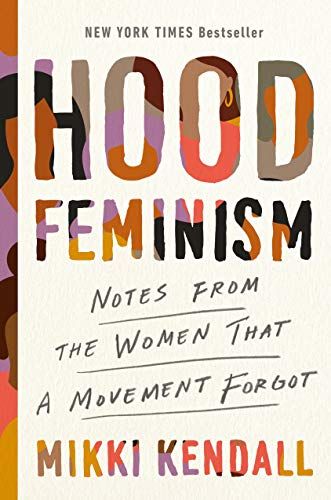
We can’t talk about feminism without talking about intersectionality. What is intersectional feminism? We’re glad you asked. It’s feminism that’s conscious of the fact that a woman’s many identities—race, class, ethnicity, sexual orientation, etc.—affect how she experiences disadvantages. Mikki Kendall takes the discussion around intersectionality even further by reminding us that we must acknowledge barriers like education, violence, hunger, medical care, and more when discussing feminism at all.

There's no doubt that equality for women has come a long way, but things aren't exactly equal, ESPECIALLY when it comes to household work. Darcy Lockman's book looks at why women are so often still stuck carrying most of the mental, emotional, and parental loads despite the idea of equal partnerships being (theoretically) popular.

As some states keep on with their crusade to take away women's right to choose, this true story about the formation of the Abortion Counseling Service (aka Jane, an underground, safe abortion organization in Chicago in the '60s) couldn't be more topical. Jane operated until the first legal abortion clinics opened in the early '70s, spending years protecting thousands of women from dangerous back-alley situations.

Okay, raise your hand if you've ever had your symptoms totally dismissed by a doctor! A lot of us, right? Well, Elinor Cleghorn's eye-opening book takes a deep dive into the history of how the medical system has failed women (all the way from Ancient Greece to modern day problems like getting Endometriosis diagnosed) and how women are often seen as unreliable sources for what they're feeling in their own bodies.

If you've ever looked back and realized the messages you got as a young girl or woman might have been kind of f*cked up, this is a must-read. Melissa Febos analyzes what narratives society gives young girls and women about themselves and roles in the world and how we can reclaim power, anger, grief, and pleasure. It's part memoir/part investigation, and you're guaranteed to come away feeling ready to make a change.
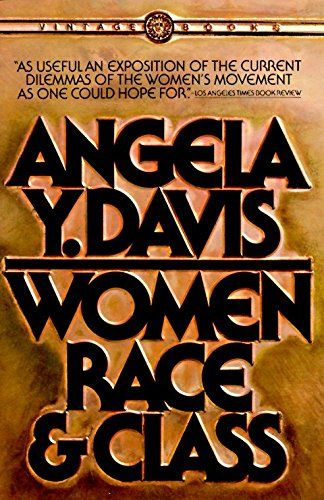
In this classic 1983 book, Angela Y. Davis explores how racism and classism have infiltrated many feminist movements throughout history, with white women leaders often upholding ideals of white supremacy instead of advocating for women of color. She documents how well-known feminists like Susan B. Anthony and Margaret Sanger dismissed the needs of Black and working-class people in the pursuit of advancing their own agendas. Davis also shares how these historical inequalities in popular feminist movements influence how society views domestic labor, reproductive freedom, sexual assault, and other feminist issues to this day. It's a must-read if you're trying to learn more about intersectionality.

In this 1929 book based on two of Virginia Woolf's lectures, she completely shuts down the sexist claim that women are inherently less talented writers and thinkers than men. To do so, she examines some of the structures that oppressed (and continue to oppress) women's ambitions, such as expectations around domestic labor and lack of access to education. It may be nearly a century old, but this work's ideas are just as potent today as they were then.

In this book, Aileen Moreton-Robinson, a professor and Indigenous woman, examines western ideas around feminism. She is a Goenpul woman of the Quandamooka people, an Aboriginal Australian group, and she looks at how white feminists in Australia have frequently either ignored or misrepresented Indigenous women in their publications and teachings.

Not to be dramatic, but the patriarchy is trying to ruin our lives at pretty much every turn. Think we’re exaggerating? Allow Feminasty to elaborate. Erin Gibson comes in hot with facts and stories that’ll make your blood boil. In each chapter, you’ll learn about lesser-known women’s issues that aren’t trending but still deserve our undivided attention. Don’t even get us started on how doctors dismiss women’s health concerns.

bell hooks defines feminism as “a movement to end sexism, sexist exploitation, and oppression.” She explains that everyone and anyone can be feminist and to do so, one most take a global and well-rounded perspective. She applies this theory to several global issues, including reproductive rights, domestic violence, racism and social hierarchies. Her writing style is captivating and delightfully blunt, which further strengthens her call to action.

Speaking of intersectionality, Unapologetic is also required reading on the topic, especially if you want to organize in social justice movements. Charlene Carruthers will change the way you think about race, class, and gender—and how the three affect each other. She’ll also inspire you to actually do something to help empower Black people and fight systemic injustices.
Readers Also Read
Some '90s Kids Movies You Should Rewatch RTFN

Which ‘Age of Attraction’ Couples Are Together?

There Are So Many Good Movies on Netflix Rn

Shiloh Jolie Stars in K-Pop Music Video


