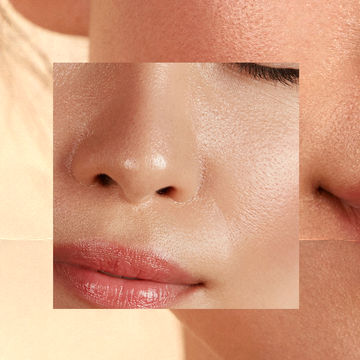
If you’ve been a victim of obsessing over your pores in a 10x zoom mirror, then you’ve probably wondered how the heck to get rid of all those little clogged pores. Even if your skin looks pretty flawless at first glance and you have a solid skincare routine, clogged pores are still a reality for most of us. The frustrating part? While clogged pores are incredibly common, the information online about what “congested skin” actually is (and what it even looks like) can be confusing. Some people say you should just squeeze it all out (please don’t), others recommend a slew of drying face masks and expensive toners. But what actually works?
To clear things up—for both your skin and your brain—I asked dermatologists to break down everything you need to know about clogged pores: what causes them, how to spot them, and the best ways to deal with them. In the meantime, consider this your sign to step away from the magnifying mirror and start here instead.
Love Cosmo's beauty content? Subscribe to our Substack for more recs and reviews delivered straight to your inbox.
What are clogged pores?
Simply put, clogged pores are pores that have been blocked by a mixture of sebum and gunk. As a refresher, sebum is the oily liquid made from our sebaceous glands. The purpose of sebum is to keep the skin lubricated, but when the collection of that oil is mixed with the wrong stuff (dead skin, bacteria, environmental debris), it can make small pores look bigger and make your skin appear congested.
What causes clogged pores?
We all have pores (yes, even that one friend with annoyingly perfect, seemingly poreless skin). These are small openings in the skin where hair follicles exist and where your sweat glands and sebaceous glands can empty their contents onto the surface of the skin, as explained by board-certified dermatologist Courtney Rubin, MD.
If you have clogged or congested pores, it might be because your skin overproduces sebum or you may have an accumulation of dead skin cells and other debris (like makeup) in your pores. Dr. Rubin says all of this increases the risk that the pore could become blocked, and blocked pores can lead to, yup, acne.
What do clogged pores look like?
When your pores are clogged, they can appear larger and maybe even darker, or as board-certified dermatologist Shereene Idriss, MD, describes it, they can create the appearance of black dots on your face. If you’re confused as all hell because you thought you had clogged pores but now you don’t know the difference between those and blackheads, you’re not alone.
Joshua Zeichner, MD, board-certified dermatologist, says even dermatologists don’t agree on the distinction between a lot of similar terms that are often used interchangeably. But don’t stress. Whether your pores are full of sebum plugs (sebaceous filaments) or a combination of sebum, dirt, and dead skin (clogged pores and congestion) or an oxidized pore plug (a blackhead), the difference in terminology isn’t that important because they’re all treated similarly. This leads us to what you really came here for…
How do I unclog my pores?
Let’s start with what you shouldn’t do, and that is squeeze your clogged pores. “If you constantly squeeze your pores, the wear and tear of squeezing will eventually make your pores bigger over time, so I don’t usually recommend this method,” Dr. Idriss says.
Most derms are also against using gadgets like like pore vaccums, facial cleansing brushes, and pore strips to unclog your pores either. “I don’t usually recommend instrumenting the face in order to unclog pores,” Dr. Rubin says. “They will just fill up again, and instrumentation can lead to inflammation or scarring.” So what should you do?
1. Retinoids
“Retinoids address the root cause of pore congestion by decreasing sebum production and by helping dead skin cells slough away properly (rather than sticking to themselves and causing blockages),” Dr. Rubin explains.
Dr. Zeichner is also a fan of retinoids for acne and clogged pores, either one prescribed by a doctor or one from the drugstore. “Over-the-counter retinoids like adapalane help calm inflammation in the skin and prevent cells from sticking together and blocking the follicles,” Dr. Zeichner says. “Think of them like pipe cleaners to keep the pores open.” Differin is most-loved by dermatologists and editors, but Personal Day’s Adapinoid Serum is fantastic for dry or sensitive skin types. Just start slow. Derms recommend once a week to start, then twice or three times per week once your skin can tolerate it (aka it doesn’t turn splotchy, red, or irritated).
2. Exfoliate with AHAs or BHAs
Dr. Idriss and Dr. Zeichner recommend products with chemical exfoliants, like AHAs or BHAs, to dissolve excess oil and the dead skin cells that block the pores. “I don’t love physical scrubs,” says Dr. Idriss. “They are not specific to the clogged-pore problem and can lead to more wear and tear.”
And while exfoliating might make it possible to remove a lot of buildup in the pores, you likely can’t remove all of it. “I think there will always be a certain amount of ‘cloggage’ in your pores, but you can lighten or limit the appearance of pores with a solid skincare routine,” Dr. Idriss says. And Dr. Zeichner adds that any unclogging you do achieve won’t last long, sadly. “Our body continually produces more oil, so clearing blockages gives only a temporary effect. The pores usually fill up again within a few days.”
To keep pores clear, go with a toner or toner pad (I like Medicube’s Zero Pore Pads) that you can swipe all over your face. Look for a formula with salicylic acid because it is oil soluble, meaning it can go deeper into your pores to help clear out dead skin.
3. Switch to non-pore-clogging products
If you're dealing with clogged pores, it's also worth running the products in your existing makeup and skincare routines through a pore clogger checker, like the ones here, here, and here. These checkers scan the ingredient list of whatever product is inputted and then flag anything that has the potential to clog pores. Even products labeled "non-comedogenic" can be filled with sneaky pore-clogging ingredients, which makes these checkers super helpful.
Is it okay to squeeze out clogged pores?
No, you definitely shouldn’t try to squeeze or pop your clogged pores, blackheads, or any acne for that matter. This could reintroduce bacteria to your skin, plus increase inflammation, leading to even bigger bumps and potentially a full-on zit. No thanks. Go to an aesthetician to get your face professionally extracted instead (or employ the above gentler tactics).
The bottom line:
Can you get rid of clogged pores? Not forever, no. But can you minimize the clogs and blockages and stop it from becoming full-blown acne? With the right products and skincare routine, absolutely—and you don't need to shell out big bucks on a fancy skincare tool to do it, either. If you stick with a gentle exfoliating skincare routine, avoid ingredients that are known to clog pores (like too-thick creams and coconut oil), and keep your fingers off your face, you’re likely to see an improvement in the appearance of your clogged pores within a few weeks.
Meet the experts:
- Courtney Rubin, MD, is a board-certified dermatologist at Comprehensive Dermatology Center of Pasadena in Pasadena, CA, and the cofounder and chief medical officer of Fig.1, a refillable skincare line.
- Shereene Idriss, MD, is a board-certified dermatologist and founder of Idriss Dermatology in New York, NY and Dr. Idriss Skincare. Dr. Idriss is also a clinical instructor in dermatology at the Icahn School of Medicine at Mount Sinai.
- Joshua Zeichner, MD, is a board-certified dermatologist and the director of cosmetic and clinical research at Mount Sinai Hospital in New York, NY.
Why trust Cosmopolitan?
Lauren Balsamo is deputy beauty director at Cosmopolitan with a decade of experience researching, writing, and editing skincare stories that range from the best retinol eye creams to the best pore minimizing treatments. She’s an authority in all skincare categories but an expert when it comes to pore products and treatments.
Beth Gillette is the beauty editor at Cosmopolitan with more than seven years of experience researching, writing, and editing skincare stories.
Beth Gillette is the beauty editor at Cosmopolitan, where she covers skincare, makeup, hair, nails, and more across digital and print. She can generally be found in bright eyeshadow furiously typing her latest feature or hemming and hawing about a new product you "have to try." Prior to Cosmopolitan, she wrote and edited beauty content as an Editor at The Everygirl for four years. Follow her on Instagram for makeup selfies and a new hair 'do every few months.
Lauren Balsamo is the beauty director at Cosmopolitan where she writes, edits, and produces all types of beauty content—from product reviews to personal essays and trend reports. She has covered beauty for more than a decade at Cosmopolitan. Follow her on Instagram.